Alphabet Recognition Extra Challenge English for Beginners Worksheets for Ages 4-7
3 filtered results
-
From - To
Enhance early literacy skills with our "Alphabet Recognition Extra Challenge Worksheets" designed for English language beginners ages 4-7. These engaging and interactive worksheets provide a fun way for young learners to master the alphabet through a variety of stimulating activities, including letter matching, coloring, and tracing. Perfect for educators and parents, these resources support language development, encourage fine motor skills, and promote early reading confidence. Whether used in the classroom or at home, our worksheets offer a structured way to ensure that children not only recognize letters but also enjoy the learning process. Explore the joy of learning with us today!
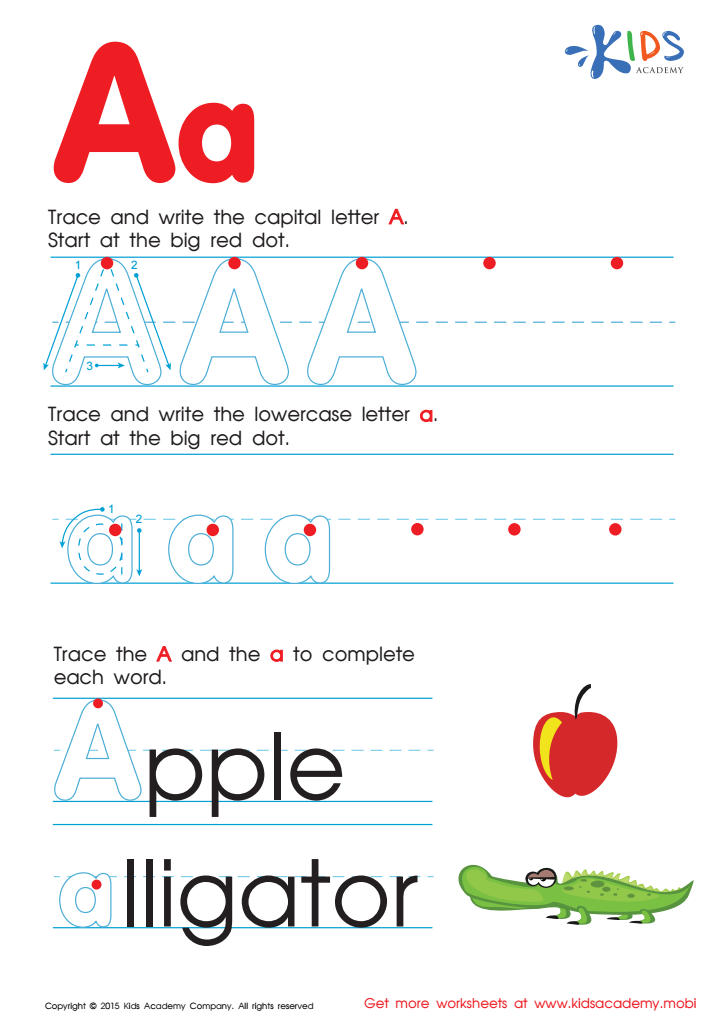
Letter A Tracing Page
 Assign to My Students
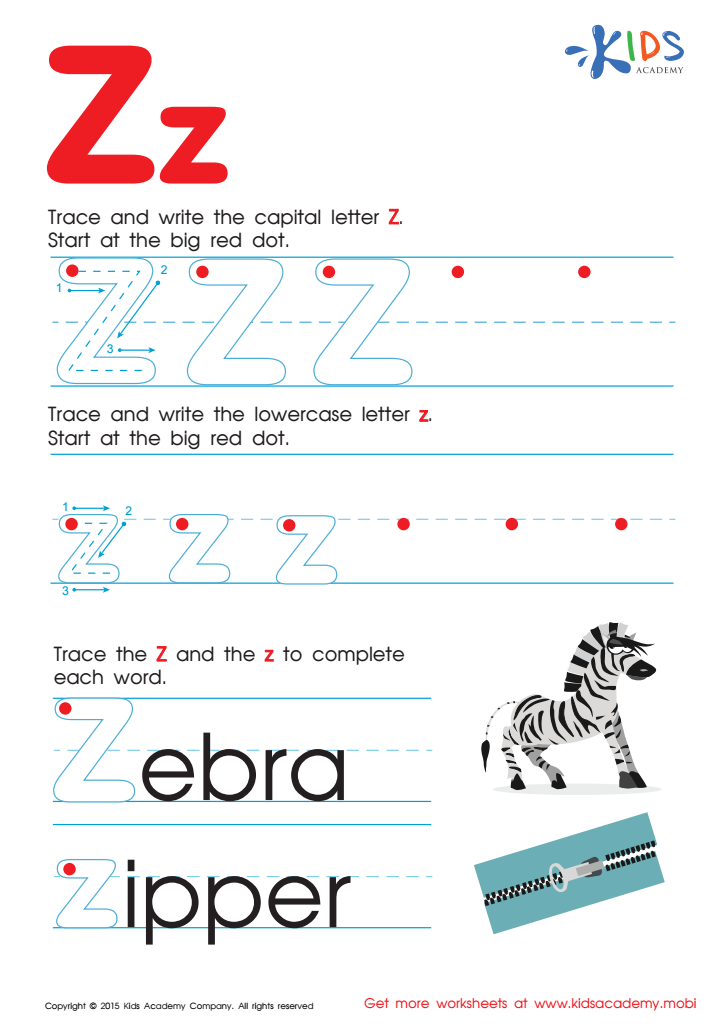
Letter Z Tracing Page
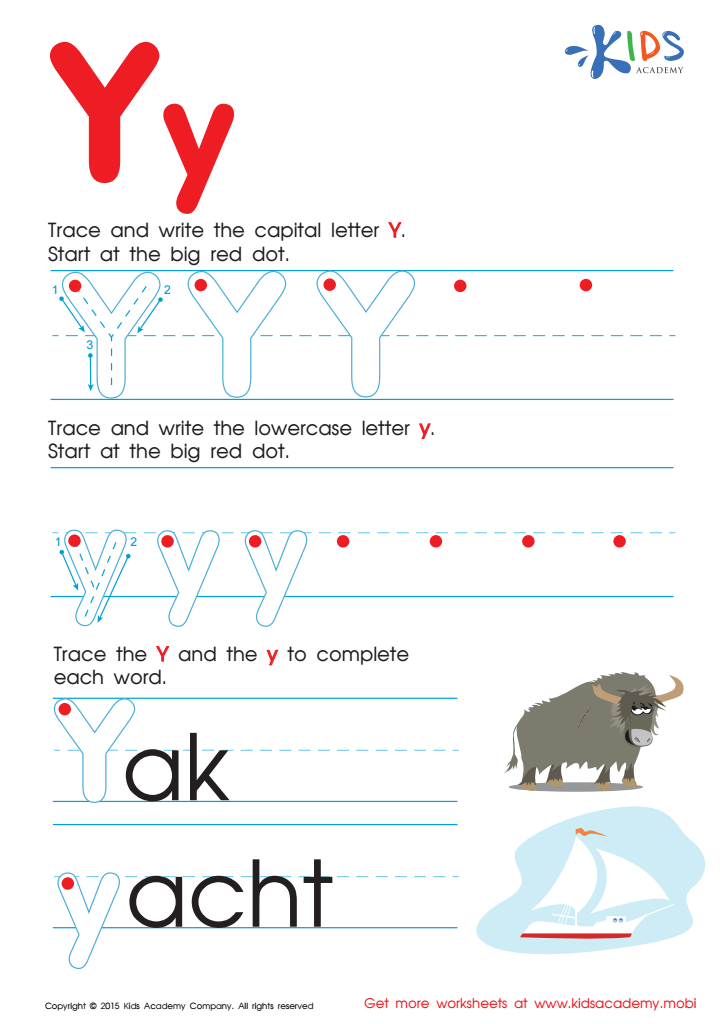
Letter Y Tracing Page





Alphabet recognition is a foundational skill for early literacy, crucial for children aged 4-7 as they embark on their educational journey. The "Alphabet Recognition Extra Challenge" program is designed to sharpen these essential skills for beginners, capturing the attention of both parents and teachers alike.
First and foremost, recognizing letters and their corresponding sounds is vital for reading and writing proficiency. Children who master the alphabet can decode words more easily, paving the way for enhanced comprehension and communication skills.
Moreover, early engagement with the alphabet fosters a love for learning. Dynamic challenges and activities make the learning process fun and interactive, aiding in better retention and a positive attitude toward education. This is particularly important in today's digital age, where literacy is closely tied to success.
The program also addresses varied learning styles, ensuring each child can grasp alphabet concepts effectively. Parents and teachers can work together to monitor progress, allowing for tailored support that fosters growth.
Investing time and resources into an Alphabet Recognition Extra Challenge is an investment in a child's future success in school and beyond, equipping them with vital tools for lifelong learning and leadership.








