
Basic arithmetic skills Extra Challenge Worksheets for Ages 4-7
5 filtered results
Difficulty Level
Grade
Age
-
From - To
Subject
Activity
Standards
Enhance your child's mathematical journey with our "Basic Arithmetic Skills Extra Challenge Worksheets" designed for ages 4-7. These engaging worksheets provide a fun and interactive way for young learners to practice fundamental arithmetic concepts, including addition, subtraction, and number recognition. Each worksheet is thoughtfully crafted to reinforce skills while encouraging critical thinking and problem-solving. The challenges are tailored to boost confidence and improve proficiency in a playful manner. Ideal for use at home or in the classroom, our worksheets ensure that learners build a strong foundation in mathematics. Download now and watch your child's arithmetic skills flourish!
Favorites
With answer key
Interactive
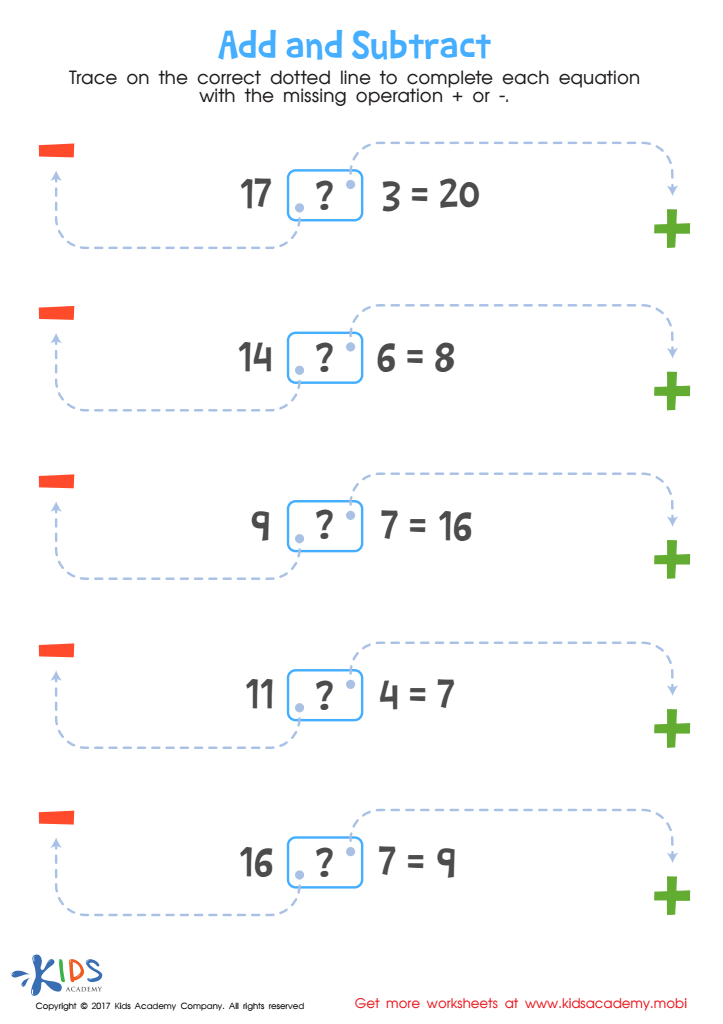
Add and Subtract Worksheet
Introduce your child to equations and advanced math concepts with this worksheet - designed to help them learn add and subtract up to 20. This logical reasoning exercise will help them gain a better understanding of math, preparing them for future success. Start early and watch them excel!
 Assign to My Students
Add and Subtract Worksheet
Worksheet
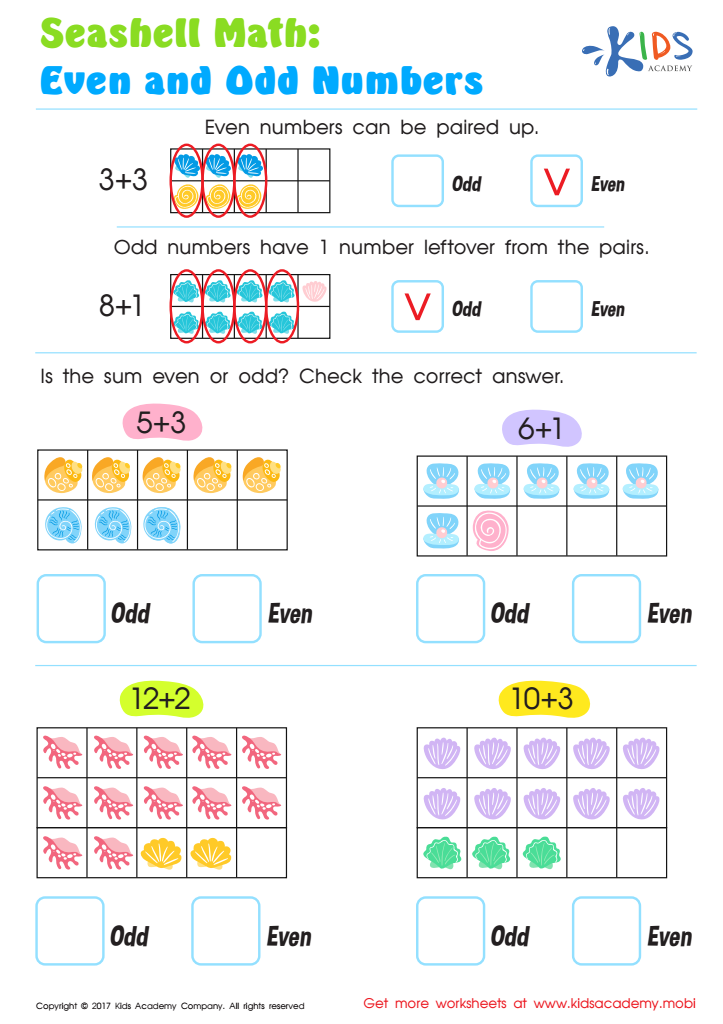
Even and Odd Numbers Worksheet
Have them identify the odd and even numbers for a quick review of this tricky concept. The graphic helps them visualize what makes a number even or odd.
Even and Odd Numbers Worksheet
Worksheet
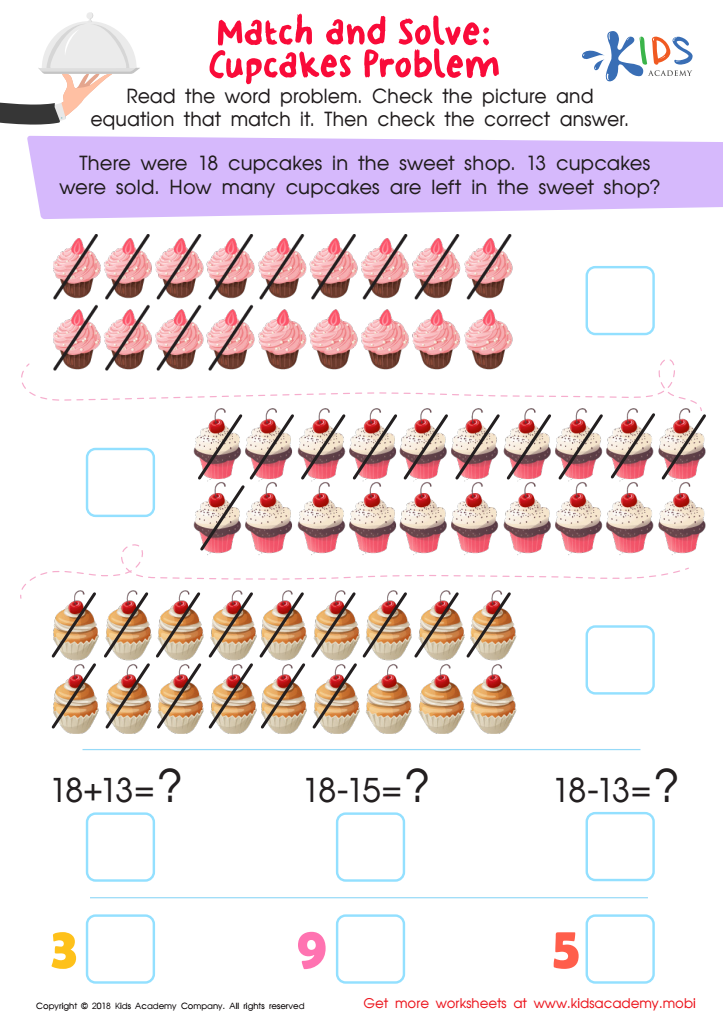
Match and Solve: Cupcakes Problem Worksheet
This math worksheet will excite your kid! Read the word problem and look at the cupcakes; the slashes mean some are being taken away. Select the picture that matches the text, then complete the equation to find the solution!
Match and Solve: Cupcakes Problem Worksheet
Worksheet
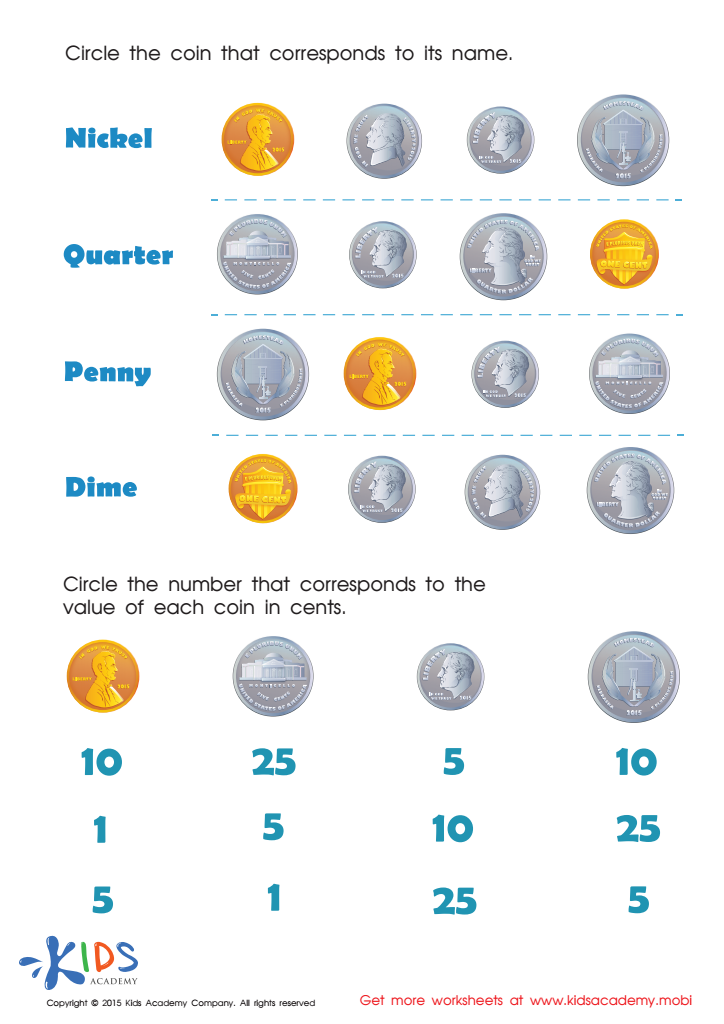
Coin Names and Values Money Worksheet
Learning about money can be easy, interesting and fun! Start by memorizing names and values of coins and then try matching pictures of coins to the right names and values. Find a great selection of counting money worksheets at our web site and keep learning.
Coin Names and Values Money Worksheet
Worksheet
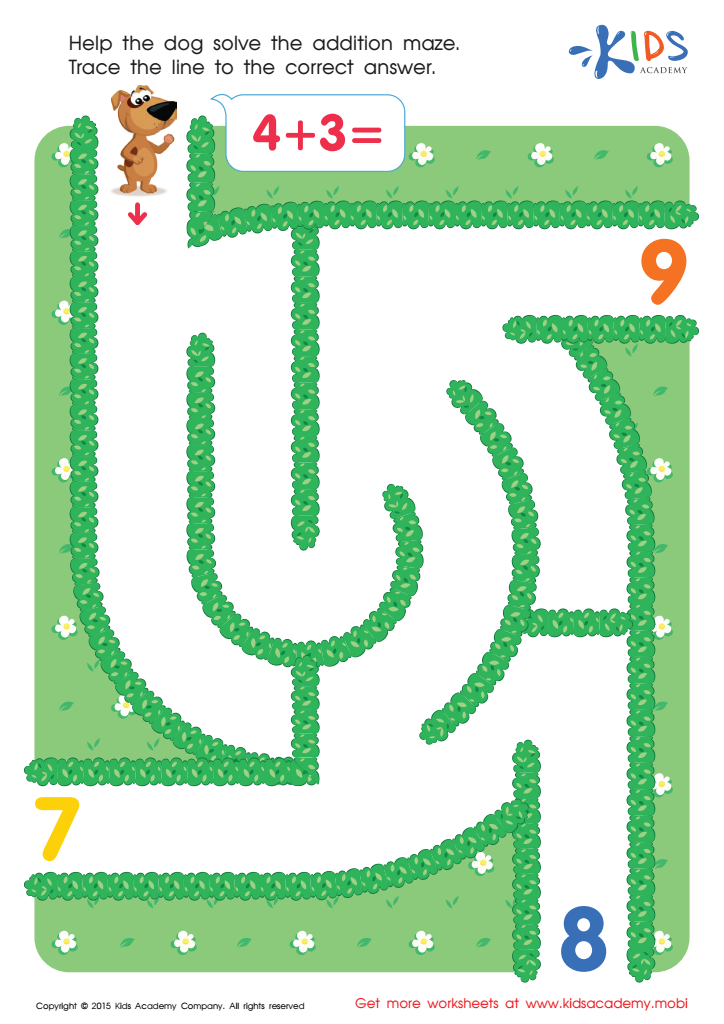
Addition Four And Three Worksheet
Let's have fun math practice! Grab a new worksheet to keep your kids engaged while helping them learn. Trace the path to the right answer and see the joy when they find it. Check Kids Academy for more free algebra worksheets and other learning materials - let's make learning exciting!
Addition Four And Three Worksheet
Worksheet
Join Kids Academy for Free
Who is primarily going to use this learning content?





.jpg)

.jpg)
Basic arithmetic skills are foundational for children's cognitive development, social interactions, and future academic success, making them essential for parents and teachers to prioritize, especially for children ages 4-7. During this critical age, children's brains are highly receptive to learning new concepts. Engaging in basic arithmetic challenges helps develop not only numerical understanding but also critical thinking and problem-solving skills.
Learning basic arithmetic encourages mathematical fluency, which lays the groundwork for more complex math concepts upon entering higher grades. Additionally, these skills promote confidence and independence in handling everyday situations that involve counting, measuring, and sharing.
Moreover, a strong grasp of arithmetic enhances a child's ability to engage in discussions about math in social and educational settings, nurturing collaborative skills essential for teamwork. By integrating extra challenges suited to their age, parents and teachers can foster a love for math, transforming it from a daunting subject into an enjoyable and approachable endeavor.
Furthermore, early mastery of these skills can alleviate future anxiety often associated with mathematics, supporting a positive attitude toward learning in general. Overall, prioritizing basic arithmetic is not just about numbers; it’s about equipping children with critical life skills that will serve them well into adulthood.








