Basic counting skills Extra Challenge Worksheets for Ages 4-7
4 filtered results
-
From - To
Enhance your child's math skills with our "Basic Counting Skills Extra Challenge Worksheets" designed for ages 4-7! These engaging and fun worksheets are perfect for young learners ready to move beyond basic counting. Whether it’s counting objects, number recognition, or simple addition and subtraction, each worksheet offers a stimulating challenge to promote critical thinking and numerical fluency. Our expertly crafted materials ensure your child remains motivated and excited about learning. Perfect for both classroom and at-home practice, start your child’s journey towards math mastery today with our comprehensive set of printable worksheets!
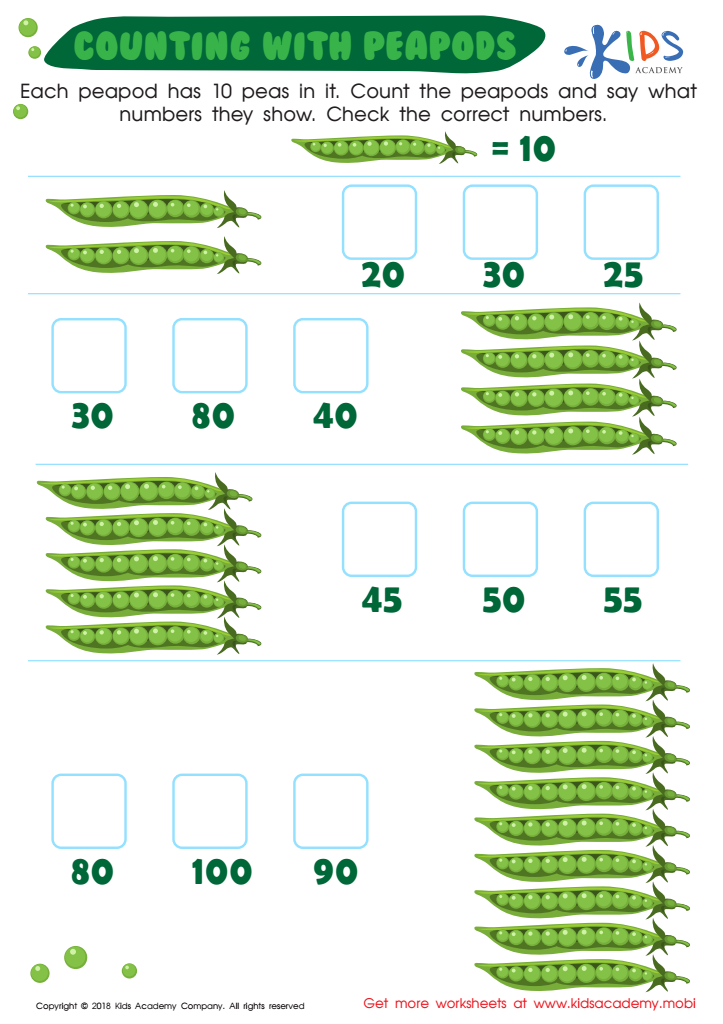
Number Worksheet: Counting With Peapods
 Assign to My Students
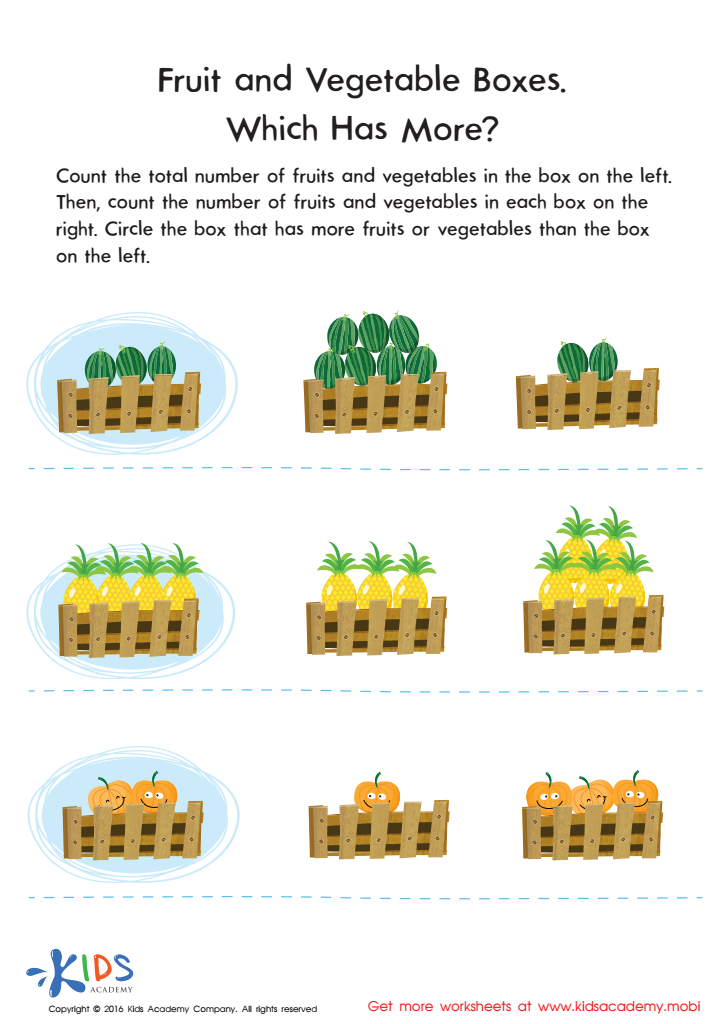
Which Has More? Size Worksheet
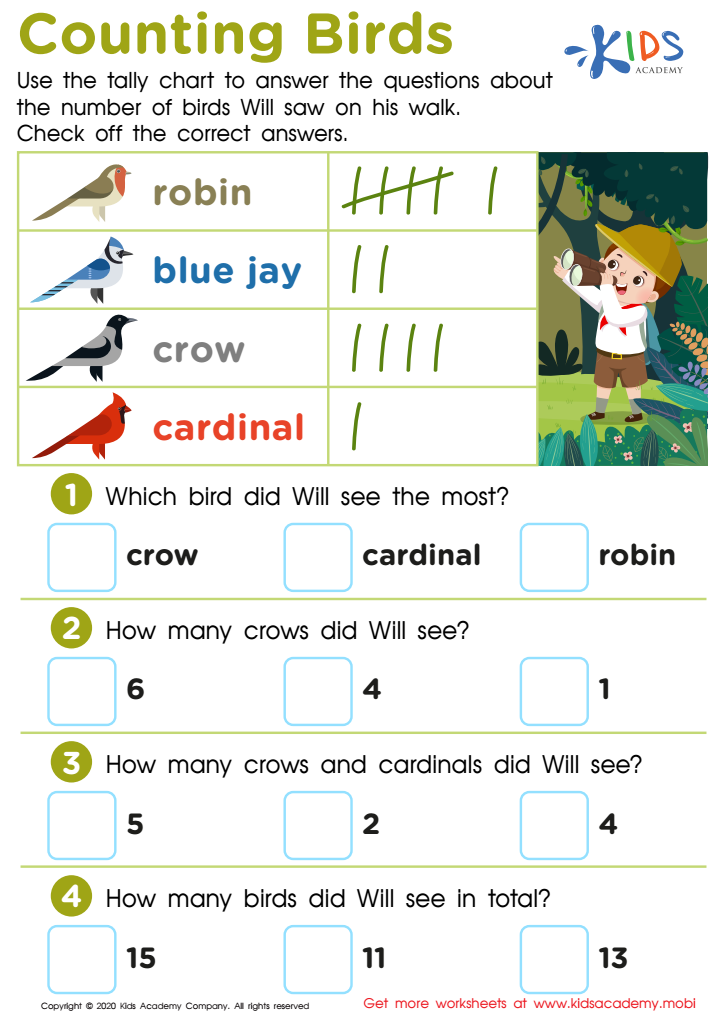
Counting Birds Worksheet
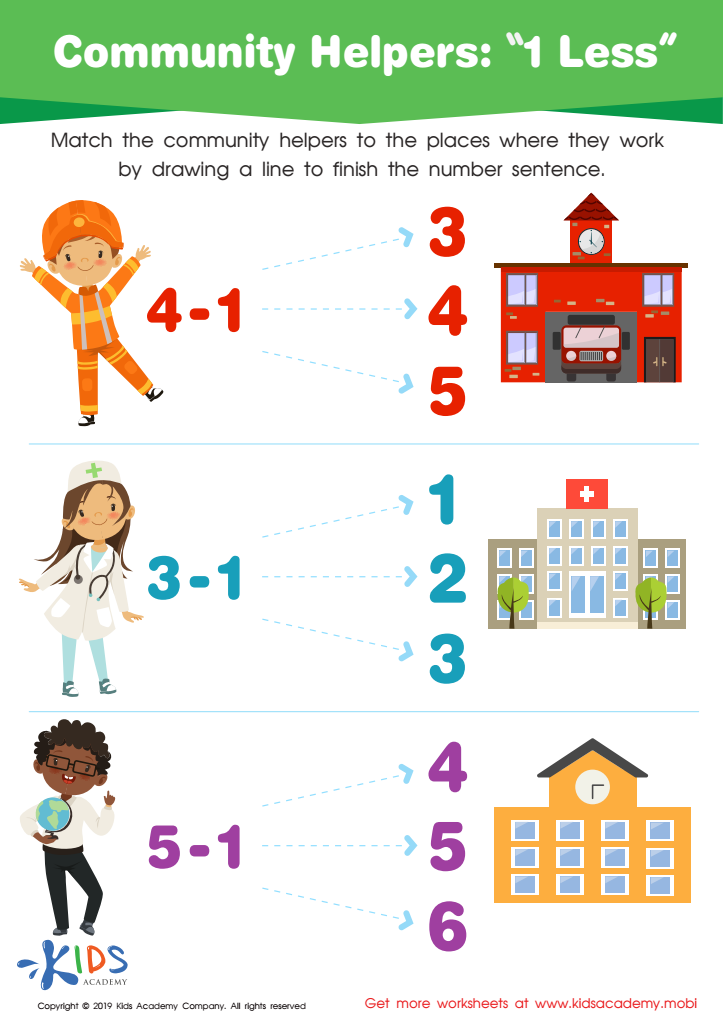
Community Helpers: 1 less Worksheet







Basic counting skills are foundational for young children (ages 4-7) and play a pivotal role in their overall cognitive development and future academic success. Engaging children in extra challenges that enhance these skills is vital.
First, counting is integral to their understanding of number concepts, mathematics, and everyday problem-solving. When children count objects and numbers sequentially, they not only learn rote counting but also grasp one-to-one correspondence, quantity recognition, and the concepts of more or less. These ideas are stepping stones to arithmetic operations like addition and subtraction.
Moreover, fostering strong counting abilities can greatly enhance a child's confidence in their numerical skills. This is crucial during early development years when children are building their self-esteem and attitudes towards learning. When children achieve competency in counting, they often feel more enthusiastic and willing to tackle other subjects.
Challenges that take basic counting a step further, such as counting backwards, skip counting, or counting objects in complex patterns, can stimulate a child's cognitive abilities through critical thinking and pattern recognition. These skills are not only beneficial within mathematics but translate to improved logical reasoning and analytical skills broadly.
Parents and teachers should thus prioritize and enthuse over counting challenges to ensure children build a robust mathematical foundation, setting them on a path to academic achievement and life-long learning confidence.








