
Handwriting improvement Extra Challenge Worksheets for Ages 4-7
3 filtered results
Difficulty Level
Grade
Age
-
From - To
Subject
Activity
Standards
Enhance your child's handwriting skills with our "Handwriting Improvement Extra Challenge Worksheets" designed for ages 4-7. These engaging worksheets promote fine motor skills and support early literacy development, providing a fun way for young learners to practice letter formation, spacing, and writing consistency. Each worksheet features a variety of exercises, including tracing letters, writing words, and challenging activities that encourage creativity. Tailored for preschool and kindergarten readiness, these worksheets cultivate confidence in writing while making learning enjoyable. Help your child master their handwriting with fun, interactive challenges that will keep them motivated and excited about writing! Perfect for home or classroom use.
Favorites
With answer key
Interactive
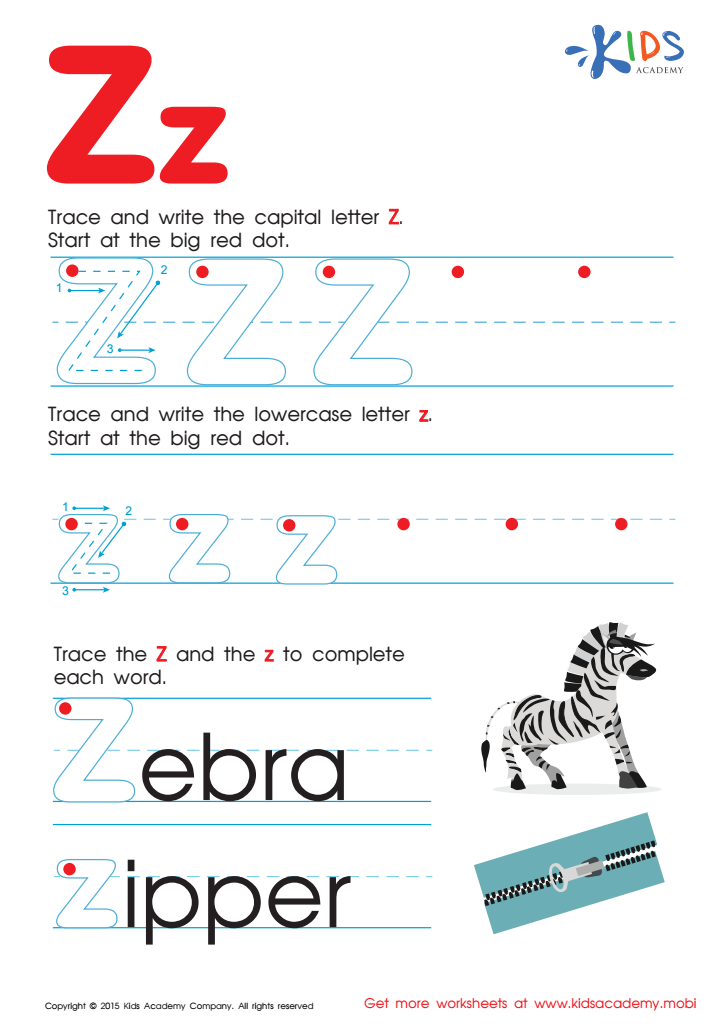
Letter Z Tracing Page
Trace and write capital "Z" and lowercase "z". Complete words "zebra" and "zipper". Be attentive and have fun! (80 words)
 Assign to My Students
Letter Z Tracing Page
Worksheet
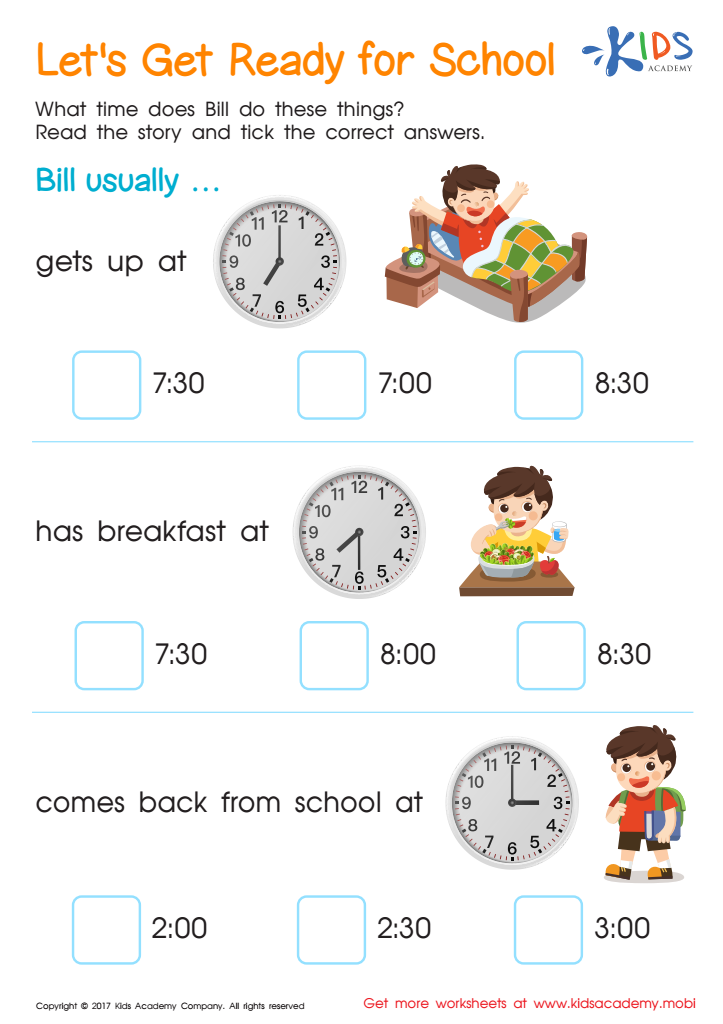
Lets Get Ready For School Time Printable
Believe it or not, kids today are struggling with reading traditional clocks. This vital skill shouldn't be lost, so why not try this fun telling time worksheet to get ready for school? Don't miss out!
Lets Get Ready For School Time Printable
Worksheet
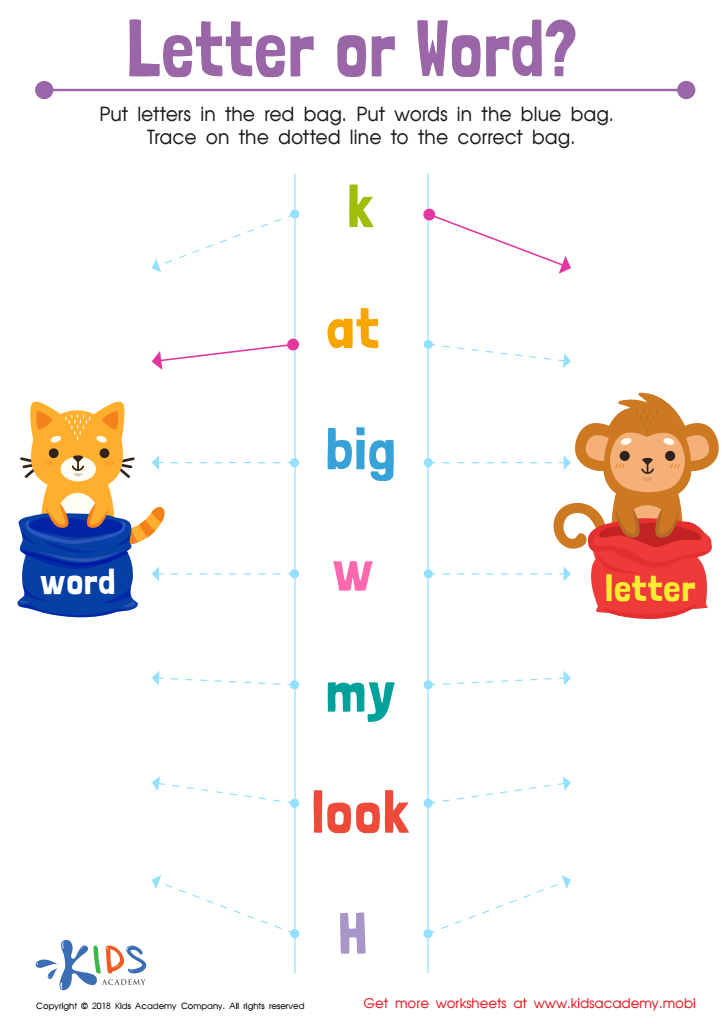
Letter or Word? Worksheet
Help your kids differentiate between words and letters. If they can recite their alphabets and identify common words, this tracing sheet will be a breeze. Have them trace on the dotted lines to place the letters in the red bag with the kitten, and the words in the blue bag with the monkey.
Letter or Word? Worksheet
Worksheet
Join Kids Academy for Free
Who is primarily going to use this learning content?







Handwriting improvement is crucial for children aged 4-7, as it lays the foundation for their future academic success and overall communication skills. At this developmental stage, fine motor skills are still being developed, and engaging in handwriting activities can significantly enhance coordination and dexterity. Improved handwriting fosters greater confidence, as children who write well often feel more capable and encouraged to express themselves.
Moreover, neat handwriting contributes to better readability and comprehension, enabling peers and teachers to understand their thoughts clearly. In a world where written communication remains vital, a strong grounding in handwriting can help children stand out in their educational journey and beyond.
For parents and teachers, focusing on handwriting can also serve as a valuable bonding opportunity. Practicing writing together can nurture positive relationships while reinforcing skills in a supportive environment. Additionally, handwriting improvement activities can incorporate fun challenges, making learning enjoyable.
By prioritizing handwriting development, we equip young learners with tools to harness their creativity and articulate their ideas effectively. Ultimately, investing in handwriting at an early age empowers children, allowing them to flourish in both academic and personal realms.








