Math fluency Extra Challenge Worksheets for Ages 4-7
3 filtered results
-
From - To
Unlock your child’s potential with our Math Fluency Extra Challenge Worksheets for Ages 4-7. These engaging and educational worksheets are designed by experts to boost your child's mathematical skills through fun, challenging exercises that enhance problem-solving and critical thinking. Perfect for preschoolers and early elementary students, our printable worksheets focus on key areas such as addition, subtraction, and number recognition. Tailored to make learning exciting, these activities help build a strong foundation in math while keeping young minds engaged and entertained. Empower your child with the confidence and fluency they need to excel in their math journey.
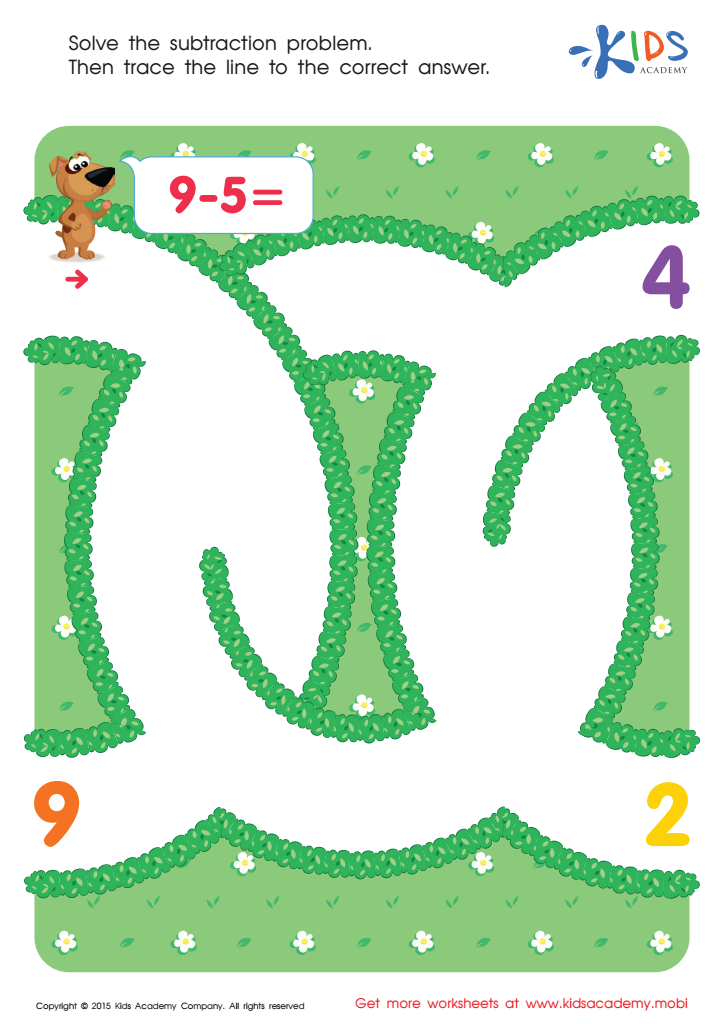
Subtraction Nine And Five Worksheet
 Assign to My Students
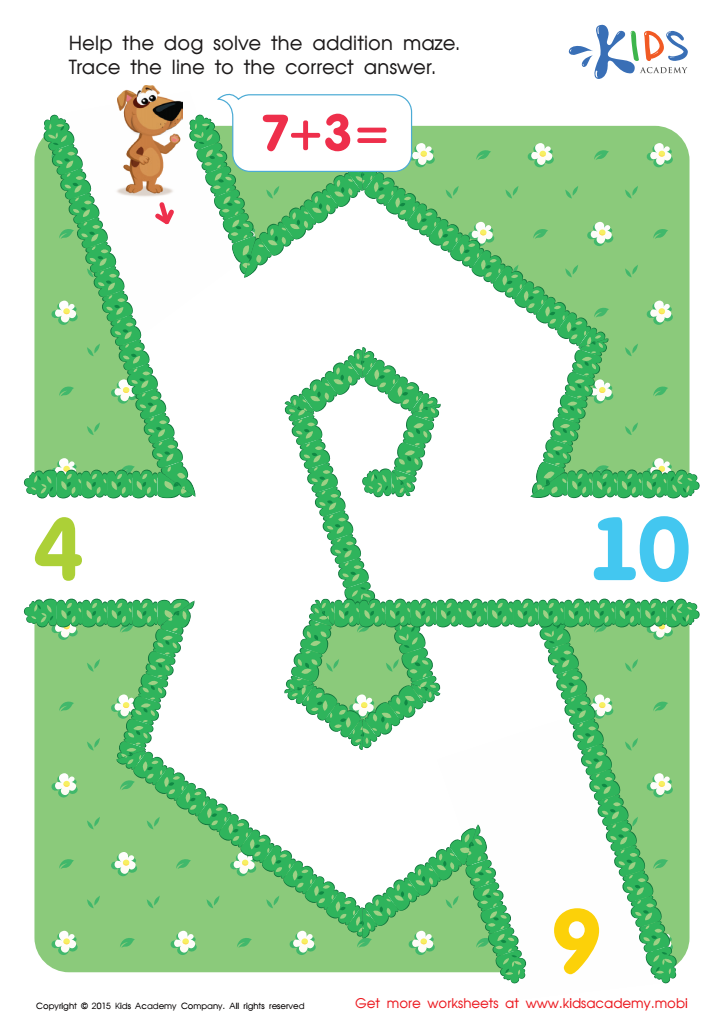
Seven Plus Three Worksheet
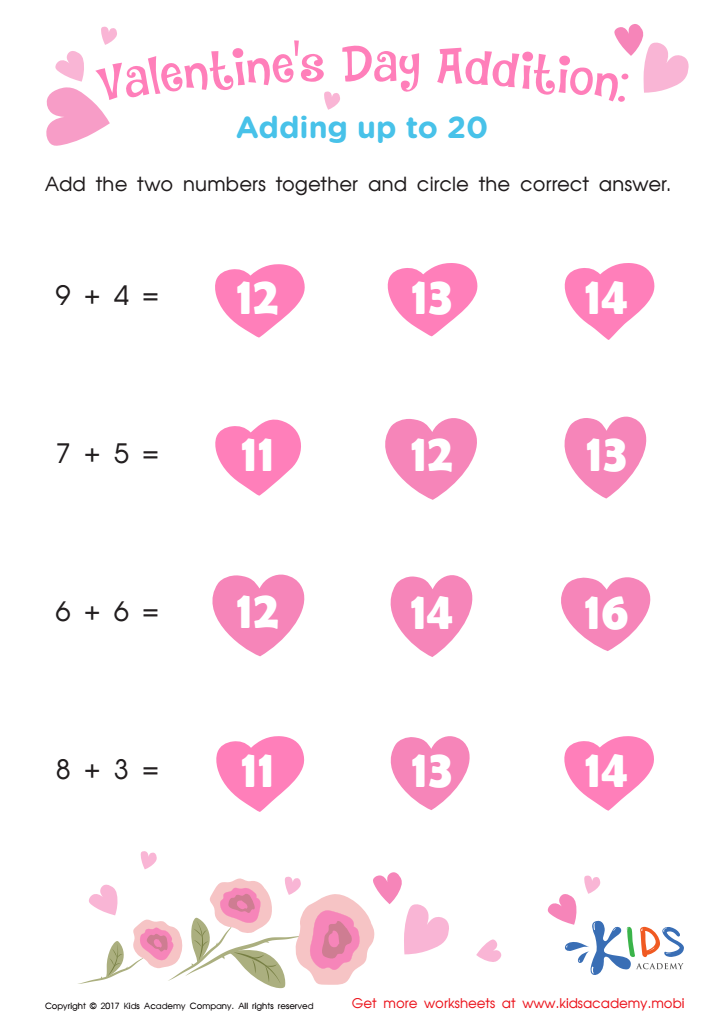
Valentine's Day Addition Worksheet








Math fluency at early ages lays the crucial foundation for advanced mathematical understanding and overall cognitive development. When children aged 4-7 engage in extra challenges that promote math fluency, they sharpen their basic arithmetic skills, understand numbers deeply, and develop a positive attitude toward math. This stage is pivotal as young minds are highly receptive and capable of absorbing new information effectively.
Exposure to math challenges in a fun, engaging manner enhances problem-solving abilities, critical thinking, and logical reasoning. These competencies are not just reserved for math but are crucial life skills usable in various scenarios. A child proficient in basic math is likely to excel in more complex mathematical concepts in later school years, fostering academic confidence.
Moreover, math fluency encourages perseverance and the ability to tackle hurdles. Solving math problems stimulates curiosity and motivates children to find solutions independently or collaboratively, which aids social development. Parents and teachers who invest time focusing on math fluency with extra challenges help build a stable educational groundwork, ensuring long-term academic success.
Creating a positive, encouraging environment where young learners perceive math as enjoyable rather than formidable is essential. Early intervention to support math fluency ensures that children are equipped with the necessary tools for both scholastic achievement and everyday tasks involving numerical competence.








