Understanding plurals Extra Challenge Worksheets for Ages 4-7
5 filtered results
-
From - To
Enhance your child's grasp of plurals with our "Understanding Plurals Extra Challenge Worksheets" designed for ages 4-7. These engaging worksheets offer fun-filled activities that encourage young learners to differentiate between singular and plural forms. Through puzzles, matching exercises, and creative illustrations, children will develop their vocabulary and language skills while enjoying the learning process. Perfect for both classroom use and home practice, these worksheets aim to build confidence and reinforce essential concepts. Let your child embark on an exciting linguistic adventure as they master plurals, laying a strong foundation for future reading and writing success!
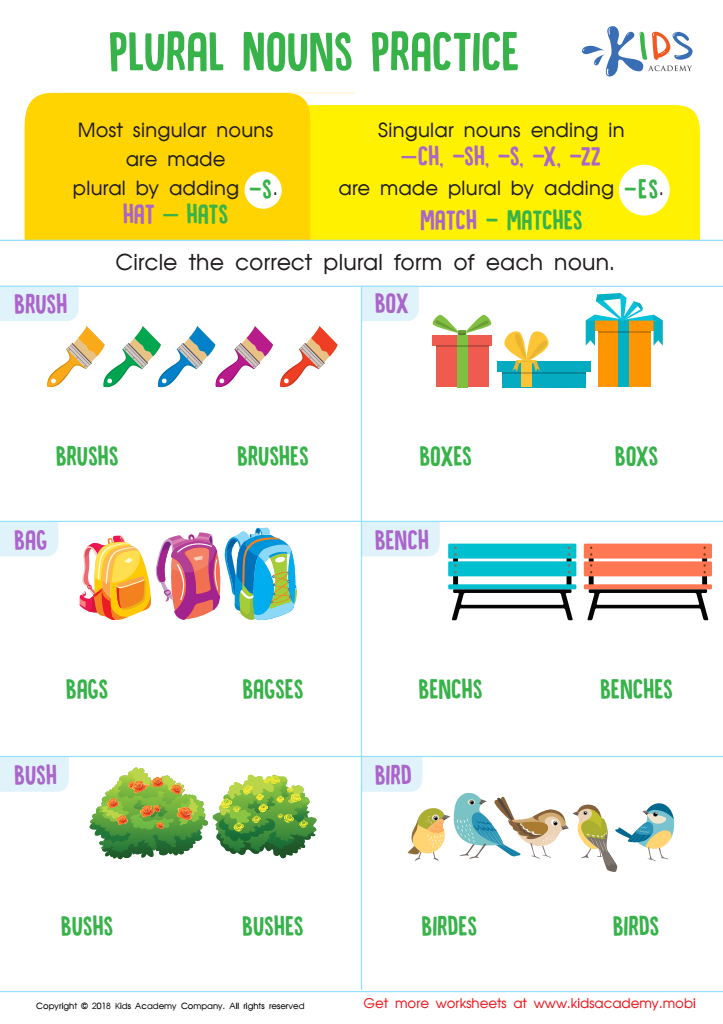
Plural Nouns Practice Worksheet
 Assign to My Students
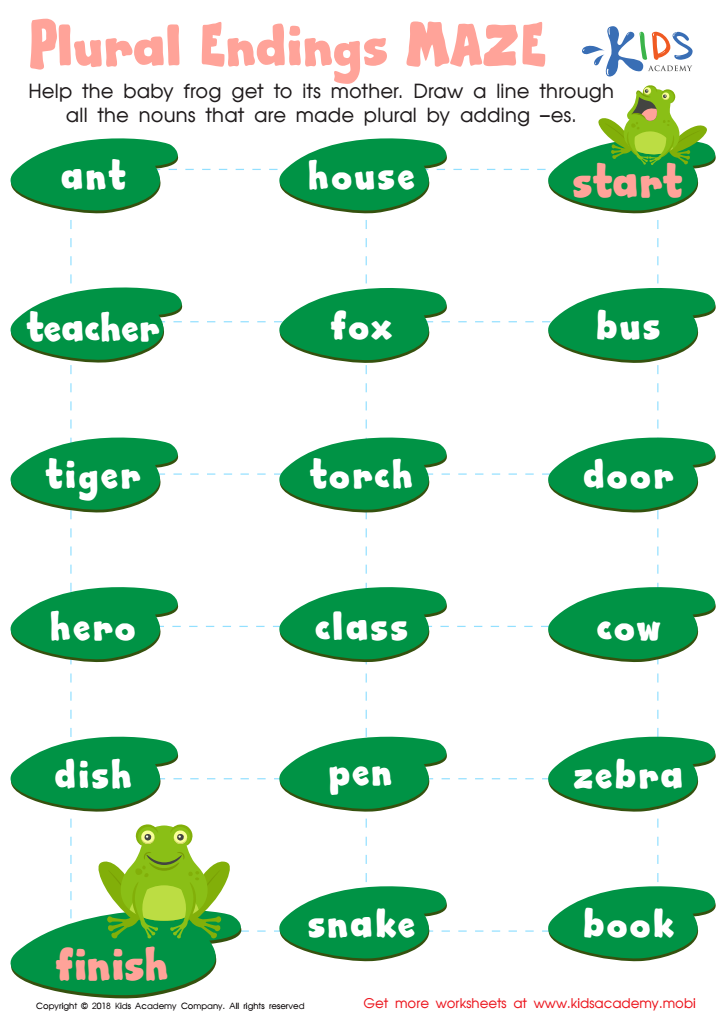
Plural Endings Maze Worksheet
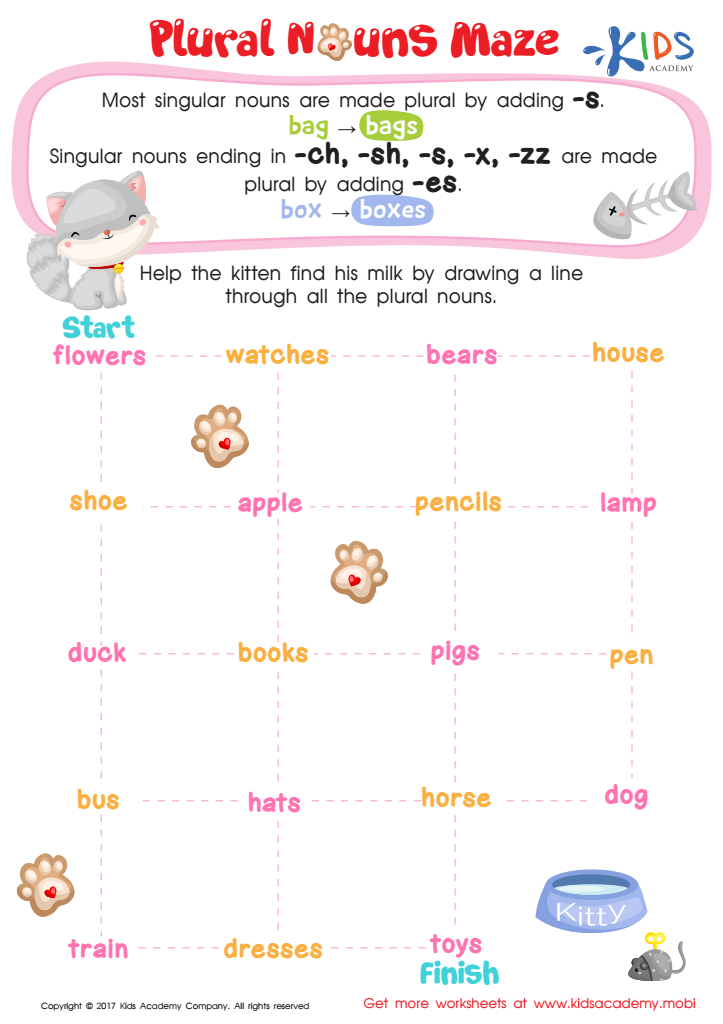
Plural Nouns Maze Worksheet
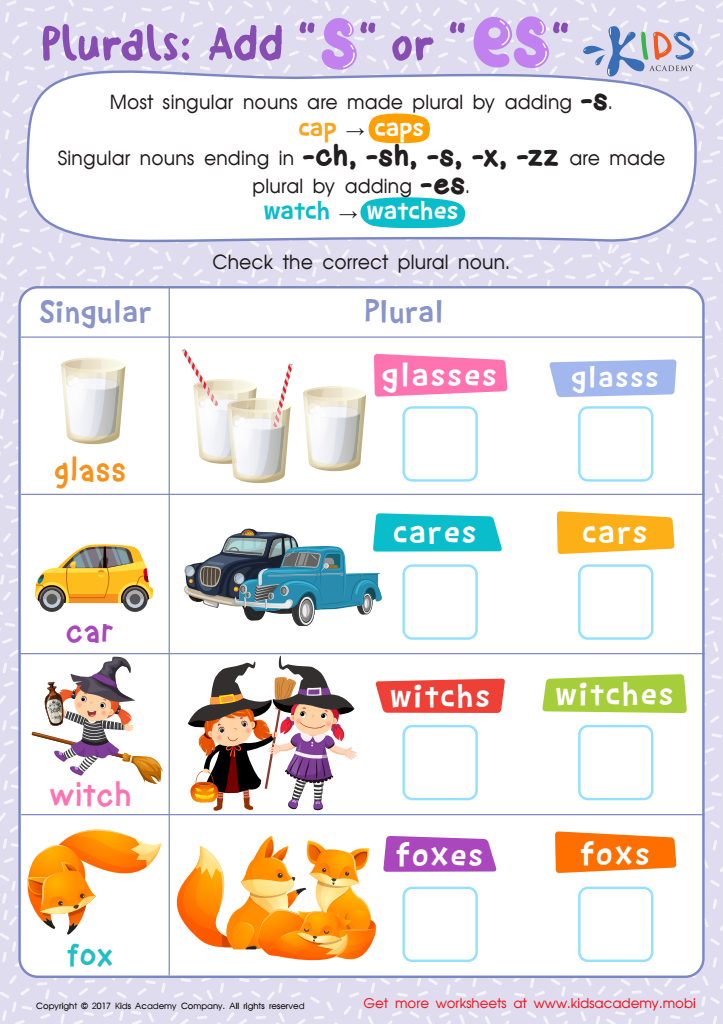
Plurals: "–es" or "–es"? Worksheet
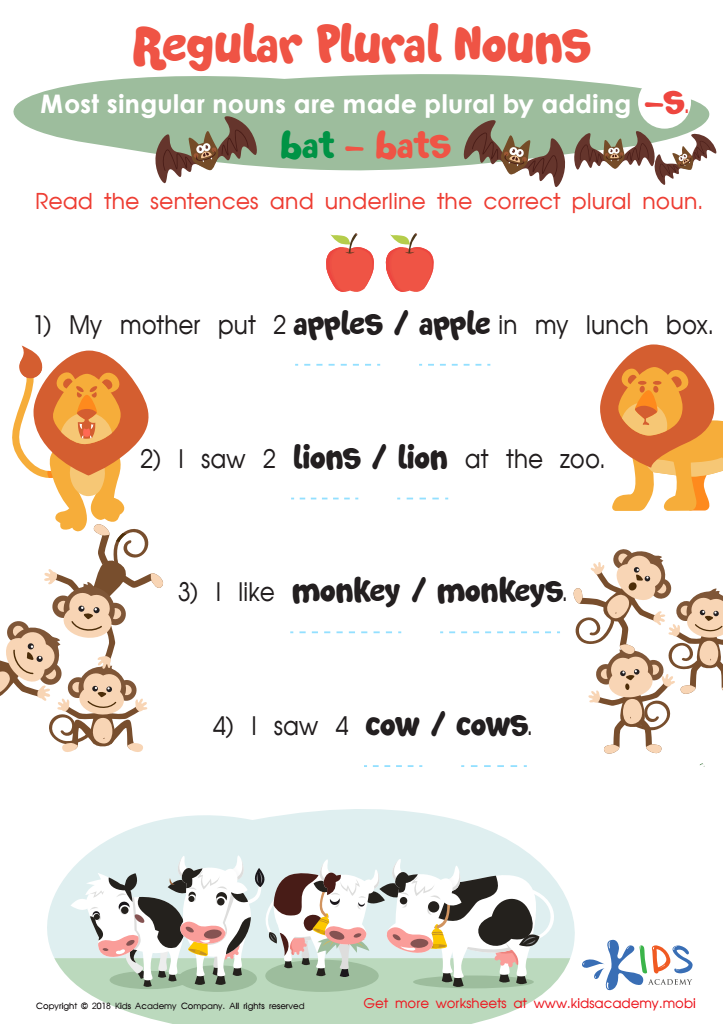
Regular Plural Nouns Worksheet





.jpg)
Understanding plurals is fundamental for children aged 4-7, as it lays a crucial foundation for their literacy and language development. When parents and teachers engage in discussions about plurals, they help children grasp the concept of quantity—distinguishing between one item and many. This is important not just for vocabulary expansion, but also for effective communication.
Moreover, learning plurals supports cognitive skills; children begin to categorize objects, recognizing similarities among them and understanding how language can change based on context. The exploration of plurals often involves playful activities, such as singing songs or playing games, which fosters a positive learning environment and keeps young learners motivated and engaged.
In addition, knowledge of plurals enhances early reading skills. Understanding these grammatical rules leads to better comprehension and fluency when encountering different texts. By caring about plurals, adults can foster critical thinking and observation skills in children, encouraging them to notice details and make connections.
Ultimately, mastering plurals is an essential step in a child's educational journey. By emphasizing this topic, parents and teachers can nurture confident communicators who thrive in both social interactions and academic settings.








