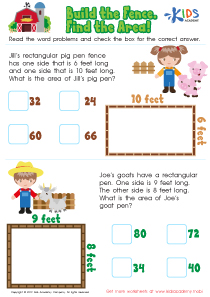
Shape Recognition Extra Challenge Matching Worksheets for Ages 4-7
3 filtered results
-
From - To
Unlock the power of shape recognition with our engaging Shape Recognition Extra Challenge Matching Worksheets tailored for ages 4-7. These meticulously designed printables make learning fun, helping your child identify, match, and differentiate various shapes with ease. Ideal for classrooms or at-home practice, these worksheets not only cultivate fundamental math skills but also enhance cognitive development, fine motor abilities, and problem-solving techniques. Simplified instructions and vibrant visuals keep young learners motivated and excited. Foster a strong mathematical foundation by incorporating our extra challenge worksheets into your child's education routine. Download now and watch their confidence flourish!
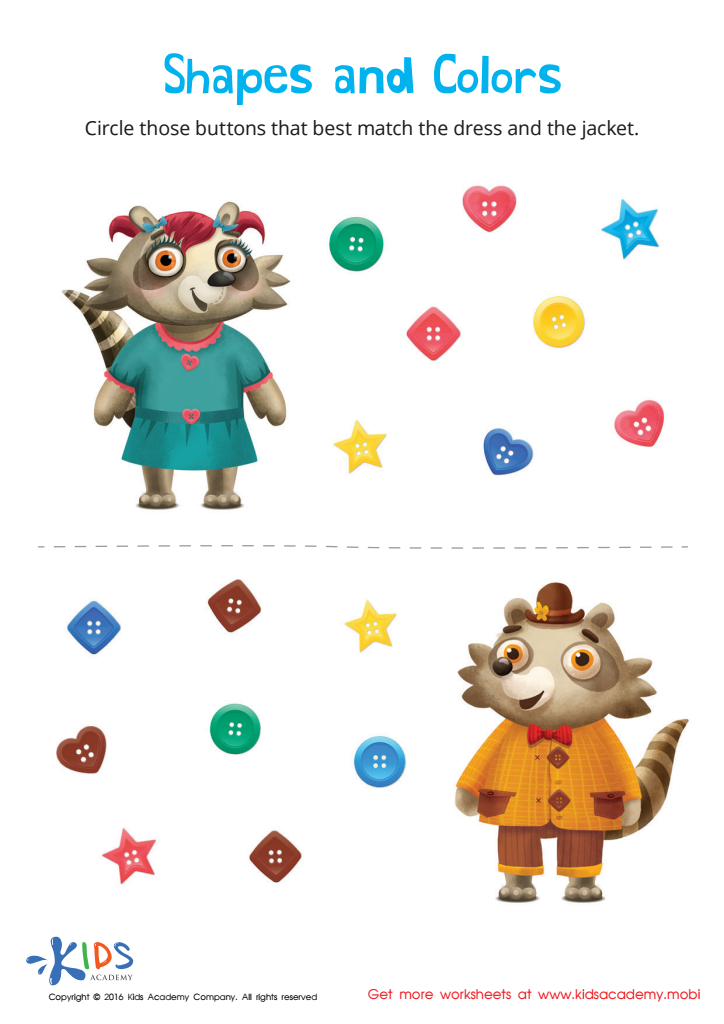
Matching: Shapes and Colors Worksheet
 Assign to My Students
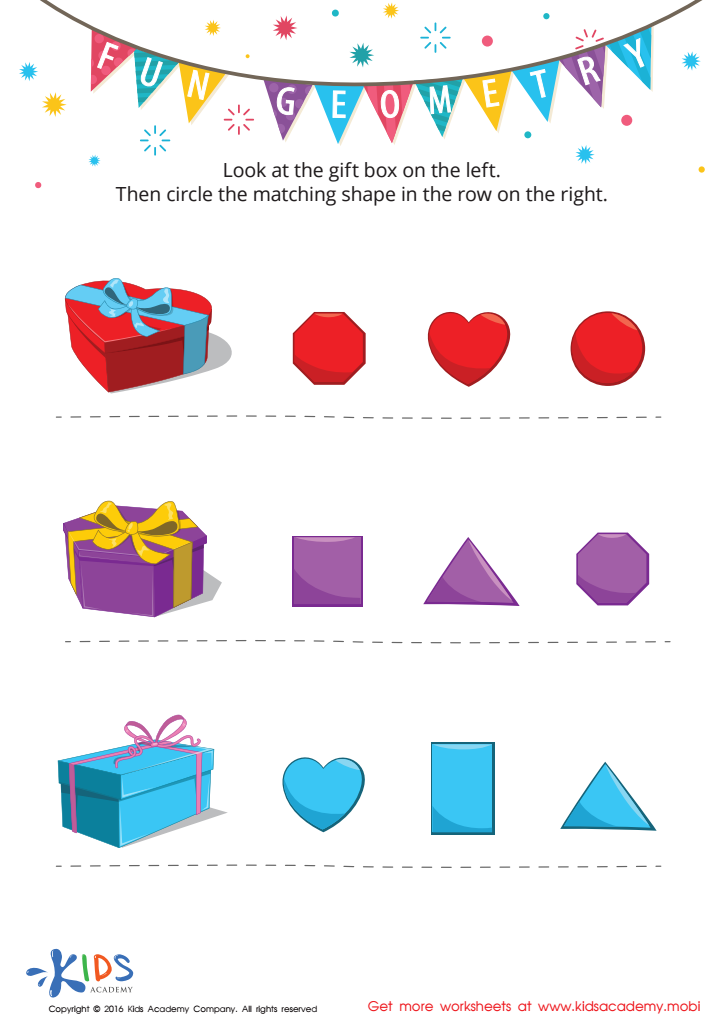
Fun Geometry Worksheet
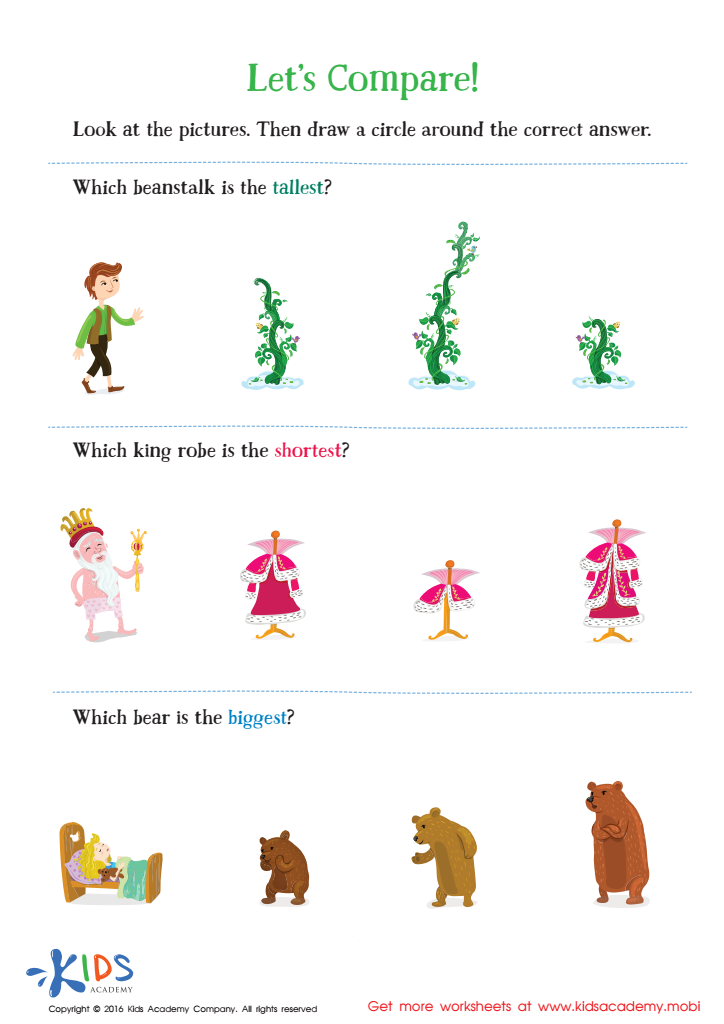
Fairy Tale Worksheet: Let's Compare








Shape recognition is a fundamental early math skill that serves as a building block for more complex mathematical concepts. Incorporating extra shape matching challenges for ages 4-7 helps to solidify these foundational skills in several key ways. First, shape recognition enhances cognitive development by promoting critical thinking and problem-solving abilities. When children recognize and differentiate between shapes, they are engaging in important processes such as identifying patterns and categorizing information, which are essential for future learning in subjects like geometry and algebra.
Moreover, these activities boost fine motor skills and eye-hand coordination as children manipulate and match different shapes, which can also aid in writing and other precision tasks. Engaging in shape recognition exercises helps improve visual-spatial skills, crucial for understanding and interacting with the physical world.
Additionally, shape recognition carries beyond mathematics and into reading and writing. By distinguishing shapes, children learn to identify letters and numbers more efficiently, enhancing their literacy skills.
In early education settings, a focus on shape recognition encourages a structured and enjoyable learning environment, fostering a sense of achievement and bolstering children's confidence. For parents, participating in these activities can be a fulfilling way to bond and actively contribute to their child’s educational development. In essence, early mastery of shape recognition paves the way for academic success and helps in the holistic development of young learners.