Understanding measurements Extra Challenge Measurement Worksheets for Ages 4-7
5 filtered results
-
From - To
Unleash your child's curiosity with our "Understanding Measurements Extra Challenge Measurement Worksheets" designed for ages 4-7! These engaging worksheets help young learners explore the essential concepts of measurement through fun and interactive activities. From comparing lengths to understanding weight, children will enhance their critical thinking and problem-solving skills. Each worksheet is thoughtfully crafted to challenge their understanding while fostering a love for math. Ideal for home or classroom use, our resources provide a solid foundation in measurements, preparing them for future learning. Dive into this exciting journey of discovery and watch your child gain confidence in their mathematical abilities today!
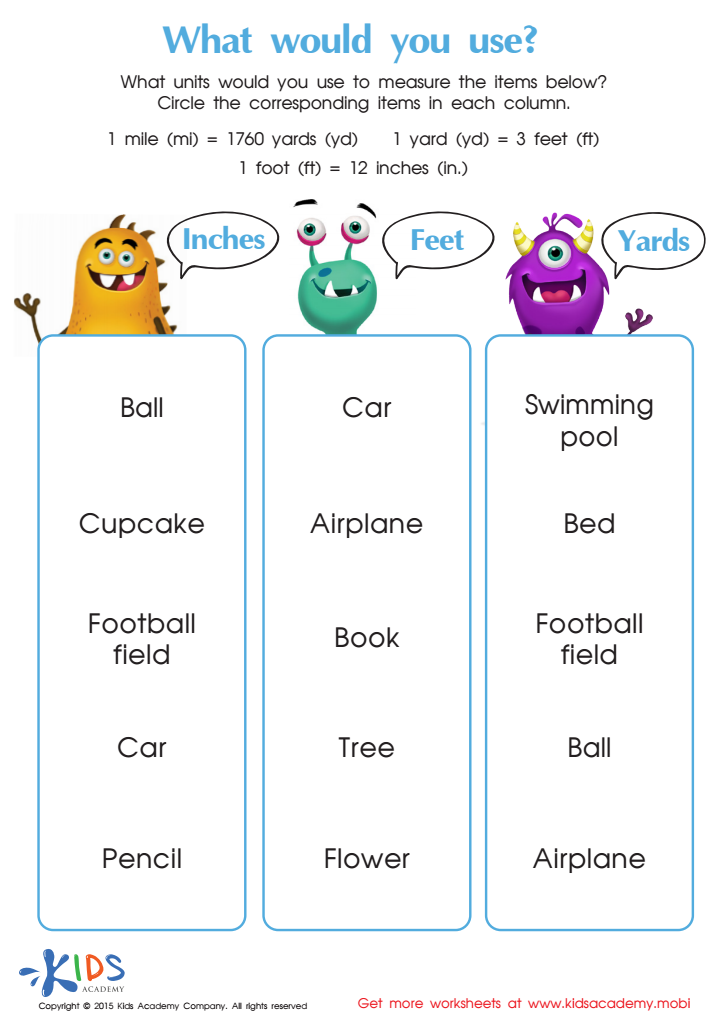
Learning about measuring objects in inches, feet and yards Worksheet
 Assign to My Students
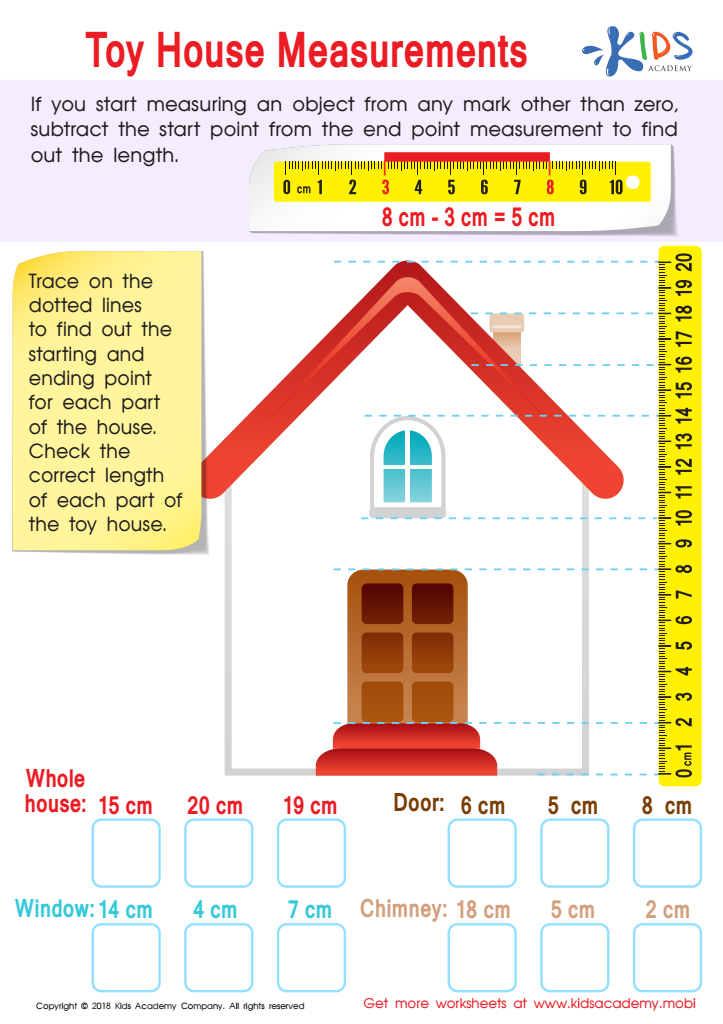
Toy House Measurements Worksheet
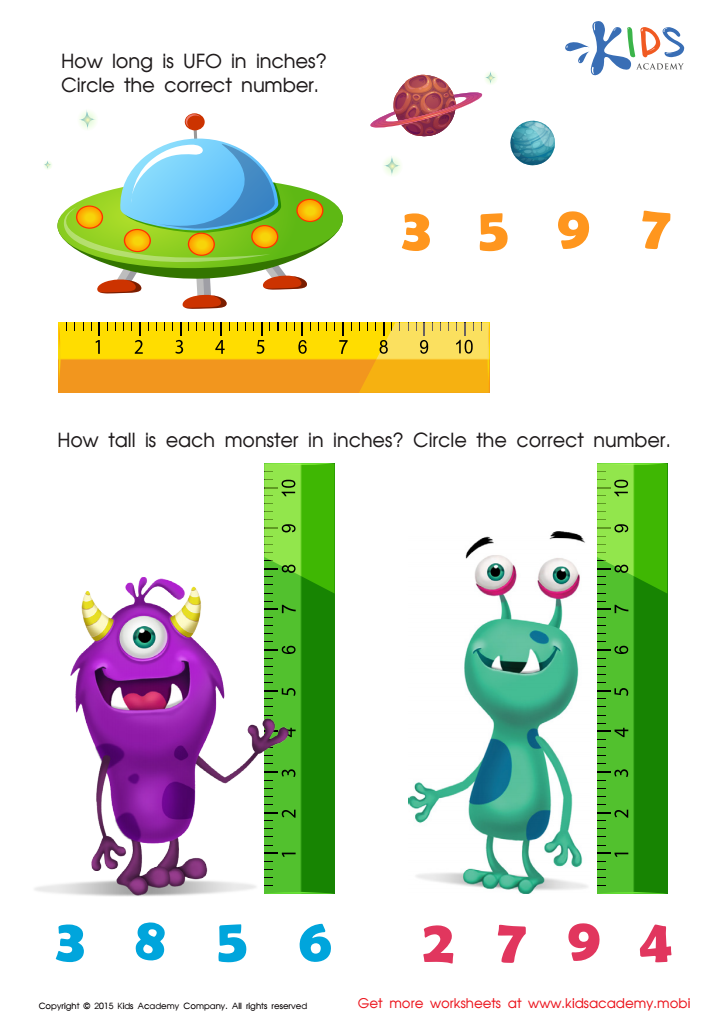
Measuring in Inches Worksheet
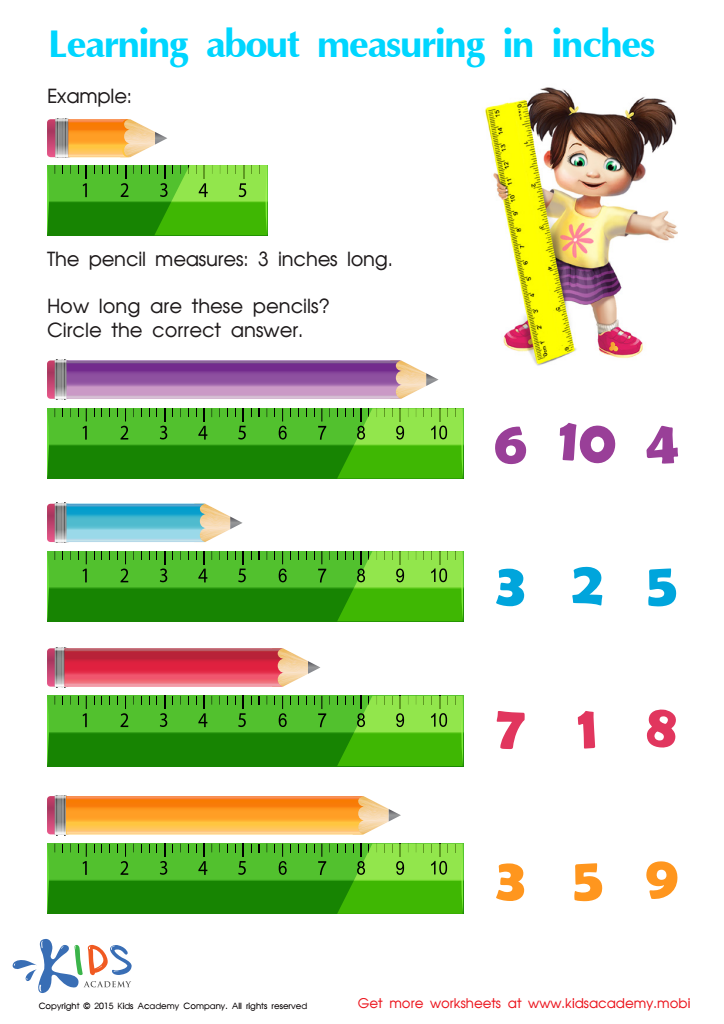
Learning About Measuring In Inches Printable
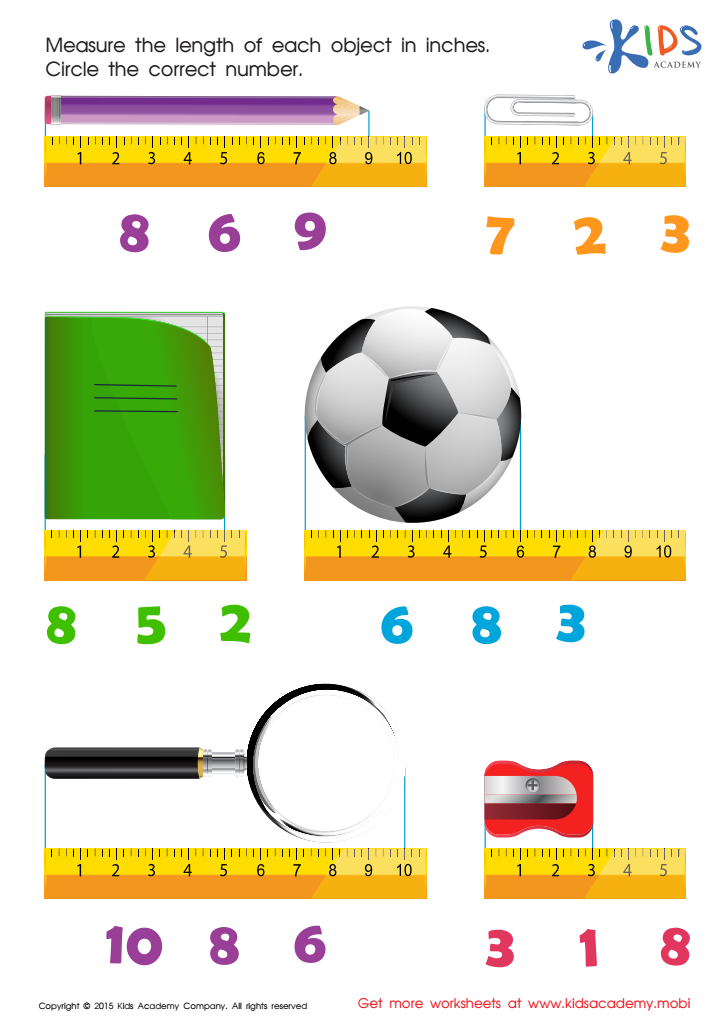
Learning measuring objects in inches Worksheet








Understanding measurements is crucial for children aged 4-7 as it lays the foundation for essential mathematical skills and concepts. For parents and teachers, fostering good measurement understanding directly impacts a child's confidence and ability in math and science. At this age, children are naturally curious and eager to explore their environment, and engaging them in fun measurement activities can make learning exciting.
When children grasp measurement, they develop critical thinking and problem-solving skills. Understanding concepts such as length, weight, and volume helps them compare objects and make informed decisions in their daily lives. Activities like measuring ingredients while cooking or comparing the heights of plants encourage practical application of these skills, enhancing both understanding and retention.
Moreover, incorporating measurement challenges in early education promotes teamwork and collaboration when kids work together to solve problems. It also supports language development as children learn to express their observations and findings. In a world driven by data and technology, early mastery of measurement prepares children for advanced scientific reasoning, boosts academic performance, and equips them with the tools they need to navigate both everyday tasks and complex future concepts. Therefore, parents and teachers should prioritize measurement understanding as a vital part of early childhood learning.