Extra Challenge Numbers 11–20 Worksheets for Ages 4-7
3 filtered results
Difficulty Level
Grade
Age
-
From - To
Subject
Activity
Standards
Dive into the exciting world of numbers with our Extra Challenge Numbers 11–20 Worksheets, designed especially for kids aged 4 to 7. These fun and educational worksheets build on foundational math skills by introducing a variety of engaging activities focused on numbers 11-20. Perfect for young learners ready to advance their counting and number recognition abilities, our worksheets feature colorful illustrations and interactive exercises. They not only make learning enjoyable but also reinforce understanding of number sequencing, addition, and subtraction. Help your child excel in mathematics with these dynamic and age-appropriate challenges that make learning numbers a delightful adventure!
Favorites
With answer key
Interactive
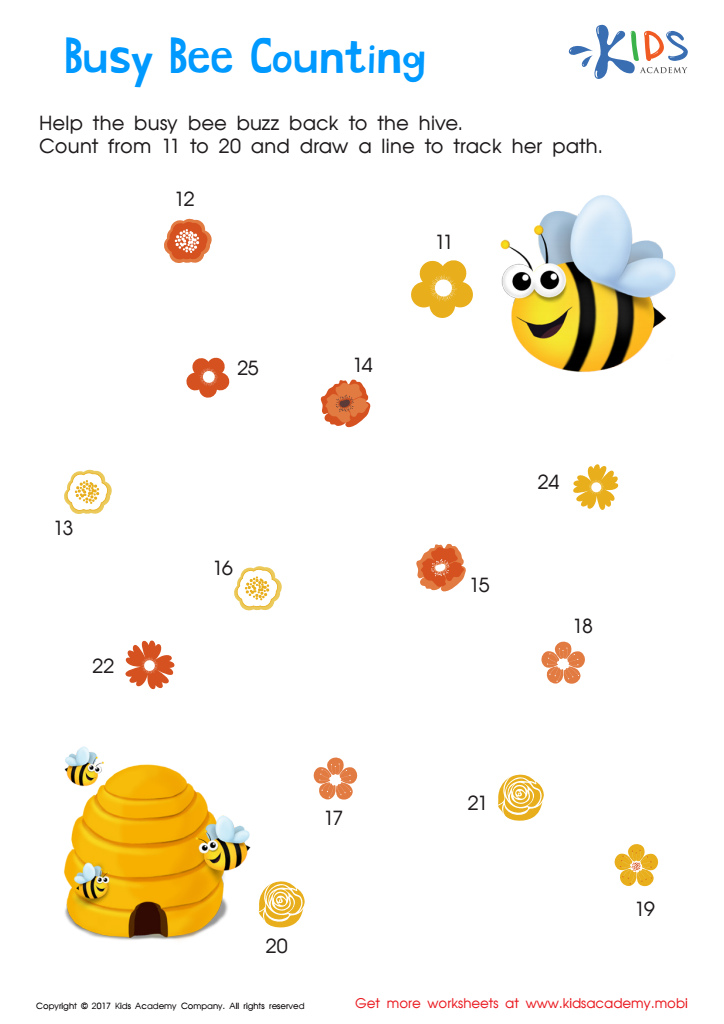
Ordering 11–20: Busy Bee Counting Worksheet
Help your child master counting from 11 to 20 with our connect the dot counting worksheet. Kids will have fun counting, drawing and problem-solving with this vibrant worksheet. With clear directions, adorable pictures and a sense of purpose, your child will develop crucial numeracy skills without even knowing it!
 Assign to My Students
Ordering 11–20: Busy Bee Counting Worksheet
Worksheet
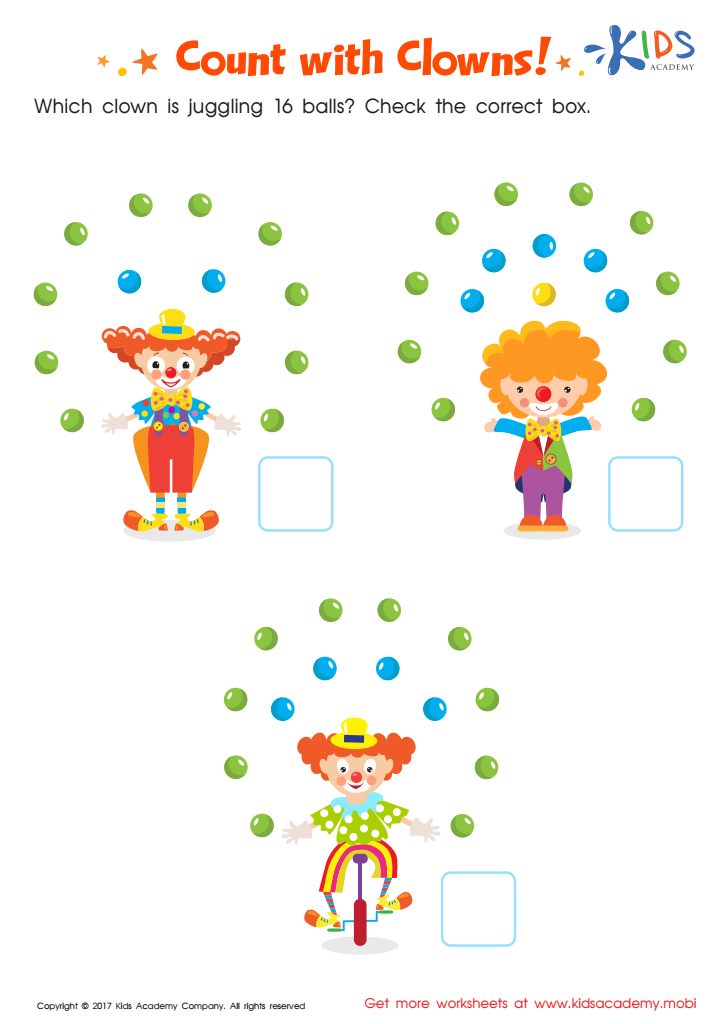
Count with Clowns Worksheet
Math may not be a laughing matter, but this worksheet sure is! Download the PDF and get ready to count balls with the clowns! Your child will have a blast and learn how to count at the same time. It's an easy, fun way to practice math!
Count with Clowns Worksheet
Worksheet
Join Kids Academy for Free
Who is primarily going to use this learning content?



Extra Challenge Numbers 11–20 for ages 4-7 play a crucial role in early mathematical development, laying the groundwork for understanding more complex numerical concepts. During these formative years, children are honing their counting skills and number recognition, which are foundational for their future math proficiency.
Between the ages of 4 and 7, children transition from basic counting to grasping the meanings and relationships between numbers. Introducing them to numbers 11–20 helps bridge the gap between single and double-digit numbers—key for understanding place value, a fundamental mathematical concept. Without mastering this, children may struggle with addition, subtraction, and beyond.
Engaging activities or challenges centered around these numbers also bolster critical thinking and problem-solving skills. They encourage pattern recognition, sequencing, and the ability to conceptualize quantities, providing a robust mental framework for other areas of learning.
Furthermore, accomplishing these challenges fosters a positive attitude toward learning and builds confidence. For parents and teachers, incorporating enriching number activities into daily routines supports holistic development and school readiness.
Involvement in such early math activities ensures that children don’t just memorize numbers but also understand their significance and practical applications, setting them on a path to academic success and lifelong numeracy skills.