Time reading skills Extra Challenge Time Worksheets for Ages 4-7
5 filtered results
-
From - To
Enhance your child's time reading skills with our Extra Challenge Time Worksheets designed specifically for ages 4-7. These engaging worksheets offer fun and interactive ways for young learners to strengthen their understanding of clocks, time-telling, and scheduling. Perfect for home or classroom use, these resources feature colorful illustrations and age-appropriate challenges that make learning enjoyable. Encourage critical thinking and problem-solving as children practice identifying numbers on clocks, determining elapsed time, and solving time-related puzzles. Equip your little ones with essential time-telling skills today and watch their confidence grow! Explore a world of learning with our diverse, interactive worksheets for early education.
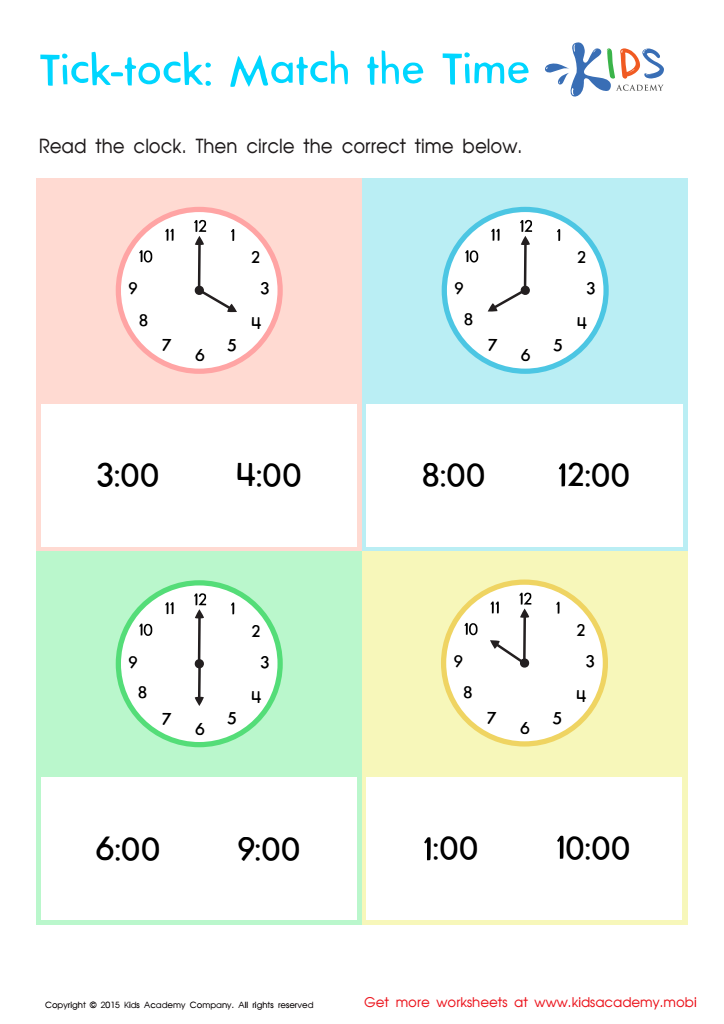
Telling The Time Worksheet: Part 4
 Assign to My Students
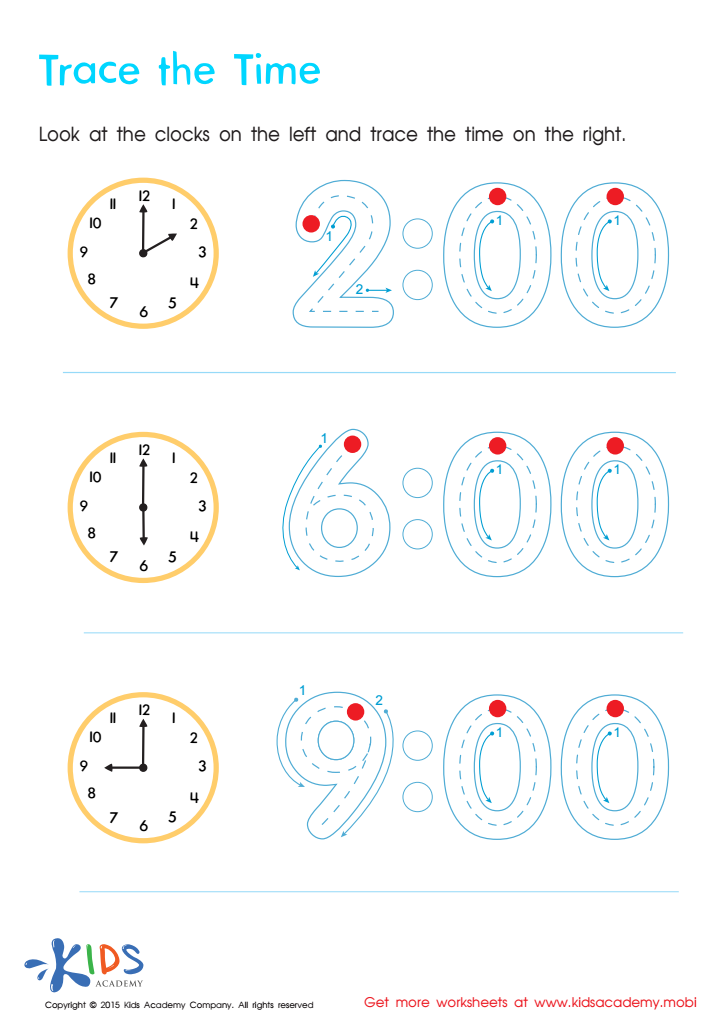
Telling The Time Worksheet: Part 2
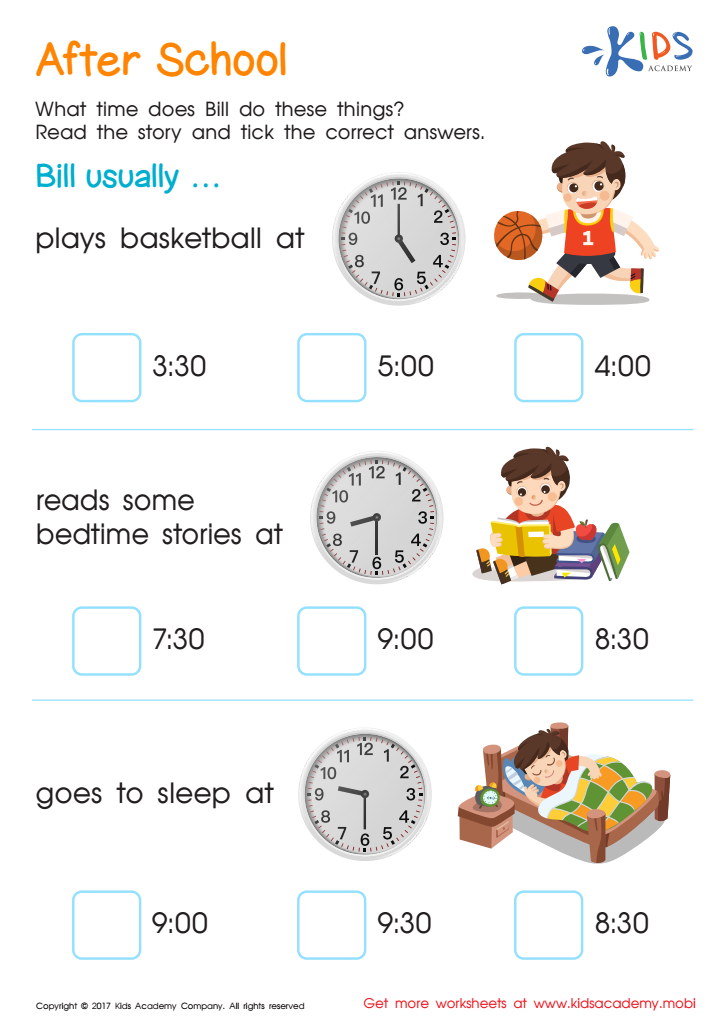
After School Time Printable
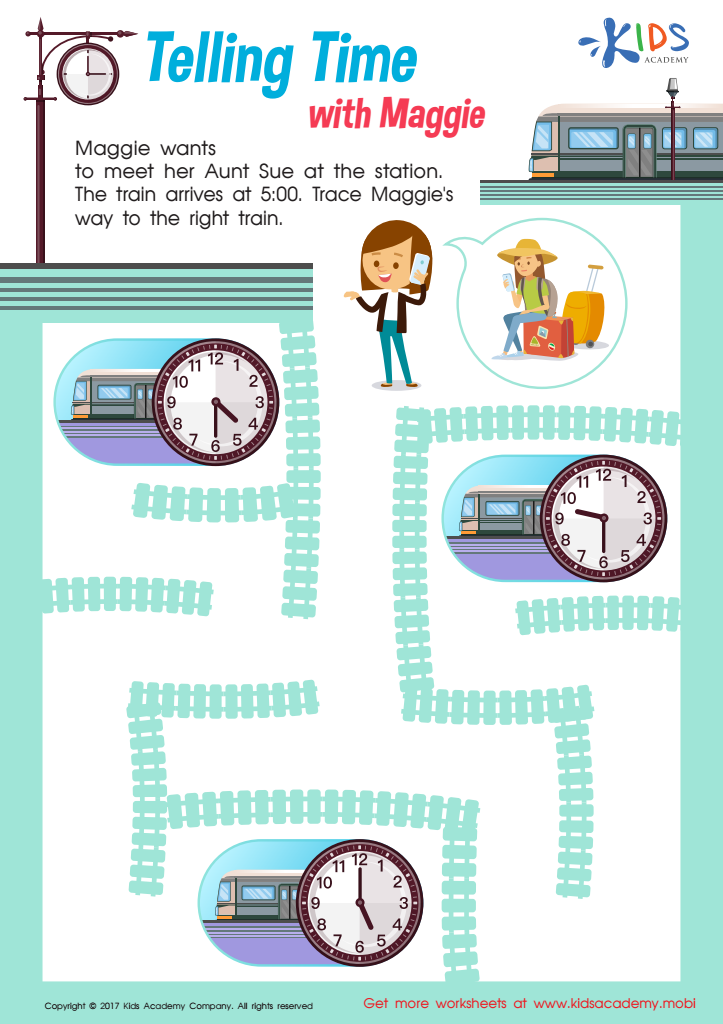
Telling Time With Maggie Time Worksheet
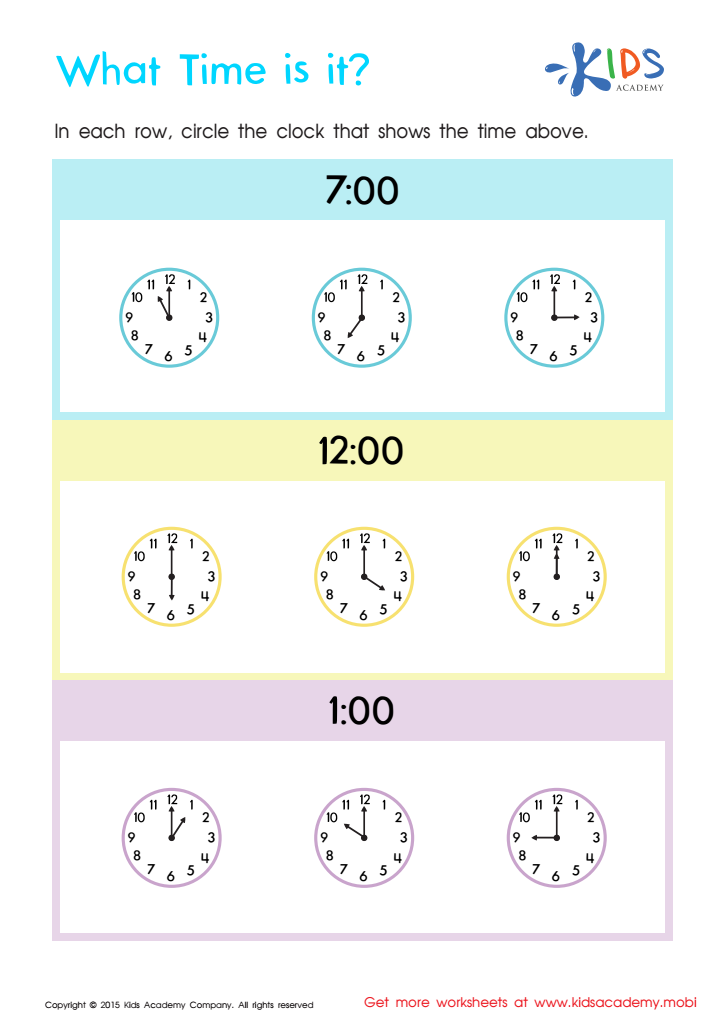
Telling The Time Worksheet: Part 3








Parents and teachers should prioritize reading skills for children aged 4-7 because early literacy lays the foundation for lifelong learning. During this critical developmental stage, kids are naturally curious and eager to learn, making it an ideal time to cultivate a love for reading. Proficient reading skills go beyond simply recognizing words; they enhance comprehension, vocabulary, and critical thinking abilities.
Moreover, children who enjoy reading are more likely to engage with academic content across subjects, ultimately setting the stage for success in school and beyond. Implementing Extra Challenge Time can stimulate literacy development, providing enriched opportunities for those who may need an extra push. Engaging in activities that focus on alphabets, sounds, and story comprehension helps children develop a strong reading foundation, fostering confidence and independence.
Additionally, reading together fosters bonding between parents and children, supporting emotional and social development. Early exposure to diverse literature promotes empathy and understanding of different perspectives. Hence, dedicating time to enhance reading skills in young learners not only encourages academic achievement but also nurtures well-rounded individuals who are prepared for the complexities of life and learning. Prioritizing these skills is an investment in children's futures, leading to broader opportunities and success.