Vocabulary development Extra Challenge Grammar Worksheets for Ages 4-9
3 filtered results
-
From - To
Enhance your child's language skills with our "Vocabulary Development Extra Challenge Grammar Worksheets" designed for ages 4-9! These engaging and interactive worksheets provide a fun and effective way for young learners to expand their vocabulary and improve their grammar. Each worksheet is thoughtfully crafted to challenge students while instilling a love for words and language. From matching exercises to fill-in-the-blank activities, your child will build confidence and proficiency in using new vocabulary in context. Perfect for parents and educators looking to enrich their curriculum, these worksheets will help create a strong foundation for future language success. Start exploring today!
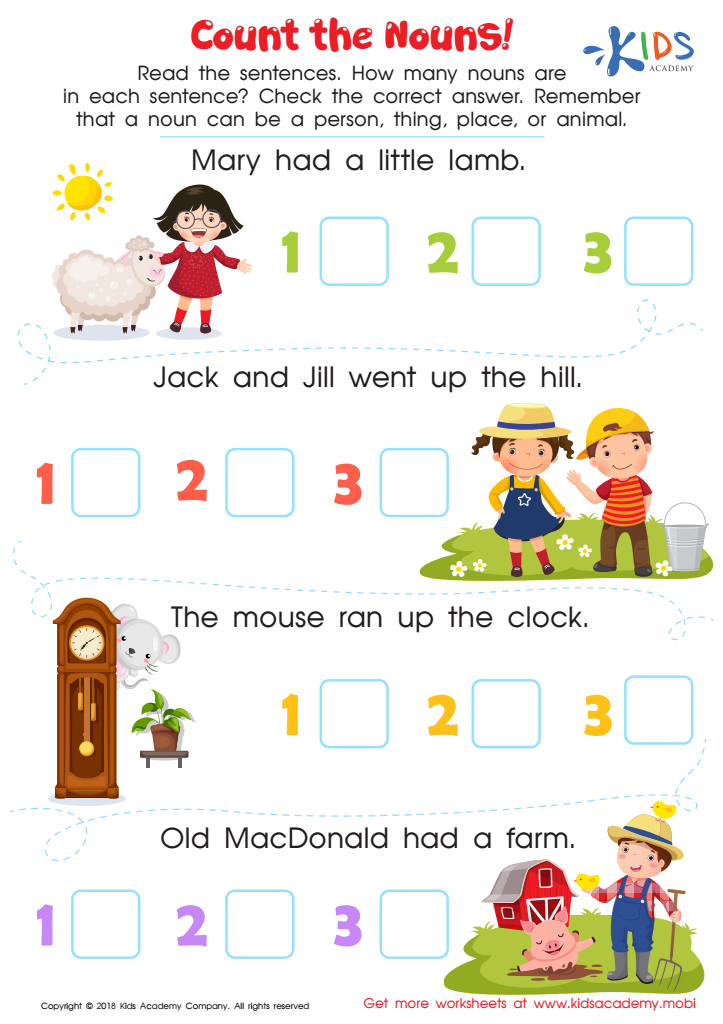
Count the Nouns Worksheet
 Assign to My Students
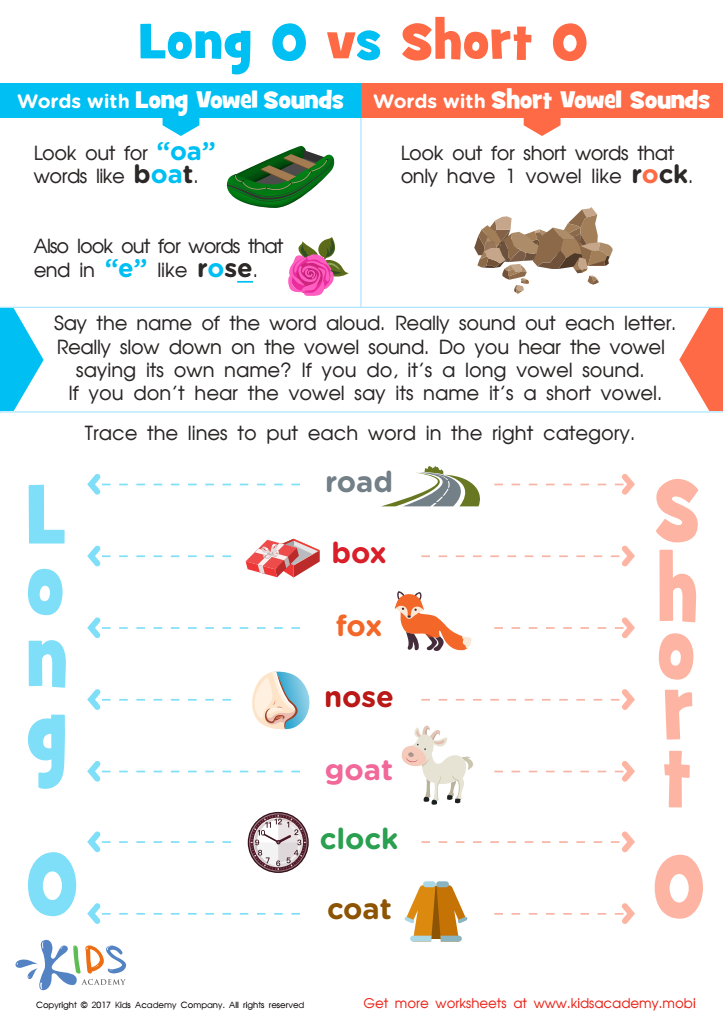
Long and Short Vowel O Spelling Worksheet
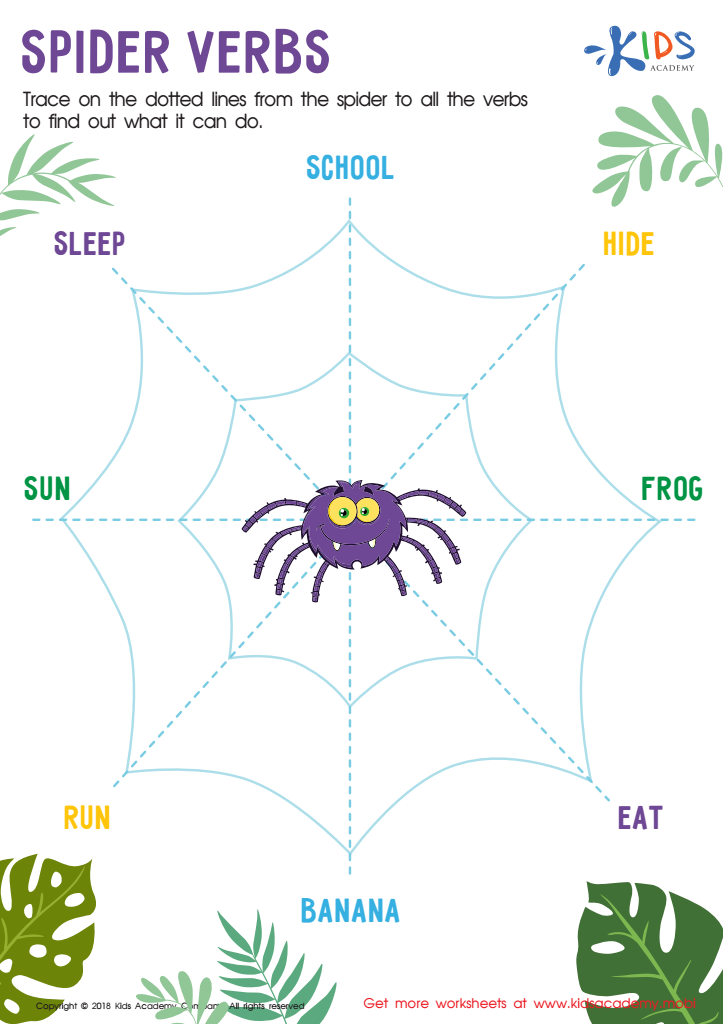
Spider Verbs Worksheet







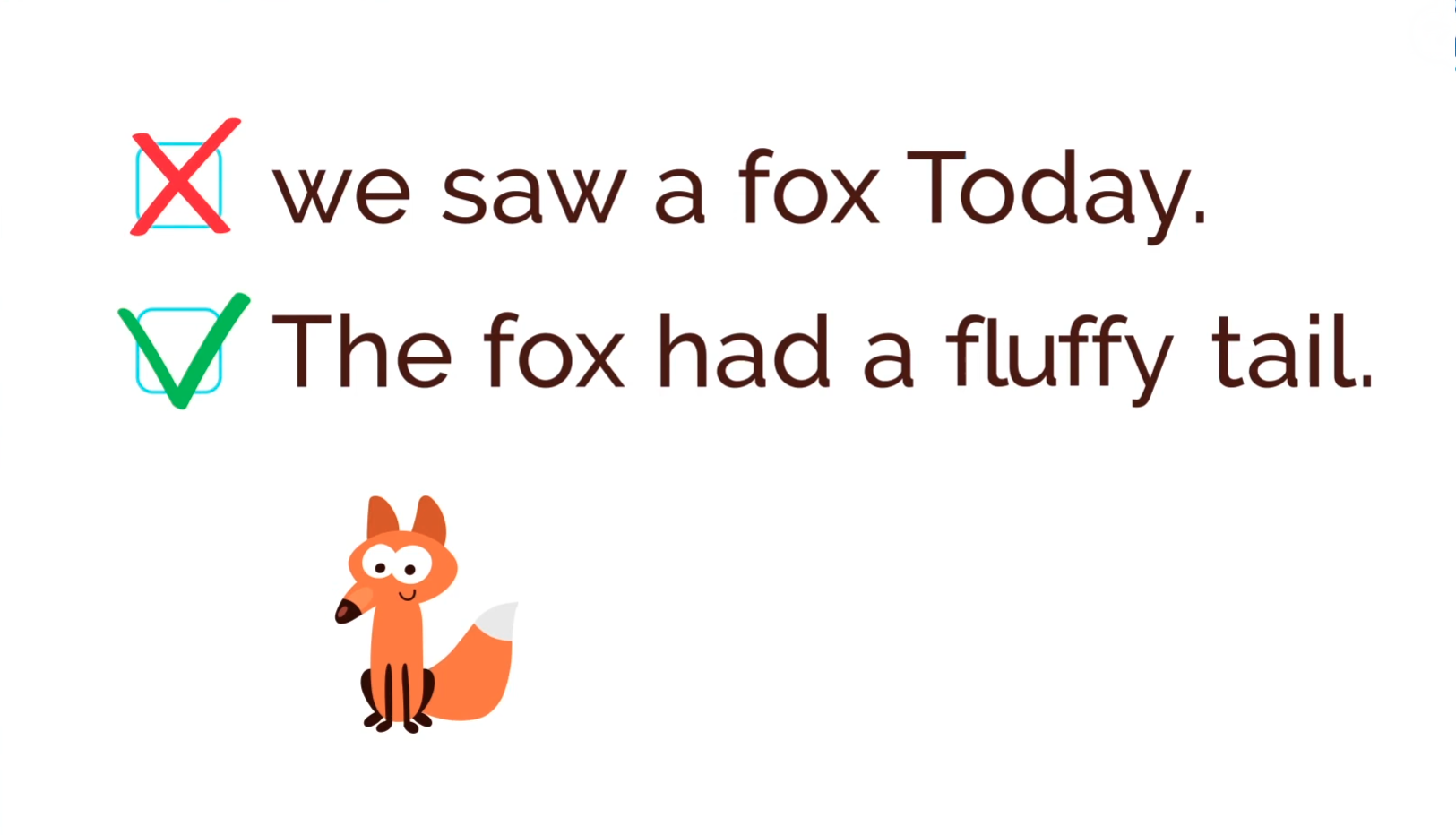
Vocabulary development is crucial for children aged 4-9, as it forms the foundation for effective communication and academic success. During these formative years, children rapidly expand their vocabulary, which impacts their ability to express thoughts, understand concepts, and engage with texts. A strong vocabulary enhances reading comprehension, enabling students to analyze and understand the material more deeply. It also fosters confidence in speaking and writing, allowing children to articulate their ideas clearly.
For parents and teachers, focusing on vocabulary development is essential. Engaging activities such as reading aloud, playing word games, and encouraging conversations about new words can enrich a child’s language skills. Additionally, integrating extra challenges, like grammar exercises, helps them understand the structure of language, improving both written and verbal communication.
Moreover, building a robust vocabulary helps children develop critical thinking skills. With a richer word bank, they can better analyze situations, emotions, and concepts, making them more effective thinkers. In today’s world, strong vocabulary and grammar skills are not just academic assets; they are essential tools for social interaction, problem-solving, and succeeding in an increasingly complex society. Ultimately, nurturing vocabulary development fosters lifelong learning and personal growth, making it a priority for both parents and teachers.