Listening skills Extra Challenge Phonics Worksheets for 4-Year-Olds
3 filtered results
-
From - To
Enhance your child's listening skills with our "Listening Skills Extra Challenge Phonics Worksheets" designed specifically for 4-year-olds! These engaging worksheets provide fun and interactive activities that help young learners develop their phonics understanding and auditory processing. Each worksheet is filled with vibrant illustrations and stimulating exercises that make learning enjoyable while reinforcing essential phonetic sounds. Perfect for preschoolers, our worksheets promote listening comprehension through play-based learning techniques. Encourage your child's language development and boost their confidence with our carefully crafted challenges that invite exploration and creativity. Elevate your little one’s learning experience today with our fantastic listening skills resources!
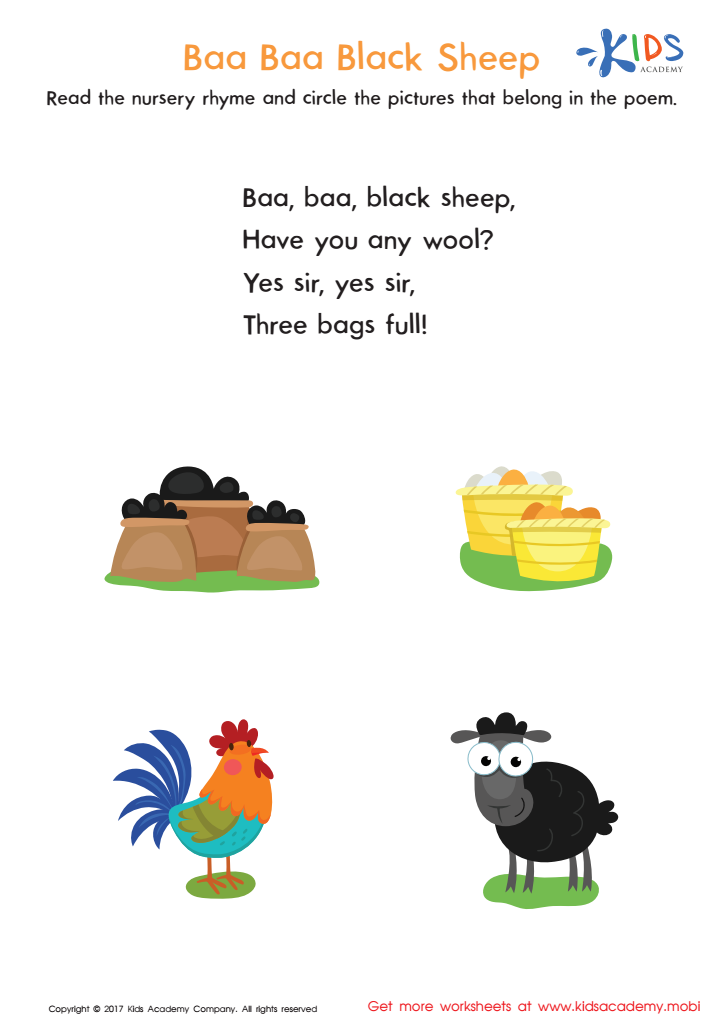
Baa Baa Black Sheep Printable
 Assign to My Students
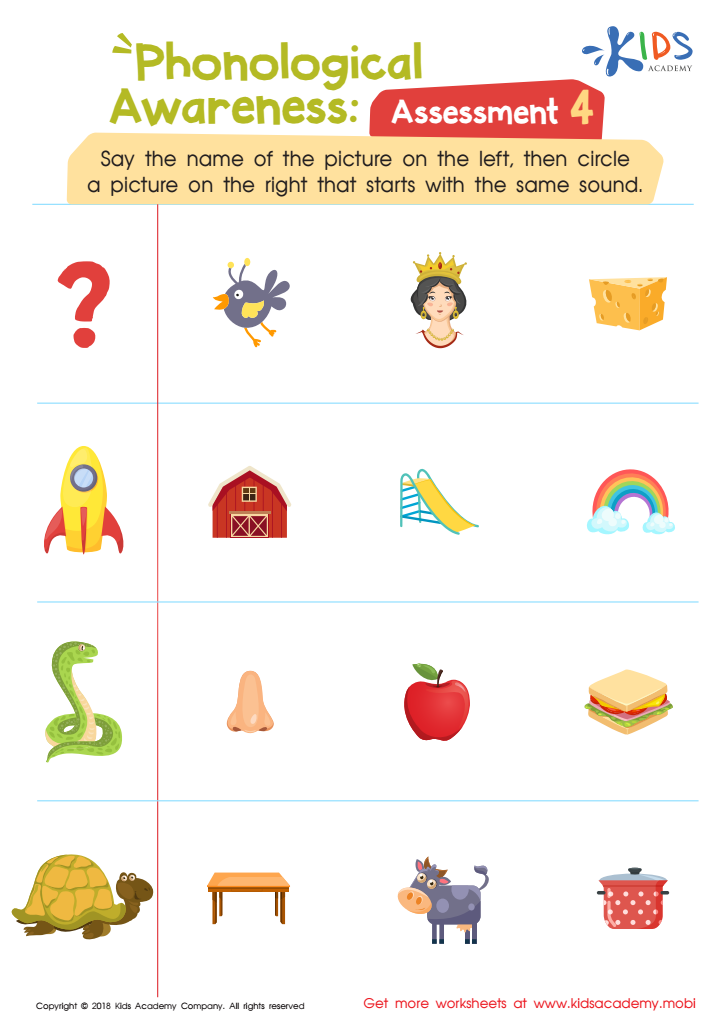
Phonological Awareness: Assessment 4 Worksheet
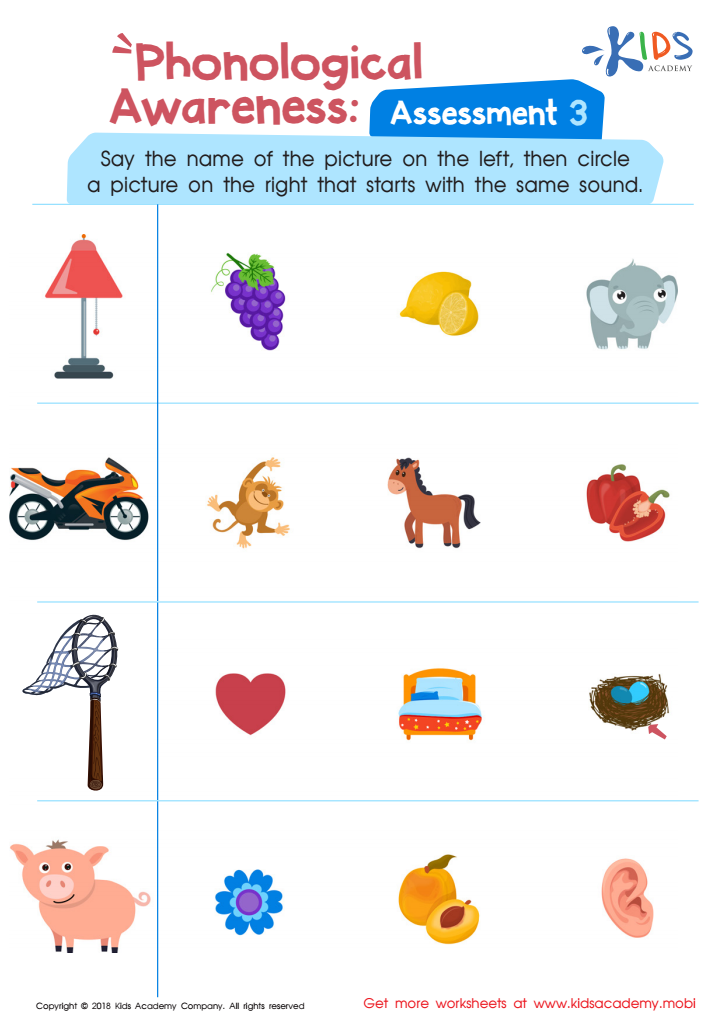
Phonological Awareness: Assessment 3 Worksheet








Listening skills are fundamental for early childhood education, particularly for phonics development in four-year-olds. Parents and teachers should prioritize these skills because they lay the groundwork for successful literacy acquisition. When children improve their listening abilities, they become better equipped to decode sounds, which is crucial for reading. Phonics introduces children to the sounds associated with letters and combinations of letters, and effective listening allows them to distinguish these sounds accurately.
Moreover, strong listening skills facilitate comprehension and foster a love of learning. Children who can listen attentively are more likely to grasp instructions, participate in discussions, and engage in storytelling activities—all essential components of early learning. The Extra Challenge Phonics approach emphasizes targeted exercises that develop auditory discrimination, enabling youngsters to recognize rhymes, syllables, and phonemes through songs, games, and activities.
Additionally, boosting listening skills enhances social interactions and emotional understanding. As children practice listening, they learn empathy, cooperation, and communication, making them more effective classmates and friends through shared language experiences. Investing time in developing these skills through phonics ultimately contributes to a child’s academic success and overall development, making it a priority for parents and educators alike.