Alphabet Recognition Extra Challenge Tracing Letters Worksheets for 4-Year-Olds
3 filtered results
-
From - To
Enhance your child's alphabet recognition with our "Alphabet Recognition Extra Challenge Tracing Letters Worksheets for 4-Year-Olds". These skillfully designed worksheets from Kids Academy offer a fun and interactive way for preschoolers to master the alphabet. By tracing each letter, children improve fine motor skills, letter identification, and early handwriting abilities. Perfect for young learners ready to tackle an extra challenge, these worksheets provide an engaging and educational activity that cultivates a love for learning. Visit Kids Academy to give your child the head start they deserve with our expertly crafted tracing letters worksheets.

Letter A Tracing Page
 Assign to My Students
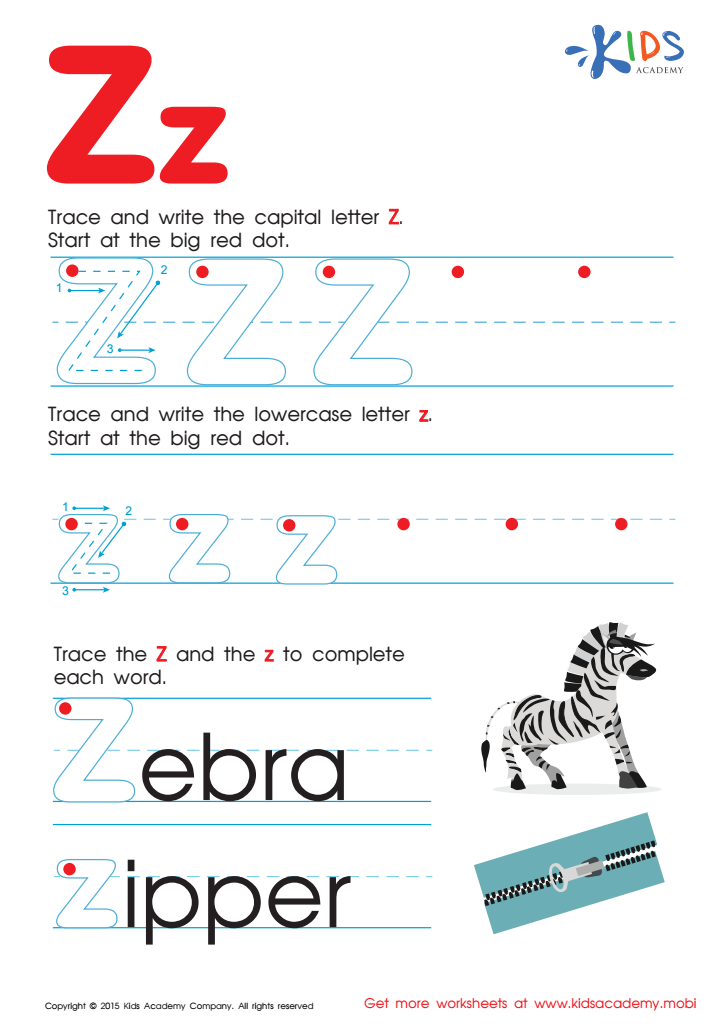
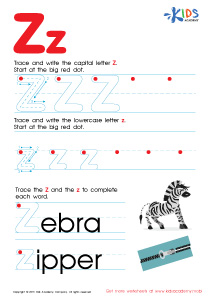
Letter Z Tracing Page
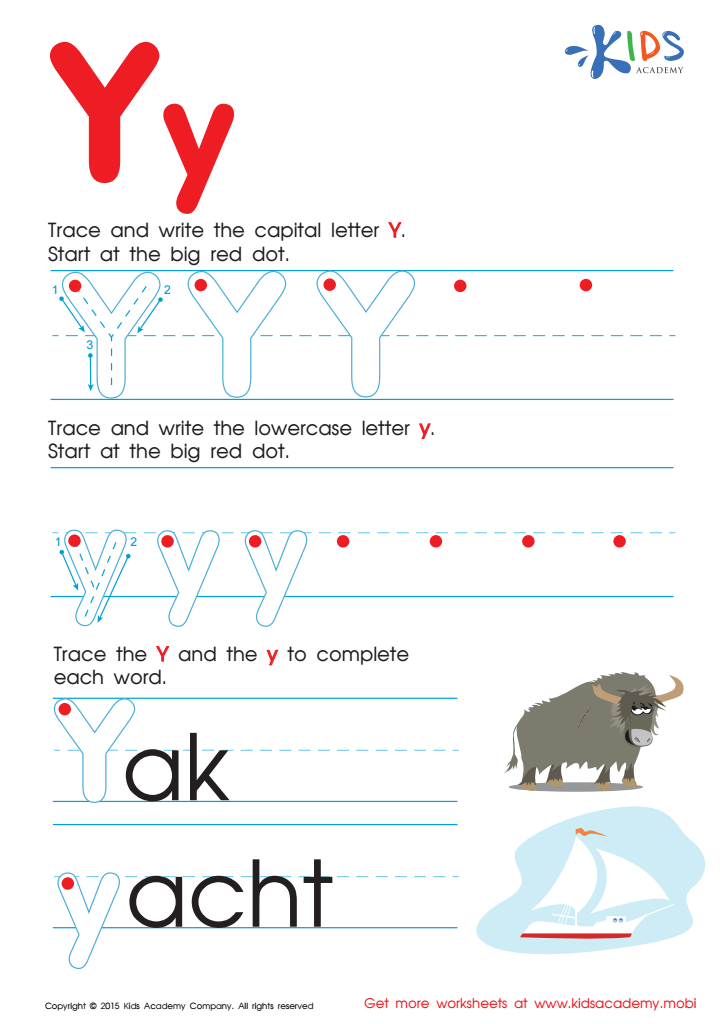
Letter Y Tracing Page







Alphabet Recognition Extra Challenge Tracing Letters for 4-year-olds is vital for early childhood development and foundational literacy skills. At this age, children are rapidly developing cognitive and motor abilities. Engaging in alphabet tracing aids fine motor control essential for writing. It involves holding a pencil correctly and controlling hand movements, which enhances coordination and dexterity.
Moreover, recognizing and tracing letters reinforces memory and boosts cognitive recognition patterns critical for future reading skills. As children consistently trace and see the letters, they create mental associations between the shapes and sounds of each letter. This, in turn, facilitates easier word formation and recognition in the later stages of reading.
The activity also introduces a structured learning experience in a fun and interactive manner. Positive and engaging educational experiences create an early love for learning, establishing a foundation for academic readiness. For parents and teachers, guiding children through these tasks allows them to identify any early learning difficulties. They can provide the necessary support early on, ensuring no learning gaps.
Finally, such activities encourage persistent effort and patience in young learners, vital traits beneficial for their broader educational journey. Therefore, investing time in Alphabet Recognition Extra Challenge Tracing not only enhances early literacy skills but also nurtures critical personal development traits in 4-year-olds.