Alphabet Recognition Extra Challenge English for Beginners Worksheets for 4-Year-Olds
3 filtered results
-
From - To
Unlock your child's potential with our engaging "Alphabet Recognition Extra Challenge” worksheets, designed specifically for 4-year-olds learning English as a second language. These worksheets promote essential alphabet skills through fun activities tailored for young learners. With vibrant illustrations and interactive exercises, your child will enjoy identifying letters, tracing, and matching activities that reinforce recognition and memory. Perfect for beginners, these worksheets provide a valuable extra challenge to stimulate learning and build confidence. Foster a love for language through enjoyable practice, helping your child create a solid foundation in English literacy. Explore our range of engaging resources for effective learning today!
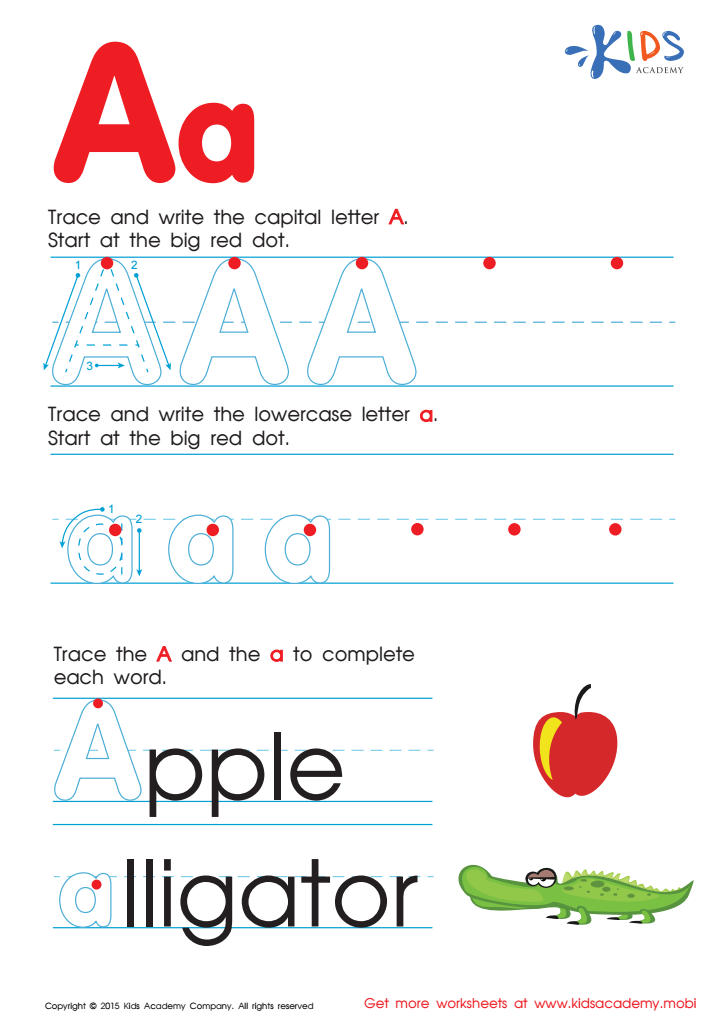
Letter A Tracing Page
 Assign to My Students
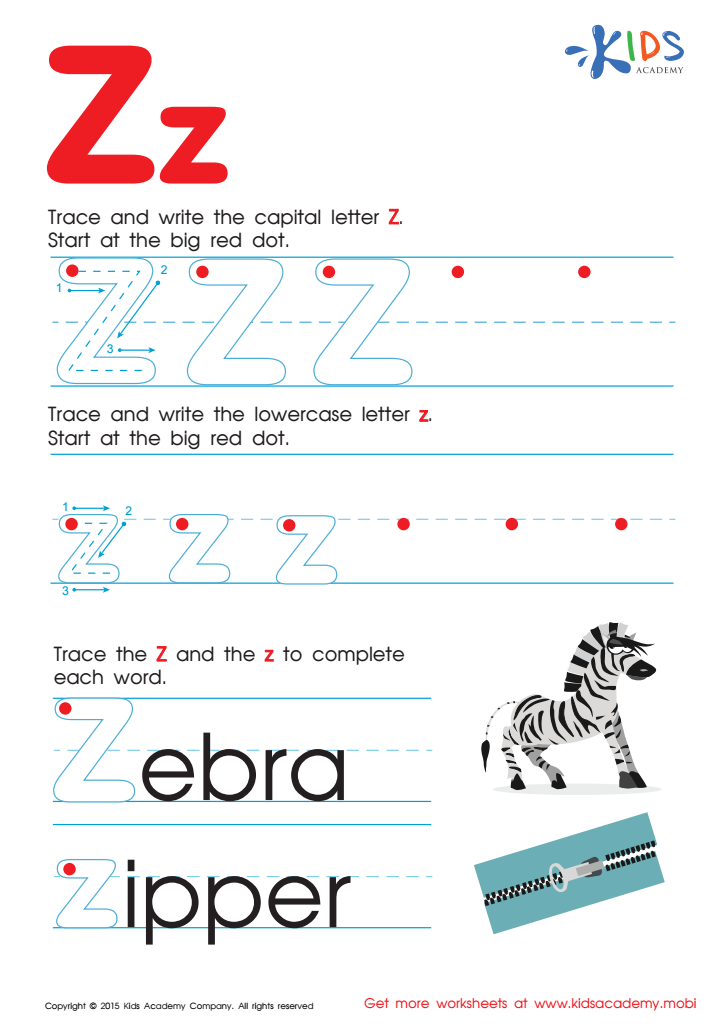
Letter Z Tracing Page
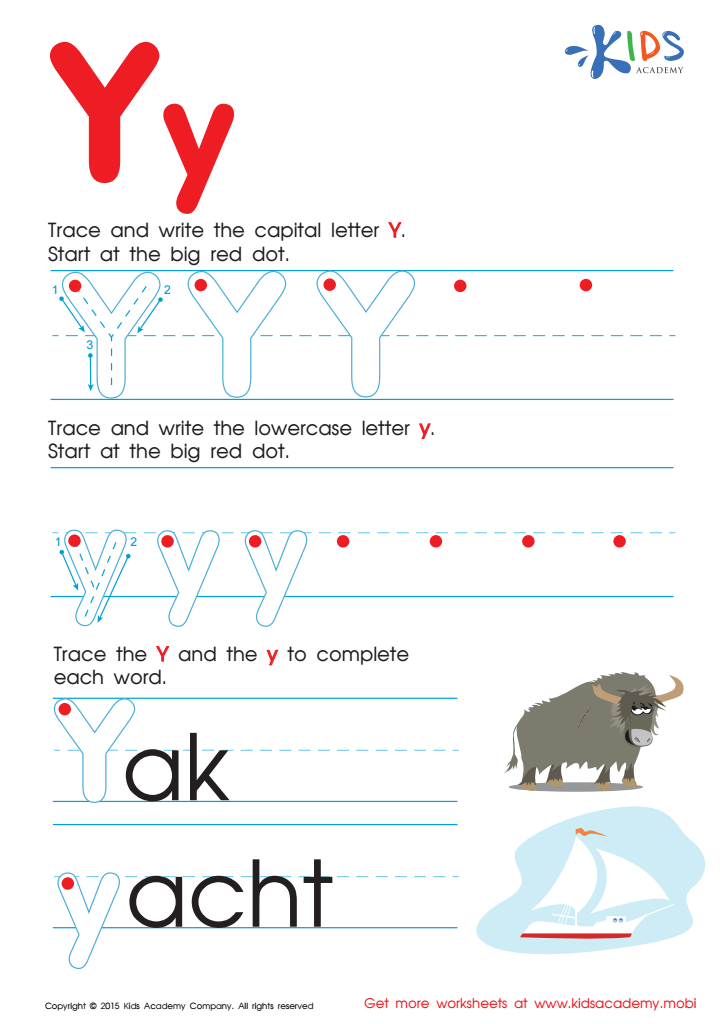
Letter Y Tracing Page





Alphabet recognition is a foundational skill that sets the stage for early literacy development, making "Alphabet Recognition Extra Challenge English for Beginners" important for 4-year-olds. Parents and teachers should care about this resource for several compelling reasons.
Firstly, recognizing letters helps children connect sounds with symbols, paving the way for reading and writing. Mastery of the alphabet fosters phonemic awareness, crucial for decoding words and enhancing vocabulary.
Secondly, this program is designed to engage young learners through interactive and fun activities that cater to their developmental stage. By presenting challenges that are appropriate yet stimulating, it promotes critical thinking and boosts confidence as children achieve milestones.
Furthermore, early exposure to diverse learning strategies, as offered in this resource, supports varied learning styles. Children may develop a lifelong love of reading, spurring further academic success.
Lastly, parents and teachers working together on alphabet recognition not only strengthens the child's learning experience but also fosters a nurturing environment that emphasizes the importance of literacy from a young age. Investing in early literacy skills today will yield significant benefits in a child's academic journey, cultivating a strong reader for the future.








