Basic counting skills Extra Challenge Worksheets for 4-Year-Olds
3 filtered results
-
From - To
Discover our "Basic Counting Skills Extra Challenge Worksheets" designed specifically for 4-year-olds! These fun and engaging worksheets reinforce essential counting skills while providing an extra layer of challenge to stimulate young minds. Each activity encourages number recognition, one-to-one correspondence, and counting sequences, ensuring kids develop a solid foundation in math. Colorful illustrations and interactive exercises keep little learners motivated and excited. Perfect for parents and educators alike, our worksheets can be easily printed and used at home or in the classroom. Help your child boost their confidence and counting proficiency with our thoughtfully crafted materials that make learning fun!
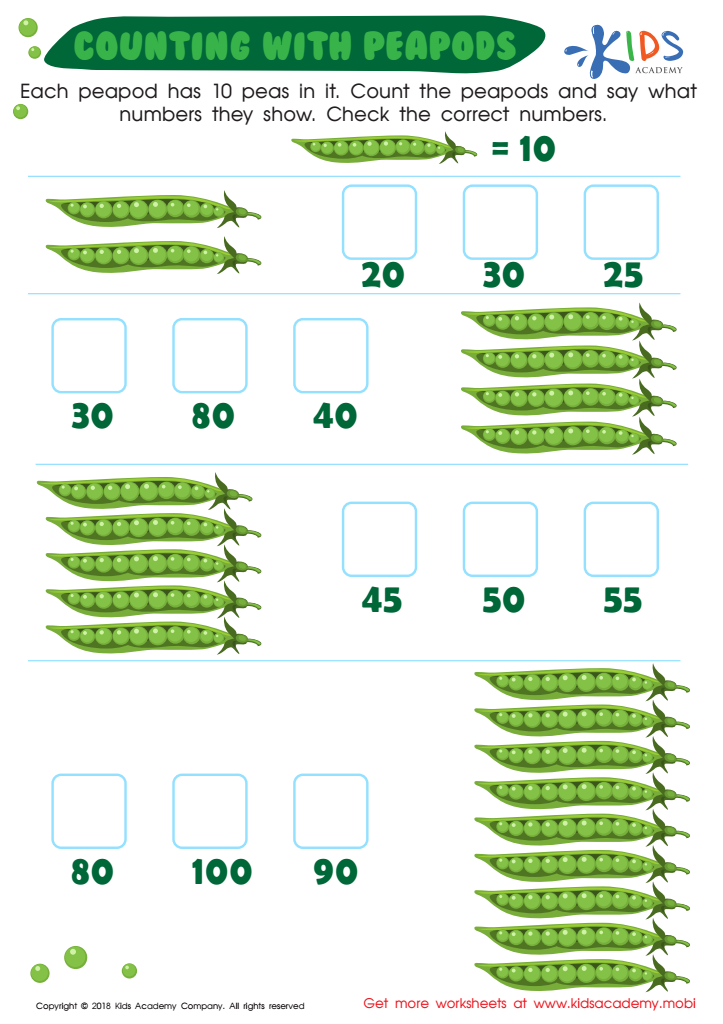
Number Worksheet: Counting With Peapods
 Assign to My Students
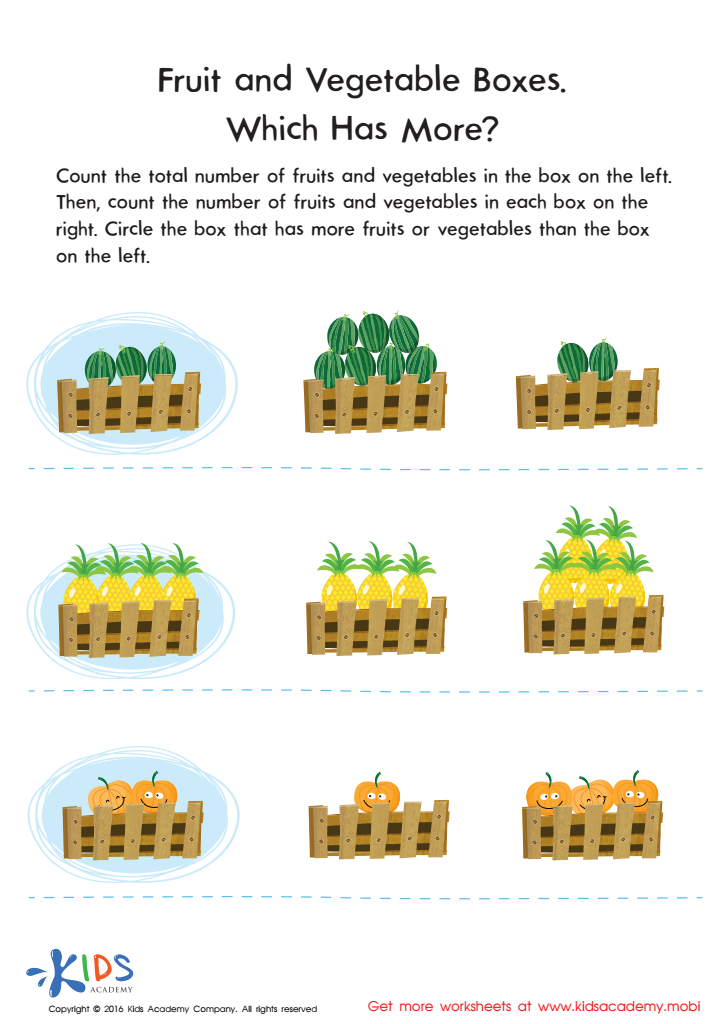
Which Has More? Size Worksheet
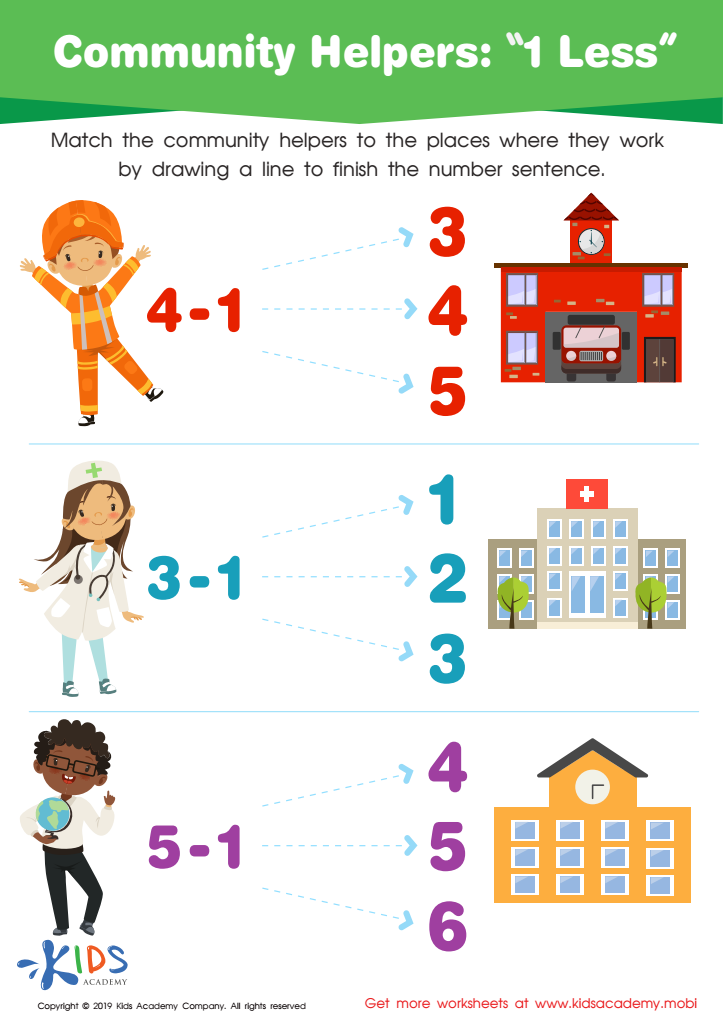
Community Helpers: 1 less Worksheet







Parents and teachers should prioritize basic counting skills for 4-year-olds as these foundational abilities are critical for long-term academic success and cognitive development. Early exposure to counting facilitates not only mathematical understanding but also enhances logical thinking and problem-solving skills. As children learn to count, they develop a sense of sequence, allowing them to make connections between numbers and everyday experiences, such as sharing snacks or measuring ingredients during cooking activities.
Additionally, enhancing counting skills builds confidence in young learners. Mastery of counting can also lead to improved literacy, as children encounter number names in stories and games, intertwining math with language skills. Early numeracy is closely related to overall academic achievement; children who are proficient in counting are often better prepared for formal education.
Moreover, counting activities stimulate fine motor skills through hands-on experiences, such as using counting toys or manipulatives. For parents and teachers, fostering counting proficiency not only supports academic readiness but also promotes critical thinking and perseverance in young children. Engaging 4-year-olds in fun, interactive counting exercises creates a positive environment for learning, setting the stage for a lifelong love of math and learning as a whole.








