Math problem-solving Extra Challenge Worksheets for 4-Year-Olds
3 filtered results
-
From - To
Unlock your child's potential with our "Math Problem-Solving Extra Challenge Worksheets for 4-Year-Olds" crafted by Kids Academy with a fun and engaging learning approach. These worksheets focus on enhancing early math skills through challenging activities tailored for preschoolers. Each worksheet is designed to encourage critical thinking, boost problem-solving abilities, and foster a love for math from an early age. Your little learner will enjoy a variety of exercises aimed at improving counting, pattern recognition, and simple addition while building essential cognitive skills. Prepare your child for a bright academic future with our stimulating math challenges!
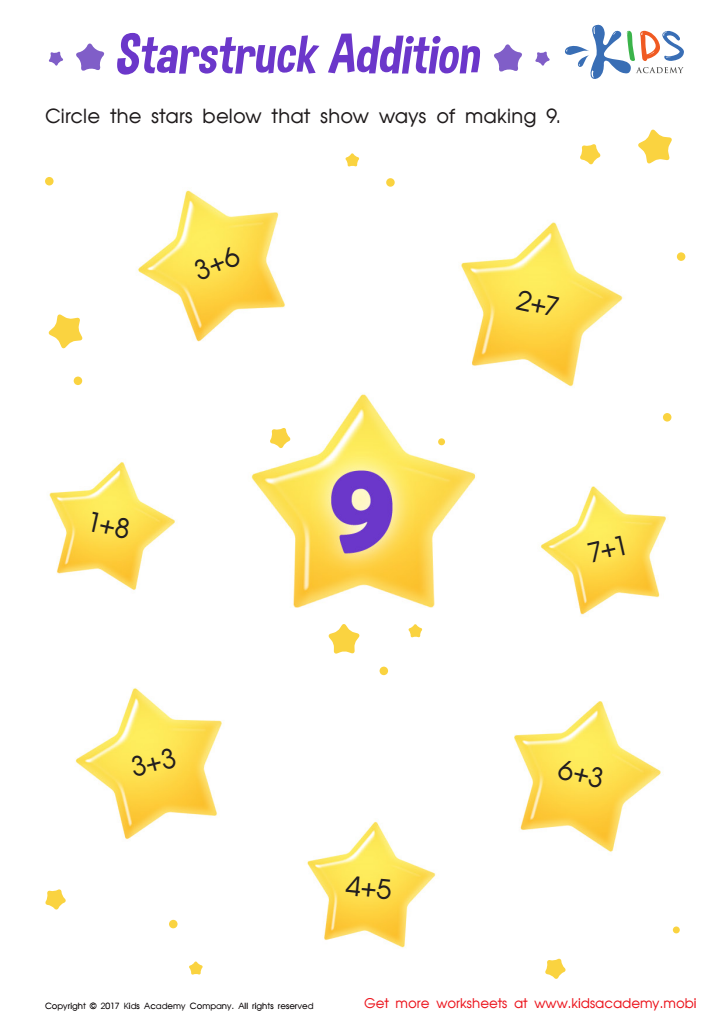
Starstruck Addition Printable
 Assign to My Students
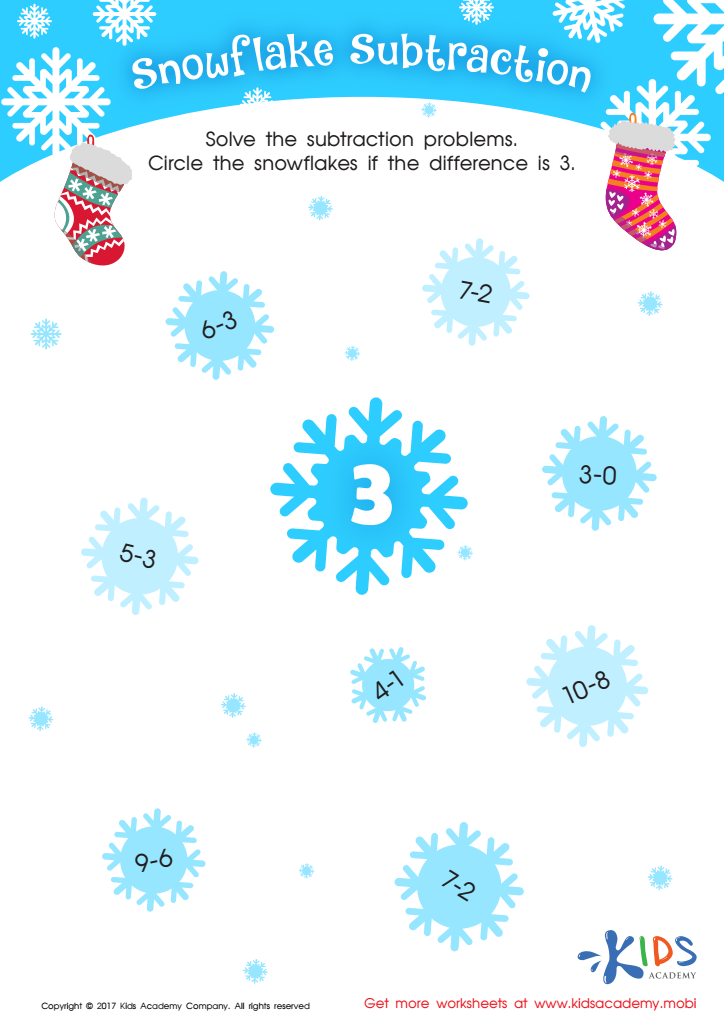
Snowflake Subtraction Worksheet
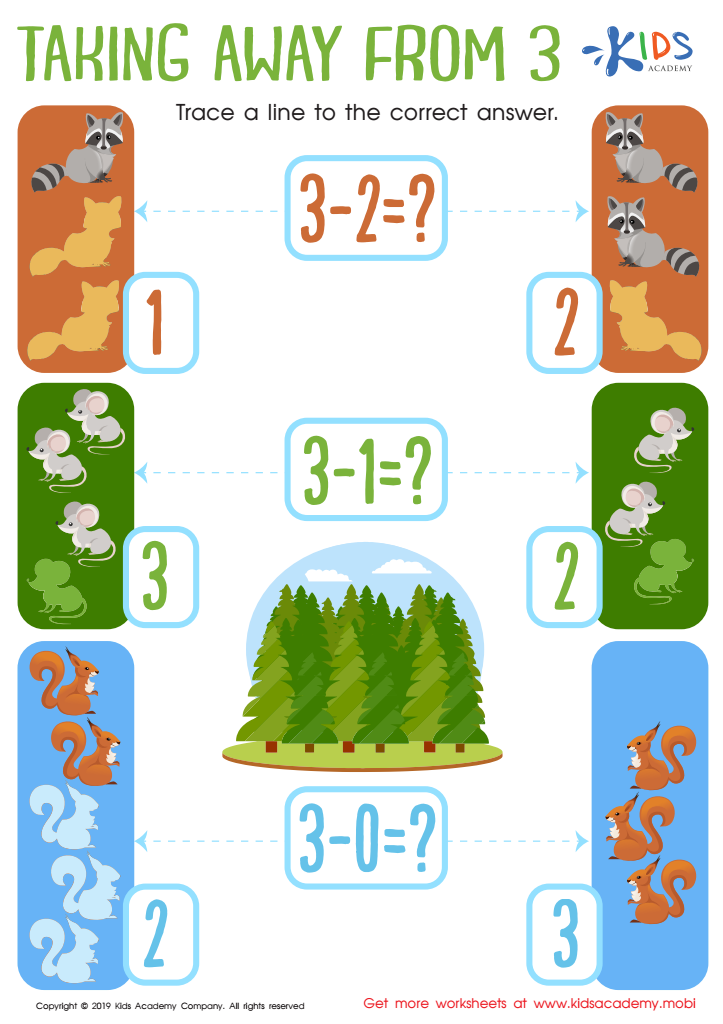
Taking Away From 3 Worksheet







Math problem-solving challenges for 4-year-olds are essential for fostering early cognitive development and establishing a strong foundation for future learning. Young children are naturally curious and absorbent, and presenting them with math challenges capitalizes on these traits. As they grapple with simple math problems, like counting, sorting, or basic addition and subtraction, children enhance their critical thinking and logical reasoning skills. These activities not only boost their mathematical understanding but also improve their ability to approach problems methodically and persistently.
Encouraging math problem-solving in preschool years also nurtures a positive attitude toward mathematics. When children successfully solve problems, they experience a sense of accomplishment that builds confidence and reduces math-related anxiety. This intrinsic motivation is crucial as it makes them more inclined to tackle more complex mathematical concepts in the future.
Parents and teachers play a pivotal role in creating an engaging and stress-free learning environment. By integrating fun and contextual math activities into everyday routines—such as counting toys, sharing snacks evenly, or recognizing patterns in nature—adults can make math an enjoyable part of a child’s world. Early exposure to these skills promotes a lifelong appreciation for learning and ensures that children develop the essential mathematical proficiency they need to thrive academically and in everyday life.








