Mathematical thinking Extra Challenge Worksheets for 4-Year-Olds
3 filtered results
-
From - To
Discover our Mathematical Thinking Extra Challenge Worksheets designed specifically for 4-year-olds! These engaging worksheets are perfect for enhancing early math skills in a fun and interactive way. Each activity focuses on key concepts such as counting, number recognition, basic addition, and shape identification, encouraging young learners to think critically and solve problems. Ideal for home or classroom use, our worksheets foster a love for mathematics while building confidence in young minds. Challenge your little ones with these creative exercises that make learning enjoyable and effective. Explore our collection and watch your child's mathematical skills flourish!
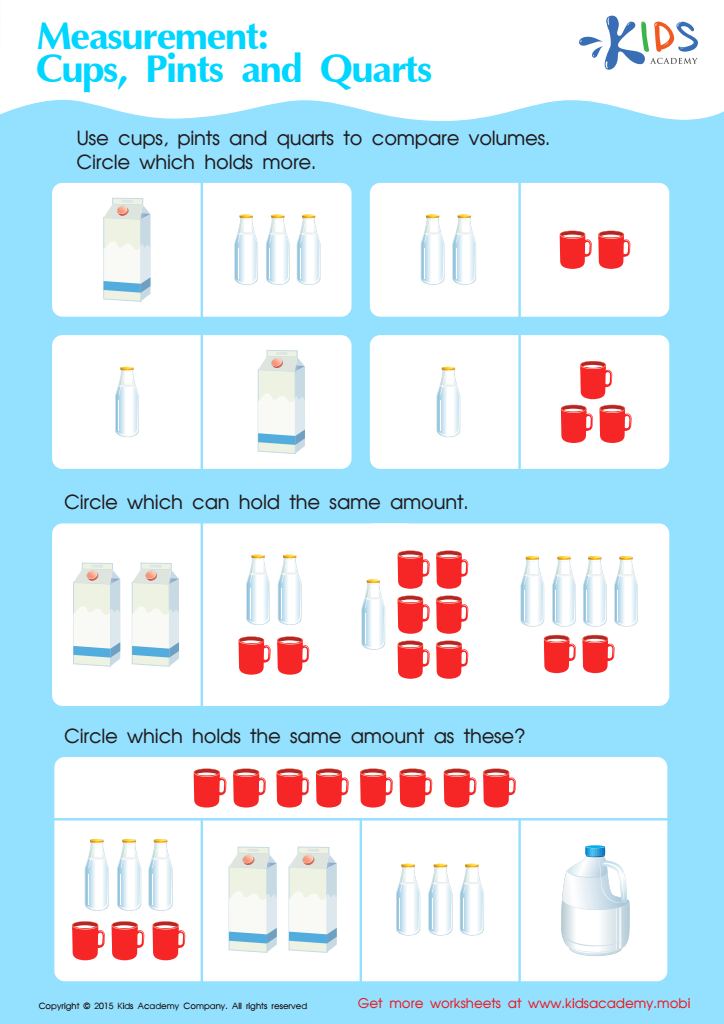
Measurement: Compare Volumes Worksheet
 Assign to My Students
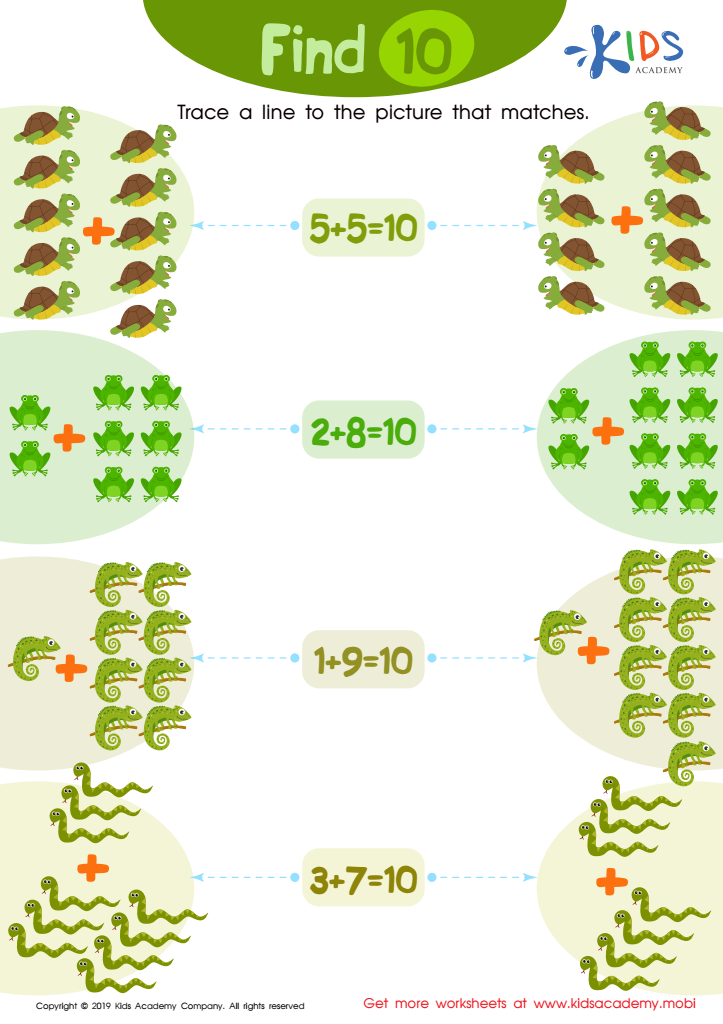
Find 10 Worksheet
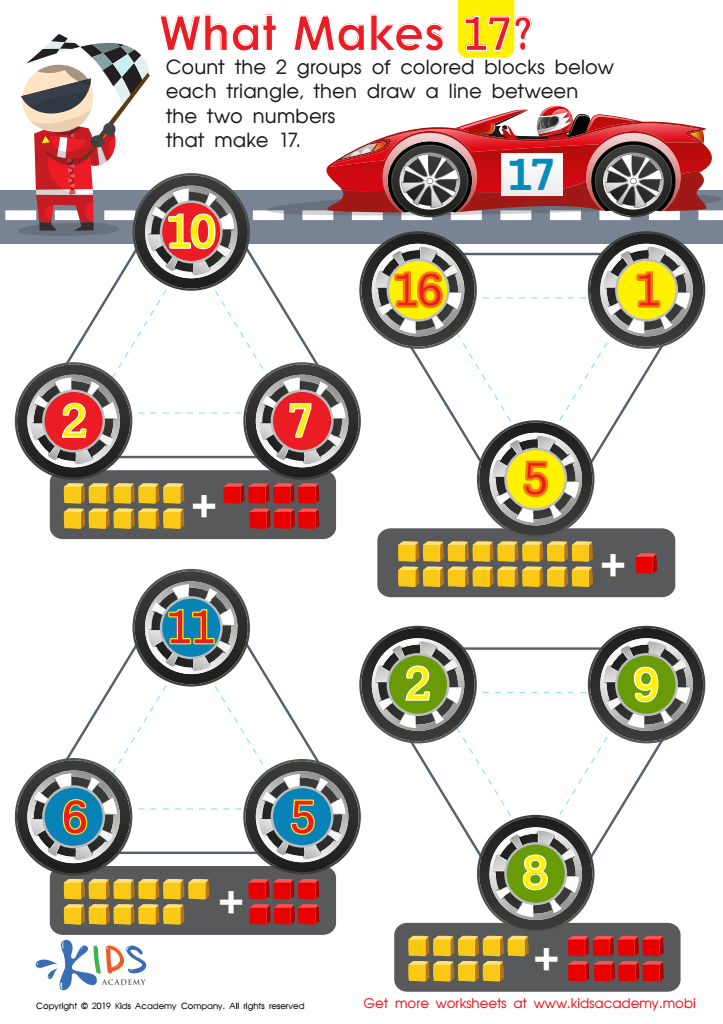
What Makes 17 Worksheet






Mathematical thinking in early childhood is crucial for developing foundational skills that influence a child's academic journey. Engaging 4-year-olds in Mathematical Thinking Extra Challenges helps them cultivate essential skills such as problem-solving, logical reasoning, and critical thinking. These skills extend beyond abstract numbers; they involve understanding patterns, spatial awareness, and relationships between objects—concepts that are pivotal in everyday life.
When parents and teachers prioritize mathematical challenges for young learners, they also promote curiosity and a growth mindset. These challenges are not merely about rote memorization; they encourage exploration and discovery, allowing children to engage with math in fun, interactive ways. This fosters a positive attitude towards mathematics, reducing anxiety around the subject as they grow older.
Moreover, early engagement in mathematical thinking lays a solid groundwork for future learning. Research indicates that strong early math skills correlate with improved academic performance in various subjects later on. By focusing on these challenges, parents and teachers are investing in children's long-term success and cultivating a love for learning. Ultimately, supporting early mathematical thinking benefits not just individual development but also strengthens the child's problem-solving abilities, preparing them for a rapidly changing world.








