Shape identification Extra Challenge Math Worksheets for 4-Year-Olds
3 filtered results
Difficulty Level
Grade
Age
-
From - To
Subject
Activity
Standards
Explore our engaging "Shape Identification Extra Challenge Math Worksheets for 4-Year-Olds" designed to boost young minds! These worksheets provide a fun, interactive way for toddlers to identify and distinguish different shapes. Each activity is crafted to enhance critical thinking, enhance observation skills, and promote early math concepts. Your little ones will enjoy circling, coloring, and matching various shapes, which helps strengthen their understanding and recognition in an enjoyable manner. Perfect for home or classroom use, these worksheets are an essential resource to assist in developing foundational math skills. Download now and watch your child's confidence soar in shape identification!
Favorites
With answer key
Interactive
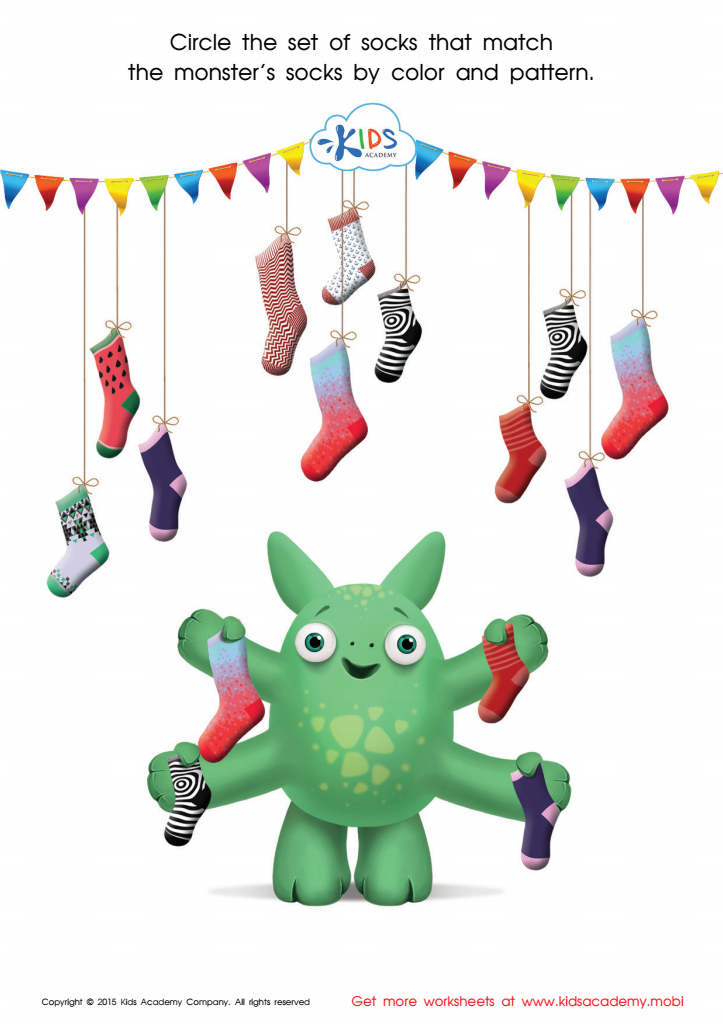
Sort the Monster's Socks Worksheet
Let your little one challenge herself and practice with matching Monster socks. She must be very attentive to match the same socks and draw a line connecting them!
 Assign to My Students
Sort the Monster's Socks Worksheet
Worksheet
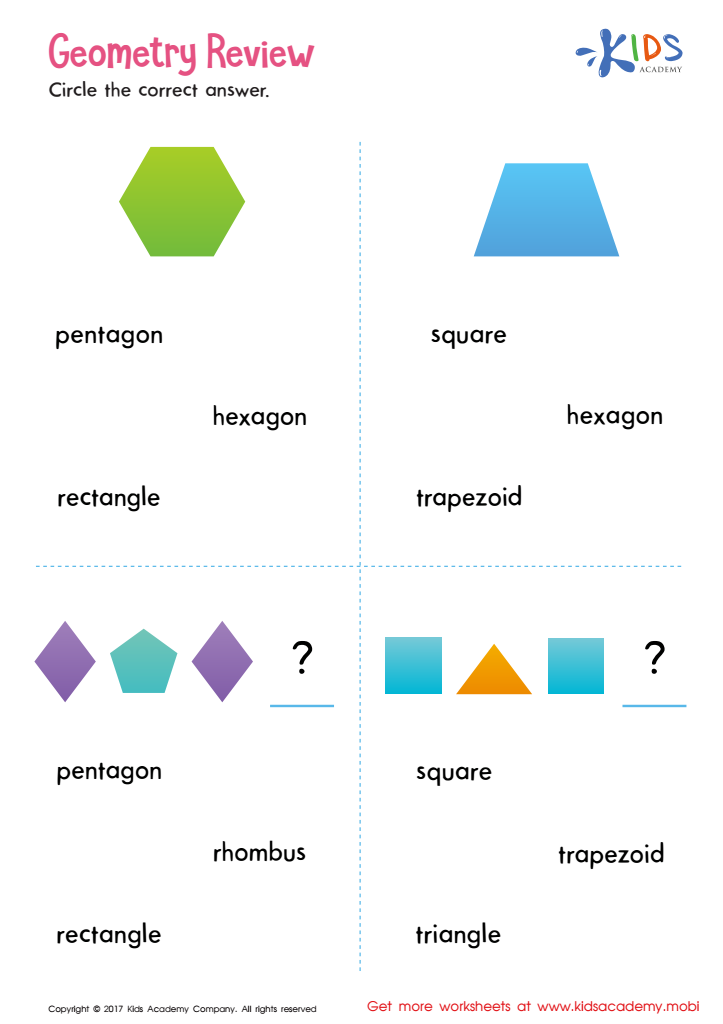
Geometry Review Printable
Repetition is key to success; give your child the practice they need with this geometry worksheet.
Geometry Review Printable
Worksheet
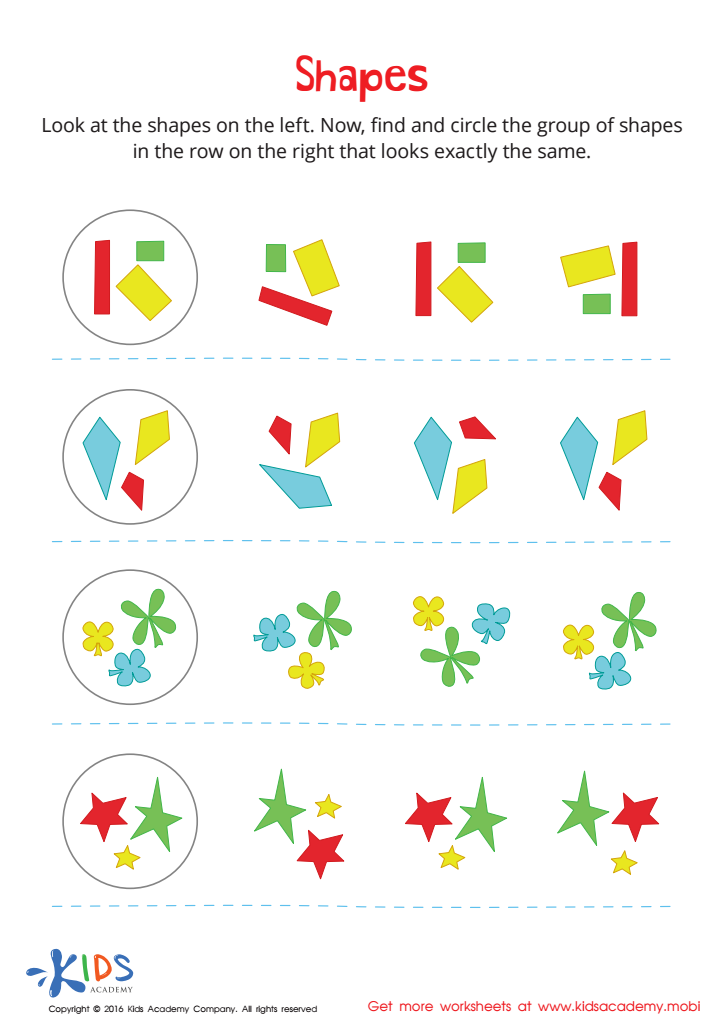
Shapes Worksheet
This fun worksheet will challenge your child to recognize tricky patterns, sort through similar ones, and create strategies to get the right answer. It'll also help them to strengthen problem-solving skills and build confidence. With more challenging tasks, your child will be ready to tackle higher level math and sequencing skills.
Shapes Worksheet
Worksheet
Join Kids Academy for Free
Who is primarily going to use this learning content?







Shape identification is a crucial foundational skill for 4-year-olds, and enhancing this learning with extra challenge math activities provides several benefits for both parents and teachers. Firstly, recognizing and naming shapes fosters critical spatial awareness and cognitive development in young children. This is not only essential for future math skills but also aids in their comprehension of the world around them.
Introducing challenges encourages problem-solving and analytical thinking, promoting independence and a growth mindset as children discover new concepts on their own. By engaging in shape identification tasks extended with challenges, children learn to approach problems strategically, preparing them for more complex mathematical concepts in later years.
Additionally, these activities often incorporate play-based learning, making math enjoyable rather than daunting. When parents or teachers incorporate extra challenges, they create opportunities for meaningful interactions and discussions, enhancing vocabulary and communication skills. Furthermore, shape identification can be seamlessly integrated into everyday activities, reinforcing lessons learned.
Incorporating extra challenges not only nurtures intellectual curiosity but also boosts confidence in young learners, laying a strong educational foundation that will benefit them throughout their academic journey and inspire a lifelong love for learning.