Alphabet Recognition Extra Challenge Tracing Letters Worksheets for Ages 5-6
3 filtered results
-
From - To
Elevate alphabet recognition skills with our Alphabet Recognition Extra Challenge Tracing Letters Worksheets designed for kids aged 5-6! These engaging worksheets not only enhance letter tracing abilities but also encourage critical thinking through fun challenges. Each page encourages young learners to practice both uppercase and lowercase letters, fostering strong handwriting skills while boosting confidence. Ideal for home or classroom use, these worksheets provide a comprehensive approach to learning through repetition and hands-on practice. Perfect for early learners ready to tackle challenges, your child will love mastering the alphabet with our exciting and interactive tracing activities! Explore literacy through play today!
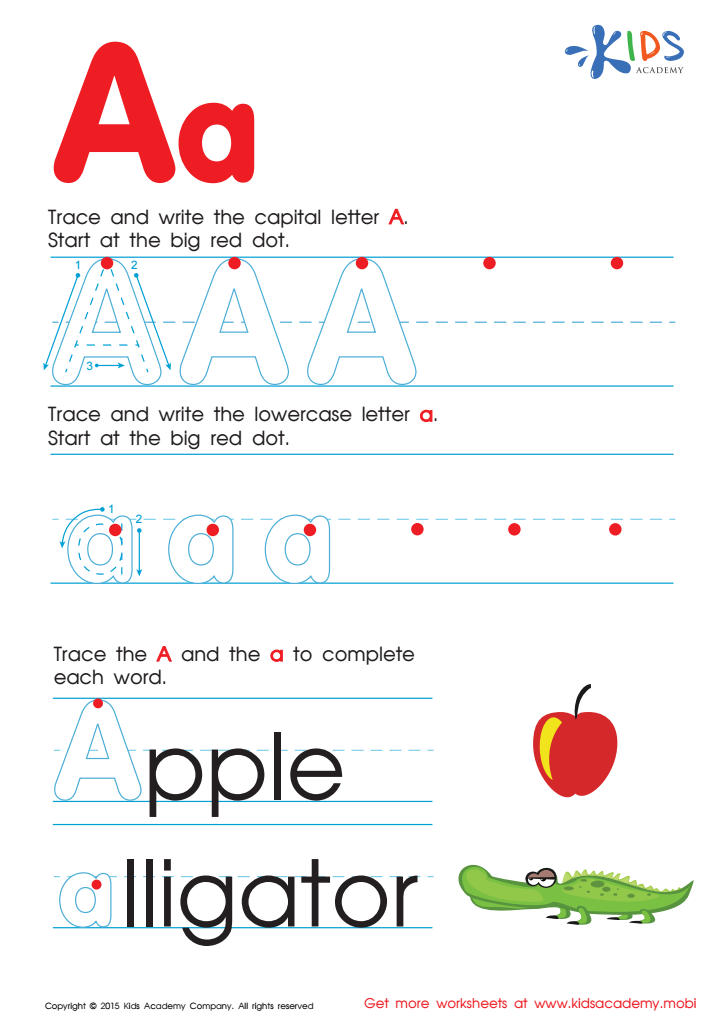
Letter A Tracing Page
 Assign to My Students
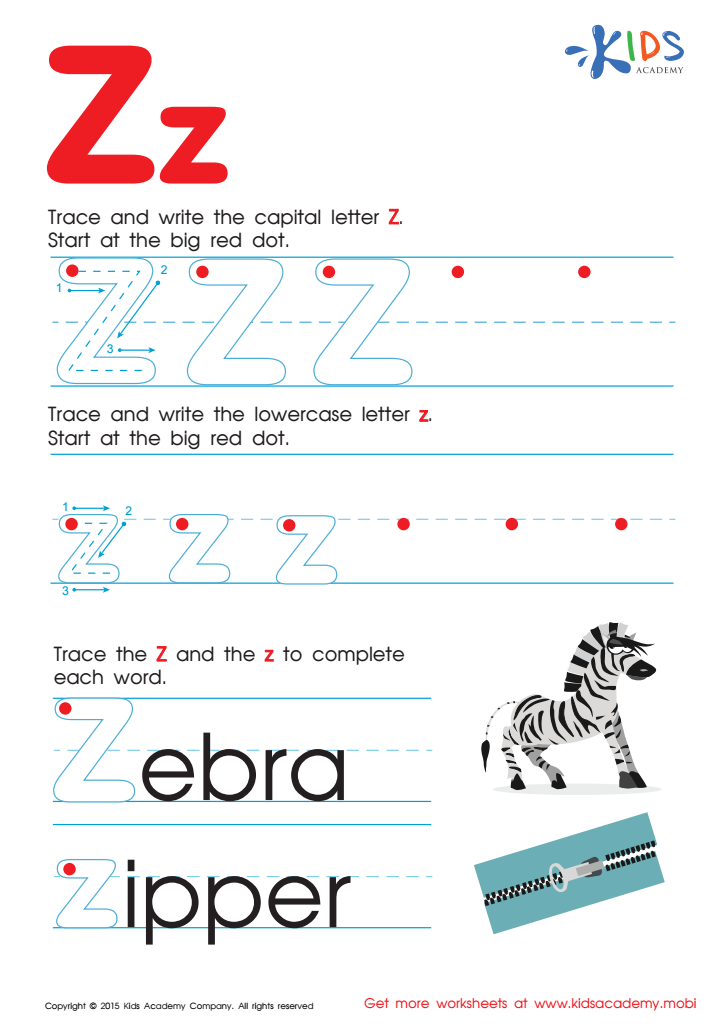
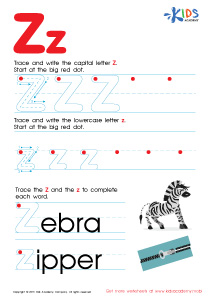
Letter Z Tracing Page
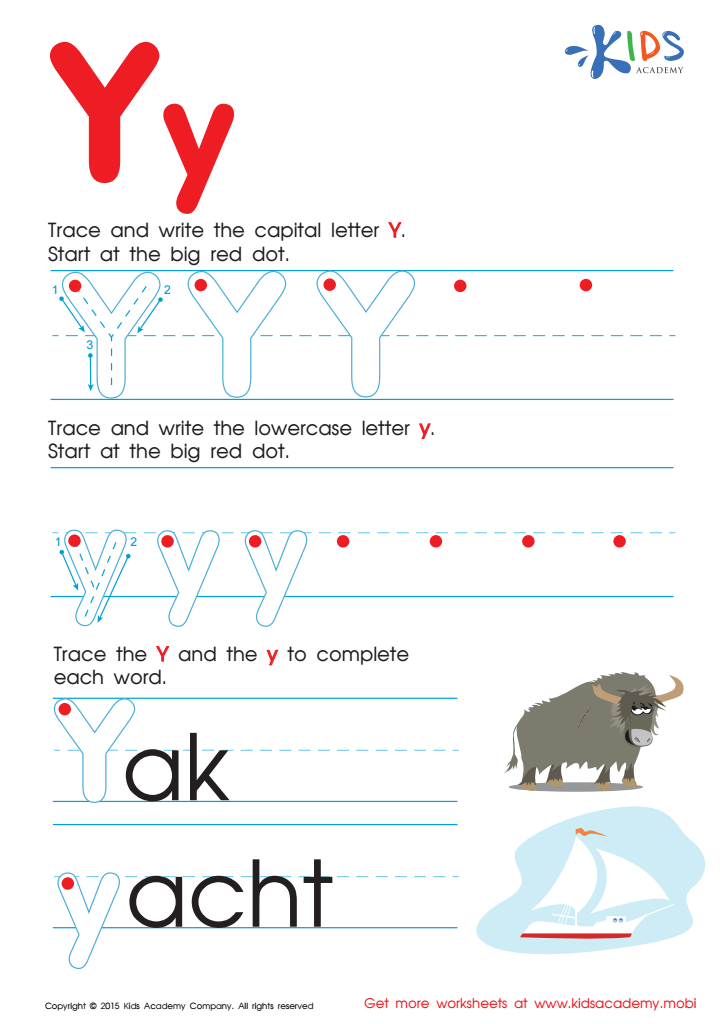
Letter Y Tracing Page







Alphabet Recognition and the Extra Challenge of Tracing Letters are crucial for children aged 5-6, as they serve as foundational skills for literacy development. Understanding letters and their corresponding sounds is essential for reading, writing, and effective communication. Parents and teachers should prioritize this activity as it enhances cognitive skills, improves fine motor coordination, and fosters familiarity with letter shapes.
Engaging in letter tracing offers children a hands-on approach to learning, reinforcing recognition through visual and tactile experiences. As they trace, they learn to control their pencil movements, which is vital for developing writing skills. This activity also promotes concentration and focus, important skills necessary for learning across subjects.
Additionally, tracing encourages creativity and expression, allowing children to connect the visual aspects of letters with their spoken forms. Strengthening these skills at a young age helps build confidence in their literacy abilities, making the transition to independent reading and writing smoother.
Furthermore, tracking progress through tracing activities helps identify areas of difficulty, enabling timely interventions. By prioritizing Alphabet Recognition and Tracing Letters, parents and teachers invest in a child’s overall academic success, laying the groundwork for lifelong learning and literacy.