Handwriting practice Extra Challenge Tracing Letters Worksheets for Ages 5-6
5 filtered results
-
From - To
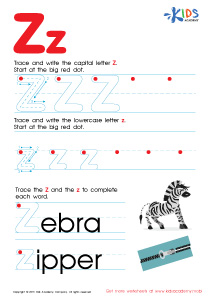
Enhance your child's handwriting skills with our Handwriting Practice Extra Challenge Tracing Letters Worksheets designed for ages 5-6! These engaging worksheets offer a fun and interactive way for young learners to master their letters. With carefully crafted prompts, children will practice tracing uppercase and lowercase letters, improving their fine motor skills and letter recognition. Ideal for supplementing classroom learning or as homework, each worksheet features vibrant illustrations to keep kids motivated. Perfect for parents and teachers alike, our worksheets provide an effective tool to foster independent writing and confidence in young learners. Download and watch your child thrive in their handwriting journey!
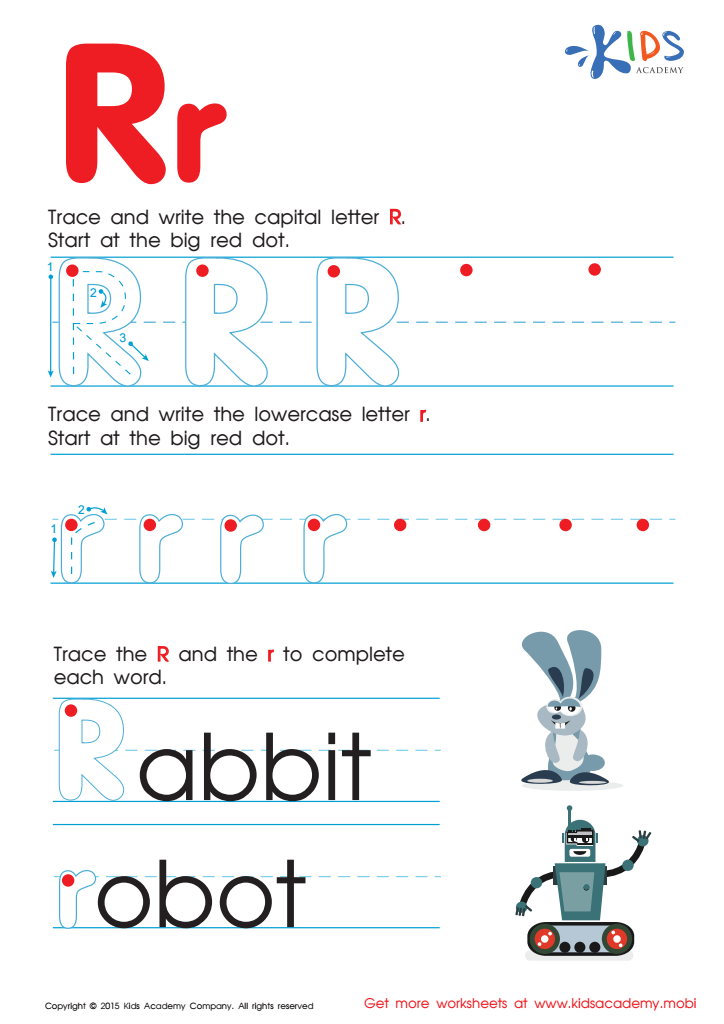
Letter R Tracing Page
 Assign to My Students
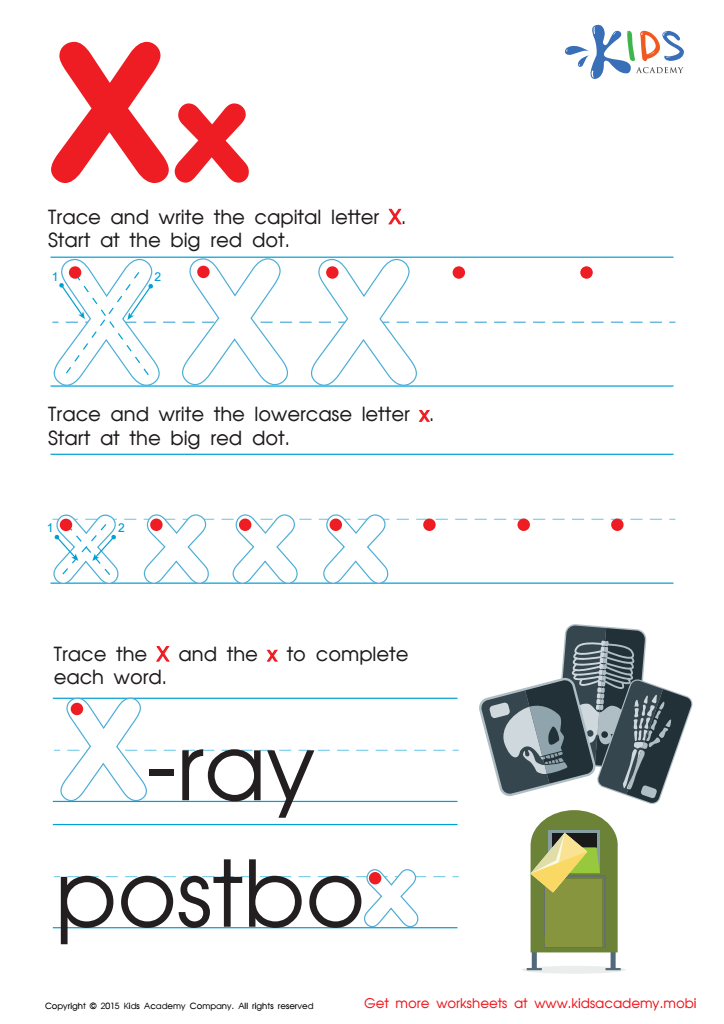
Letter X Tracing Page
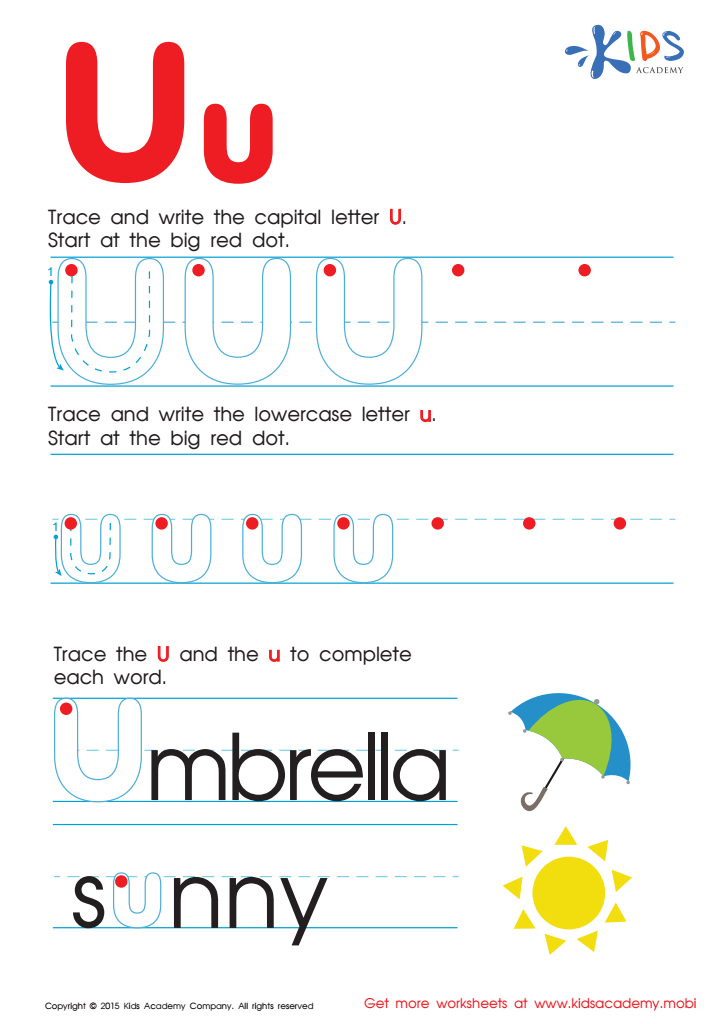
Letter U Tracing Page
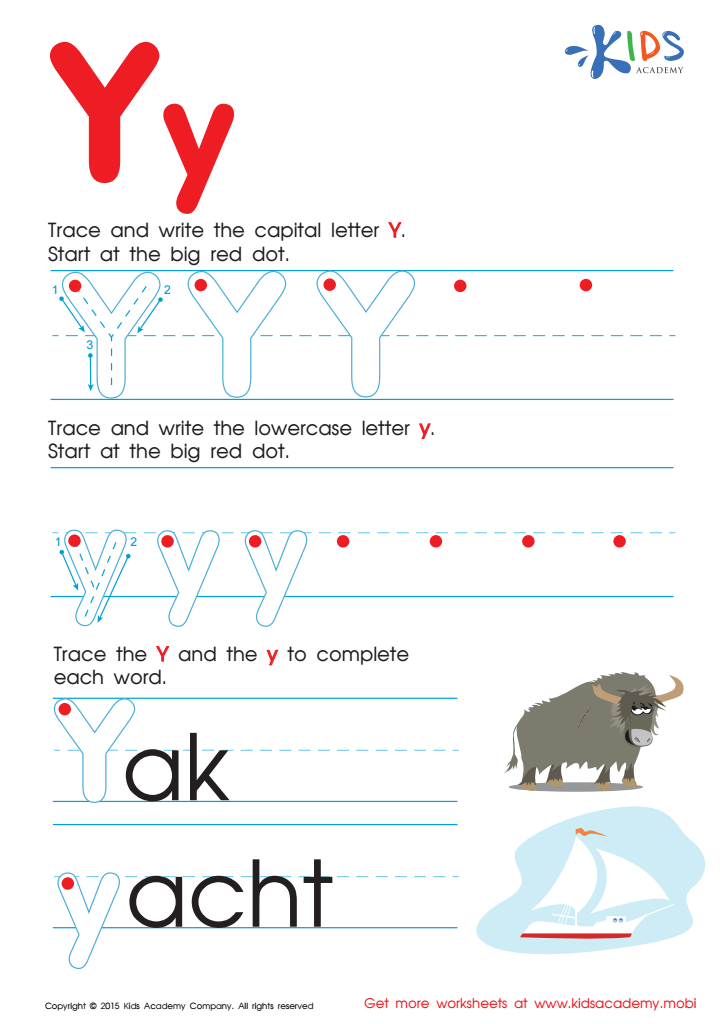
Letter Y Tracing Page

Letter V Tracing Page








Handwriting practice, particularly for young learners aged 5-6, is crucial for several reasons. First, it builds fine motor skills, which are foundational for tasks beyond writing, such as cutting, drawing, and even everyday activities like buttoning a shirt. Tracing letters as an extra challenge helps children develop control over their writing instruments, leading to clearer, more legible handwriting that fosters effective communication.
Additionally, handwriting is linked to cognitive development. The act of forming letters activates different parts of the brain and enhances neural connections, improving memory retention. This age is critical for literacy development; children who practice their handwriting often show better phonemic awareness and reading skills.
Moreover, handwriting practice contributes to self-confidence. As they see improvement in their ability to write, children feel a sense of accomplishment, motivating them to engage further in learning. It also encourages discipline and patience, as practicing handwriting requires focus and dedication.
Finally, clear handwriting can have long-term academic benefits. It influences how teachers perceive a child's work, affecting grading and feedback. By prioritizing handwriting practice, parents and teachers ensure that children lay a strong foundation for future learning and communication skills.