Basic counting skills Extra Challenge Worksheets for Ages 5-6
4 filtered results
-
From - To
Enhance your child’s counting abilities with our "Basic Counting Skills Extra Challenge Worksheets for Ages 5-6." These fun and engaging worksheets are thoughtfully designed to offer an extra challenge for children, helping them master counting while nurturing confidence and numeracy skills. Perfectly tailored for curious minds, these worksheets include various activities that encourage kids to count objects, recognize numbers, and develop strong mathematical foundations. Ideal for classroom or home use, this resource ensures learning becomes an exciting adventure. Spark a love for math early on and help your child excel with our expertly crafted counting challenges!
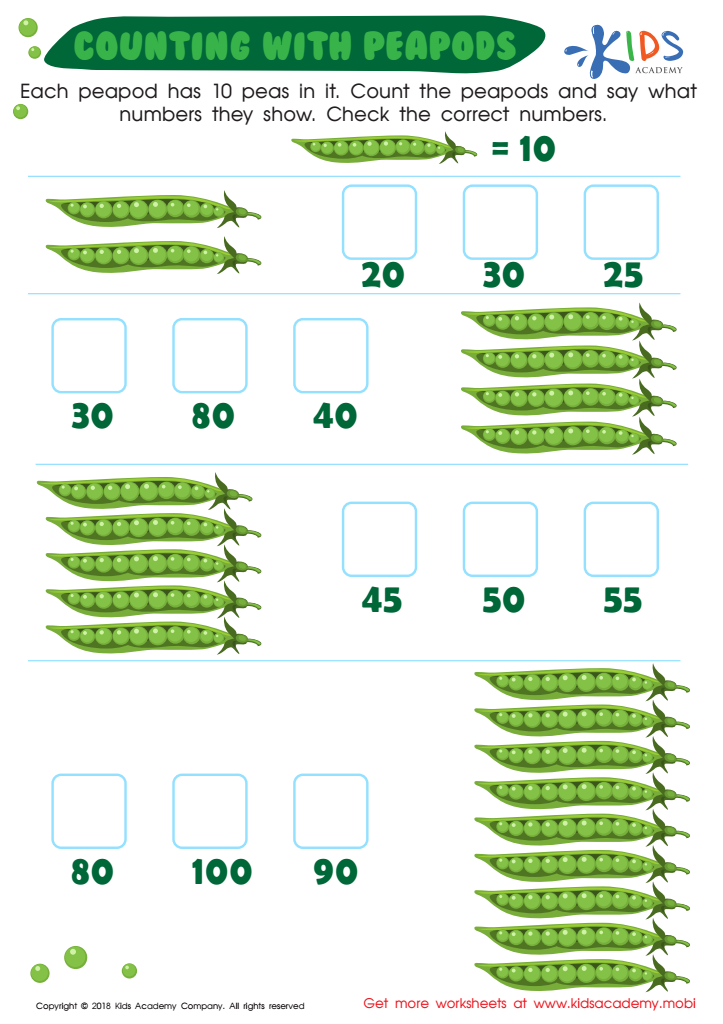
Number Worksheet: Counting With Peapods
 Assign to My Students
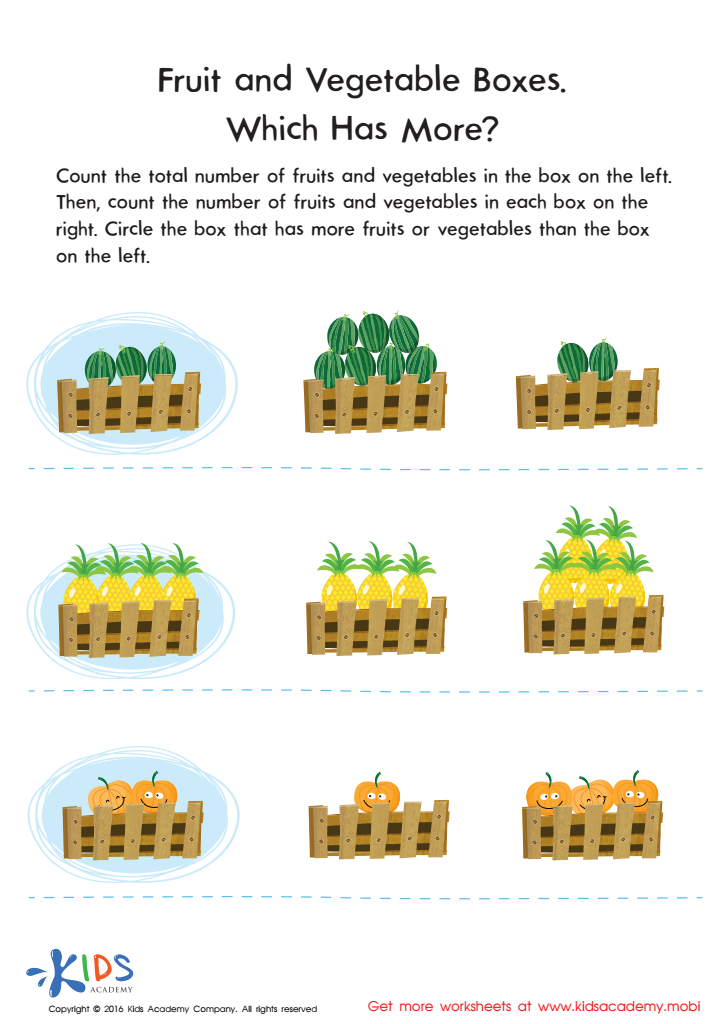
Which Has More? Size Worksheet
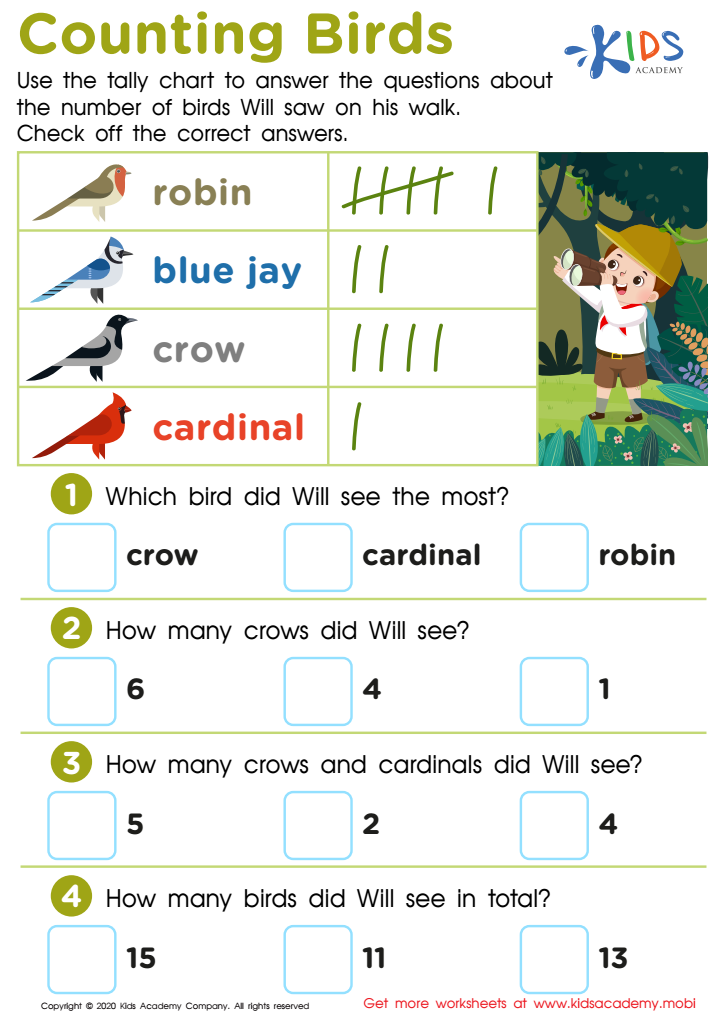
Counting Birds Worksheet
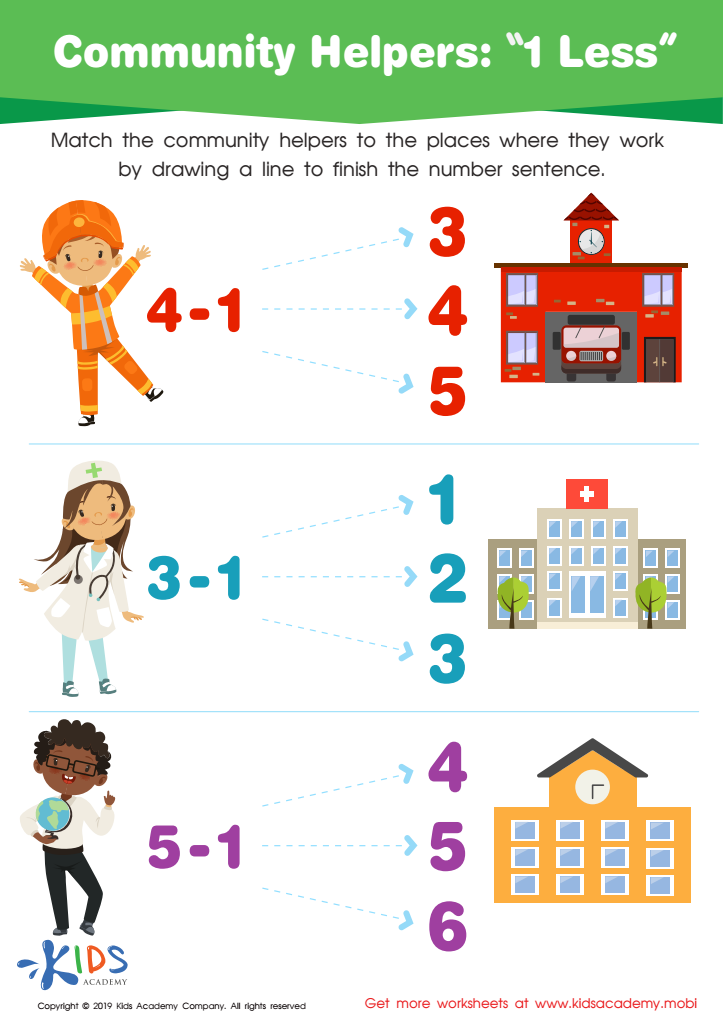
Community Helpers: 1 less Worksheet






.jpg)

Basic counting skills are foundational for children aged 5-6 as they set the groundwork for all future mathematical learning and cognitive development. It's crucial for parents and teachers to recognize the importance of challenging young learners to enhance these skills beyond just rote counting.
An Extra Challenge in basic counting involves activities that promote deeper understanding and critical thinking, such as counting backwards, skip counting, or recognizing number patterns. This helps children develop number sense—a key component in all levels of math. It enhances their ability to understand relationships between numbers, which is essential when they later encounter addition, subtraction, multiplication, and division.
Engaging children in these advanced counting exercises also supports their cognitive development. It improves memory, concentration, and problem-solving abilities. When children can count with confidence and flexibility, they are better positioned to tackle more complex math problems with greater ease.
Furthermore, fostering a positive experience with challenging math activities can create a strong foundation for a lifelong interest in mathematics and learning. Encouraging excitement and curiosity in children through these engaging counting activities helps build their confidence and promotes a growth mindset.
By prioritizing and caring about basic counting skills with an extra challenge, parents and teachers empower children to not only succeed in their current academic endeavors but to also cultivate the essential skills for future learning and everyday life.








