Comparing lengths Extra Challenge Worksheets for Ages 5-6
5 filtered results
-
From - To
Discover our Comparing Lengths Extra Challenge Worksheets, designed especially for ages 5-6 to boost math skills in a fun and interactive way. These engaging worksheets help young learners grasp the concept of comparing and measuring lengths through colorful, hands-on activities. Perfect for building a solid foundation in early math, each worksheet encourages critical thinking and problem-solving as kids compare different objects. Ideal for both classroom use and at-home learning, our expertly crafted worksheets will keep children entertained while fostering essential math skills. Visit Kid's Academy for more challenging and educational resources!
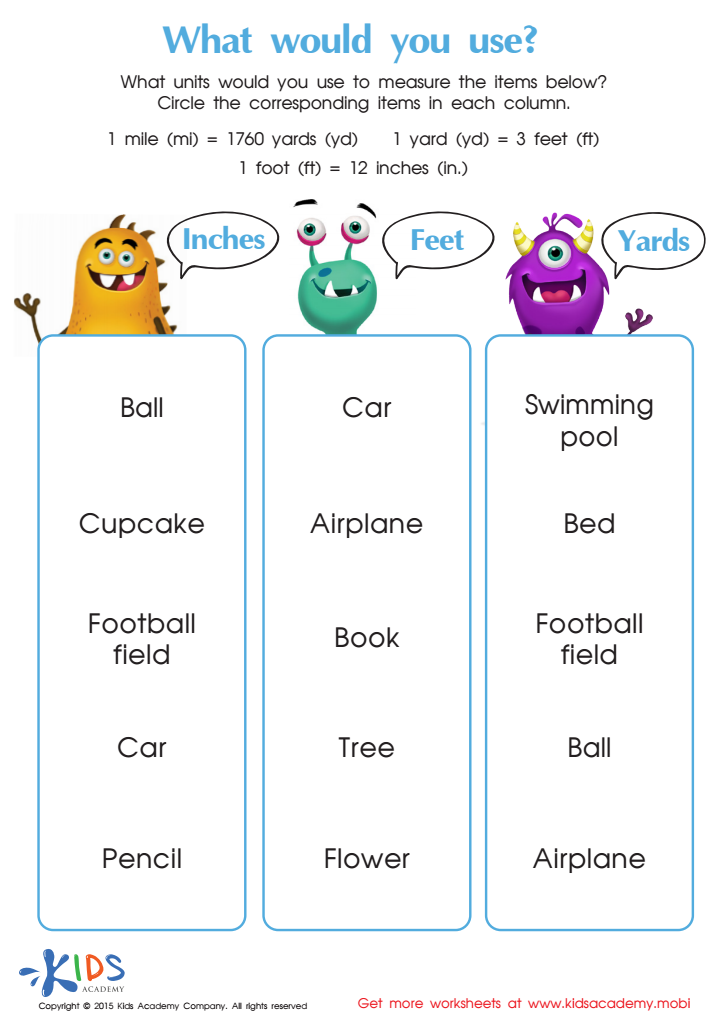
Learning about measuring objects in inches, feet and yards Worksheet
 Assign to My Students
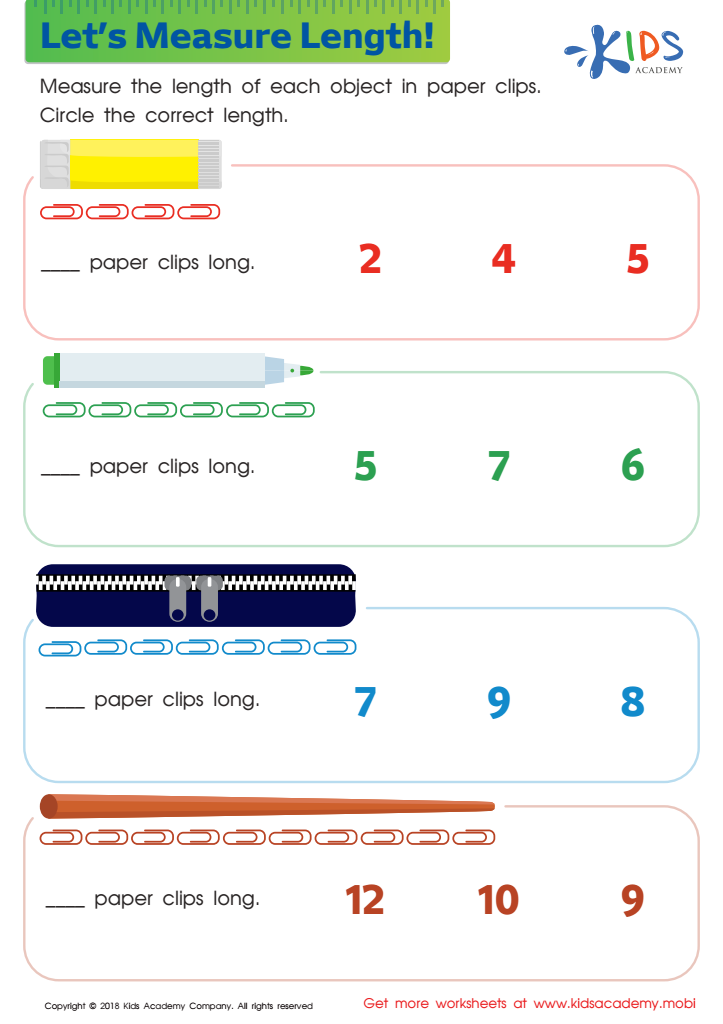
Lets Measure Length Worksheet
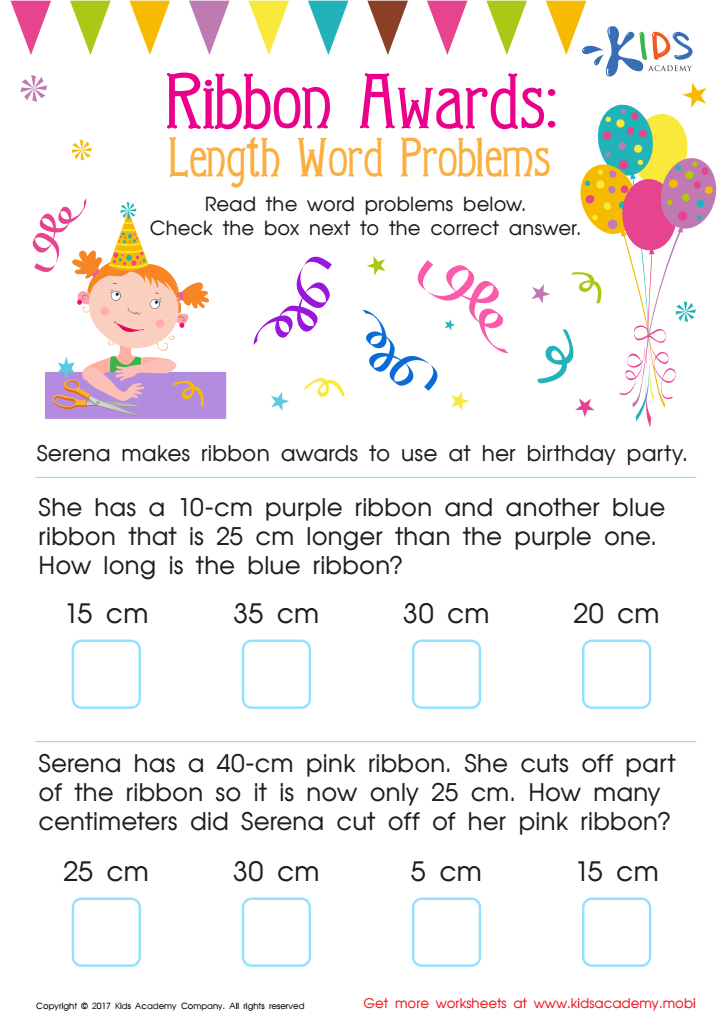
Length Word Problems Worksheet
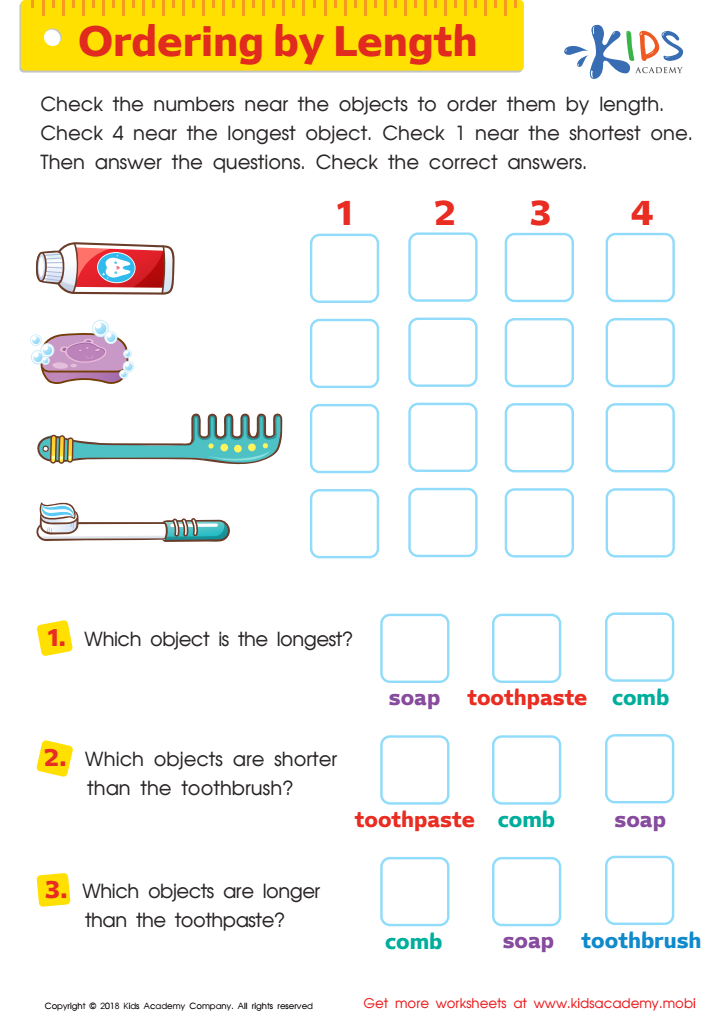
Ordering by Length Worksheet
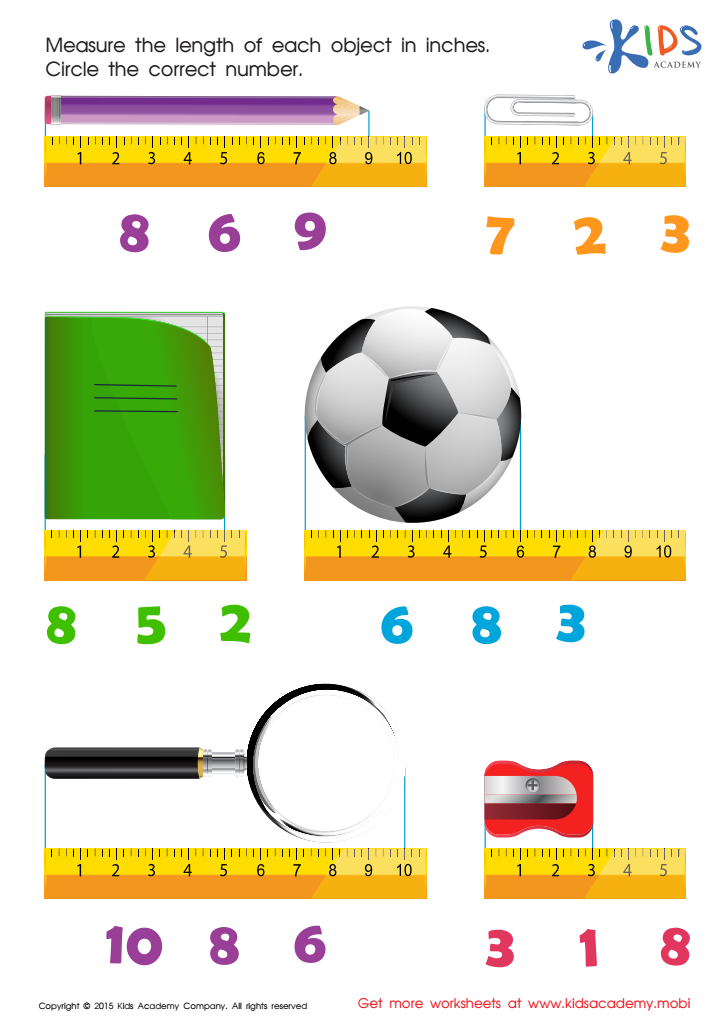
Learning measuring objects in inches Worksheet








Comparing lengths is a fundamental mathematical skill that plays a crucial role in a child’s overall cognitive and academic development. For children aged 5-6, engaging in an extra challenge that involves comparing lengths has considerable benefits. First and foremost, it enhances their understanding of measurement, which is a key concept in mathematics and important for everyday life skills.
When young children compare lengths, they start to develop a sense of spatial relationships. This helps them in visualizing and organizing objects in their minds, which is essential for problem-solving and critical thinking. Moreover, comparing lengths aids in improving their fine motor skills as they manipulate objects to measure and compare.
For parents and teachers, encouraging children to undertake this extra challenge nurtures perseverance and fosters a growth mindset. Children learn that mastering a new concept is achievable through practice and effort. Additionally, it supports early numeracy by indirectly reinforcing counting strategies and number recognition.
From a social standpoint, these activities often require teamwork and communication, thereby promoting social interaction and language skills. Clear verbal descriptions of what they observe boost their expressive and descriptive abilities.
In summary, for ages 5-6, comparing lengths is foundational to their educational journey, fostering cognitive skills, promoting social interaction, and setting the groundwork for advanced mathematical concepts.








