Critical thinking development Extra Challenge Worksheets for Ages 5-6
5 filtered results
-
From - To
Welcome to our "Critical Thinking Development Extra Challenge Worksheets" designed specifically for ages 5-6! These engaging worksheets aim to enhance your child's analytical skills, creativity, and problem-solving abilities. Each activity is crafted to challenge young minds, encouraging them to think critically while having fun. From puzzles to logical reasoning tasks, our diverse selection helps children practice essential skills in an interactive way. Perfect for home or classroom use, these extra challenge worksheets provide an exciting opportunity for kids to explore new concepts and build confidence in their thinking abilities. Empower your little learners to become critical thinkers today!
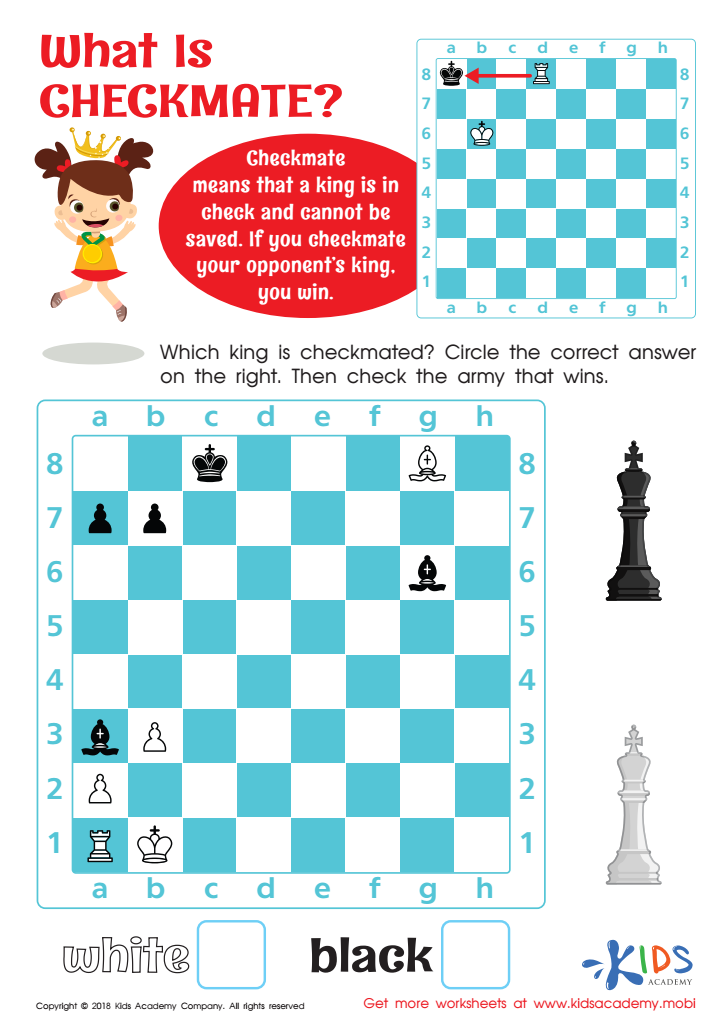
What is Checkmate? Worksheet
 Assign to My Students

Fact or Make Believe Worksheet
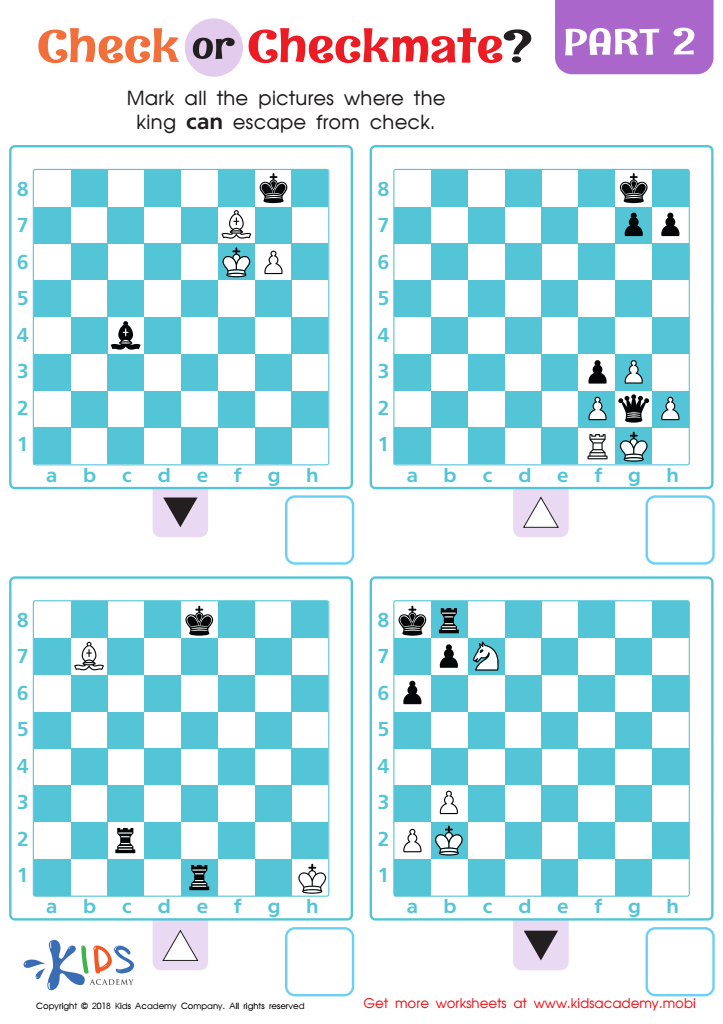
Check or Checkmate: Part 2 Worksheet
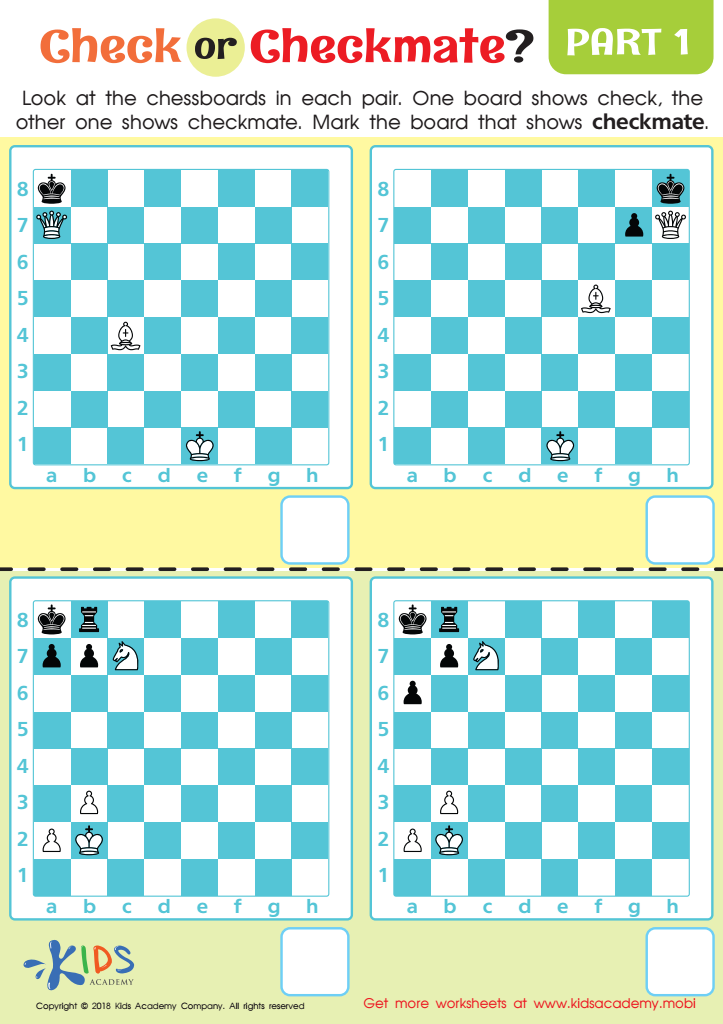
Check or Checkmate: Part 1 Worksheet
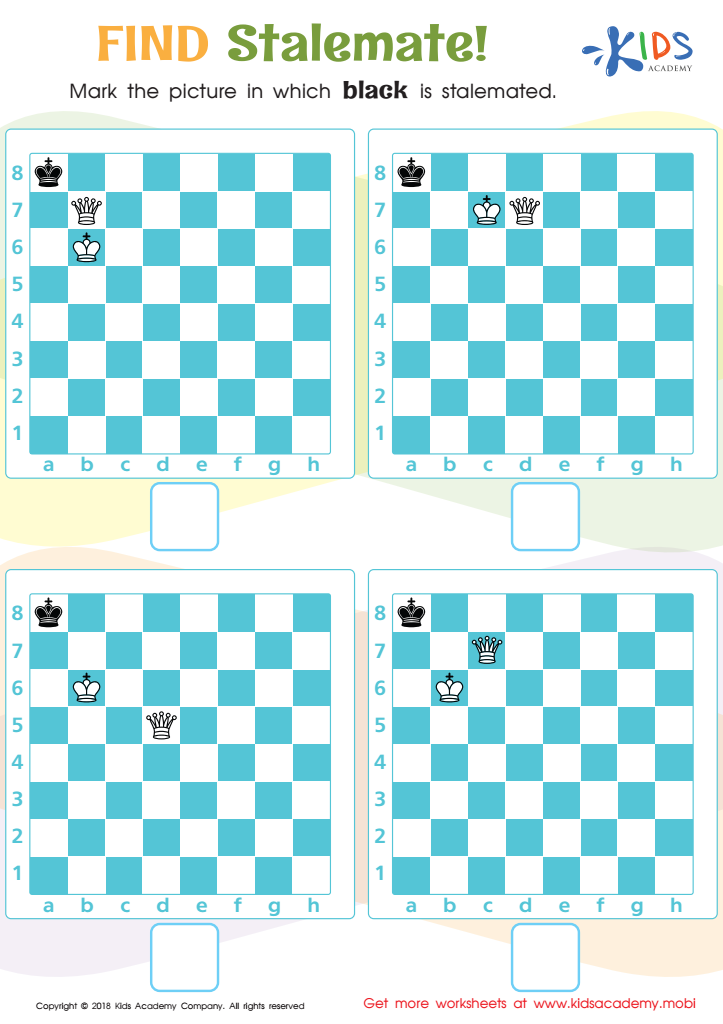
Find Stalemate! Worksheet





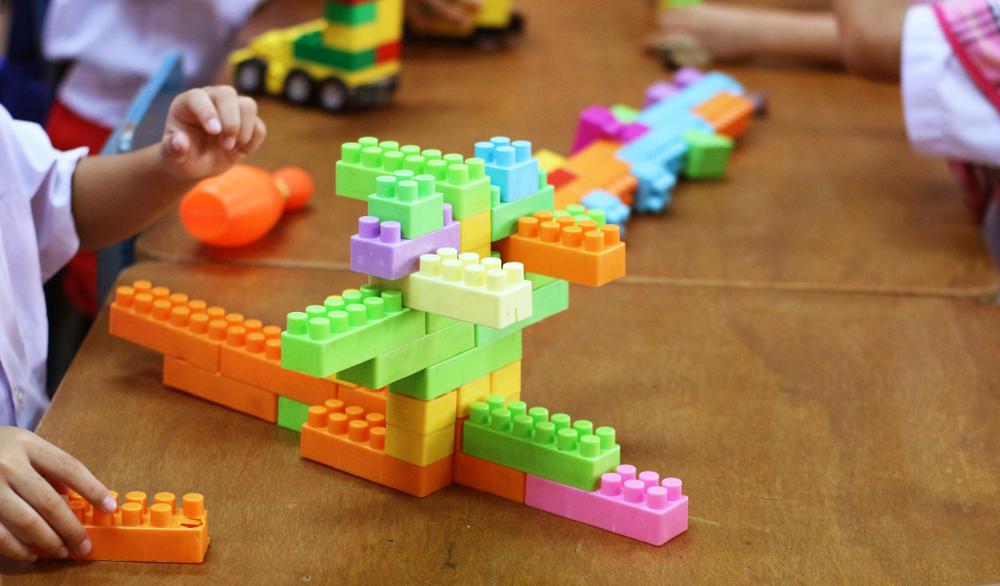

Critical thinking development is crucial for children aged 5-6, as it lays the foundation for lifelong learning and effective problem-solving skills. During these formative years, children are naturally curious, constantly questioning their environment. Nurturing critical thinking helps them learn how to analyze, evaluate, and synthesize information rather than simply accept it at face value.
Parents and teachers should prioritize this skill because it encourages independence and confidence in decision-making. When young children develop critical thinking abilities, they become better equipped to navigate challenges and conflicts, both academically and socially. This is especially relevant as they begin formal education, where they will encounter various subjects and seek to understand complex concepts.
Additionally, fostering critical thinking can enhance creativity. As children learn to think deeply and examine different perspectives, they are more likely to develop innovative ideas and solutions, which are invaluable in an increasingly complex world.
Moreover, critical thinking skills facilitate stronger communication abilities, allowing children to articulate their thoughts clearly and respectfully. This not only enhances classroom interactions but also builds essential social skills. Thus, investing in critical thinking development is vital for parents and teachers who wish to equip children for future success and wellbeing.








