Comparing sizes Extra Challenge Math Worksheets for Ages 5-6
4 filtered results
-
From - To
Elevate your child's math skills with our "Comparing Sizes Extra Challenge Math Worksheets for Ages 5-6." These engaging worksheets are designed to help young learners grasp the concept of size comparison through fun and interactive exercises. Each worksheet is thoughtfully crafted to enhance critical thinking and problem-solving abilities. Your child will enjoy mastering comparisons such as bigger vs. smaller, taller vs. shorter, and more. Ideal for kindergarten and grade 1 students, these extra challenge worksheets are perfect for in-class use or as a supplemental activity at home. Boost your child's confidence and math proficiency today!
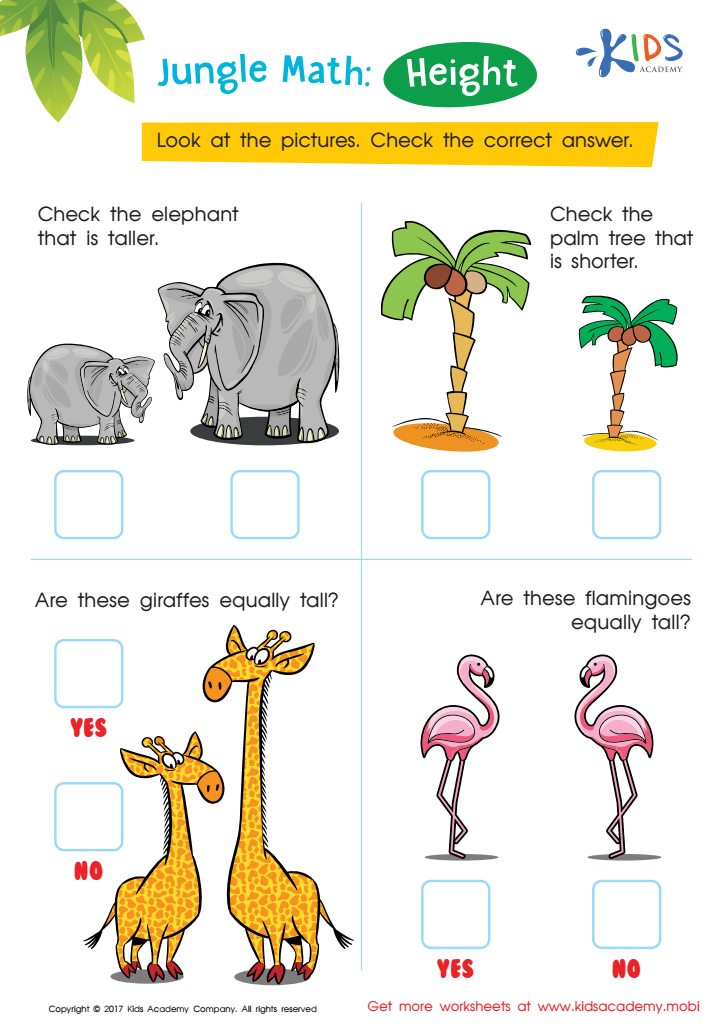
Which Is Taller Worksheet
 Assign to My Students
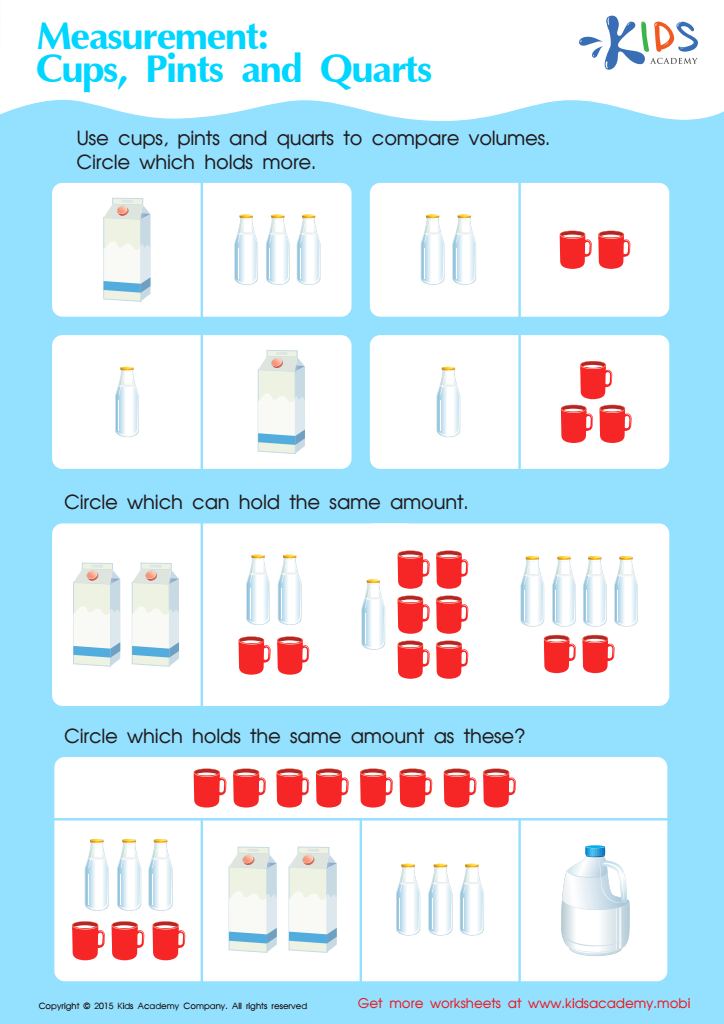
Measurement: Compare Volumes Worksheet
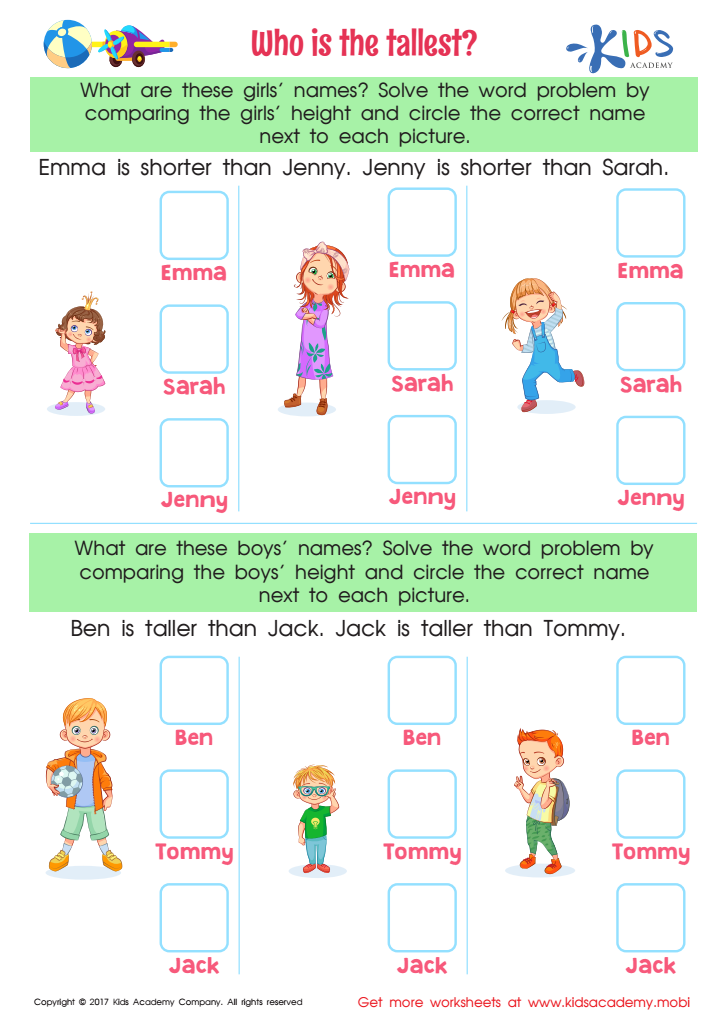
Who Tallest Printable
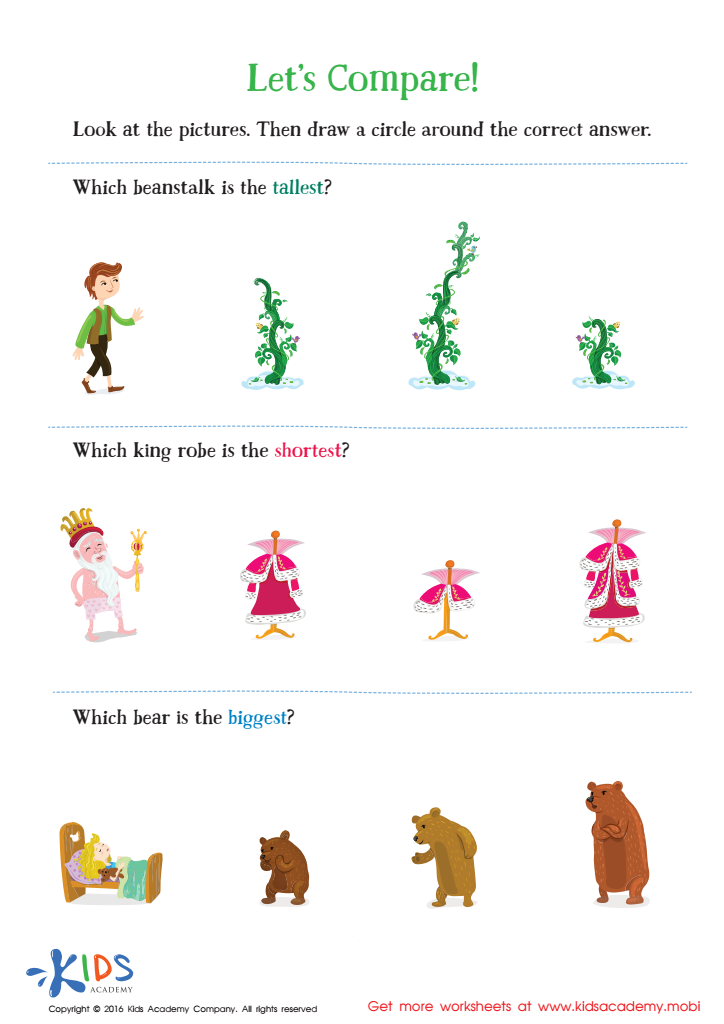
Fairy Tale Worksheet: Let's Compare








Parents and teachers should prioritize comparing sizes extra challenge math for children ages 5-6 because it lays a crucial foundation for various cognitive and practical skills. At this developmental stage, children are naturally curious and absorb information quickly. Engaging in size comparison activities helps them develop critical thinking and problem-solving abilities by learning to observe, analyze, and categorize objects based on attributes such as length, height, weight, and volume.
First and foremost, comparing sizes enhances mathematical vocabulary and concepts, preparing children for future learning in geometry and measurement. Phrases like “shorter than” or “heavier than” become familiar, fostering early numerical literacy. Secondly, these activities sharpen visual-spatial awareness, which is essential not just in math but in everyday tasks like evaluating distances, organizing spaces, and following navigation.
Moreover, understanding size relationships strengthens logical reasoning and promotes better understanding of the physical world. For instance, children begin to comprehend why a smaller box fits into a bigger one or why certain objects are better suited for specific tasks.
Lastly, engaging in size comparison activities often involves hands-on learning, which is more engaging and retains children's interest longer. This boosts perseverance and enjoyment in learning, setting a positive educational tone. Overall, these introductory math challenges cultivate essential brain development and set a strong base for more complex mathematical and scientific learning ahead.








