Recognizing shapes Extra Challenge Geometry Worksheets for Ages 5-7
3 filtered results
-
From - To
Explore the "Recognizing Shapes Extra Challenge Geometry Worksheets for Ages 5-7," designed to enrich young learners' understanding of geometry through engaging activities. These thoughtfully crafted worksheets introduce shapes in various contexts, encouraging children to identify, compare, and classify different geometric forms. Perfect for reinforcing concepts introduced in the classroom, these extra challenge worksheets offer fun problems that stimulate critical thinking and problem-solving skills. Ideal for both individual practice and group activities, they foster a love for math while helping children develop a solid foundation in shape recognition. Watch your students shine as they tackle these exciting geometric puzzles!
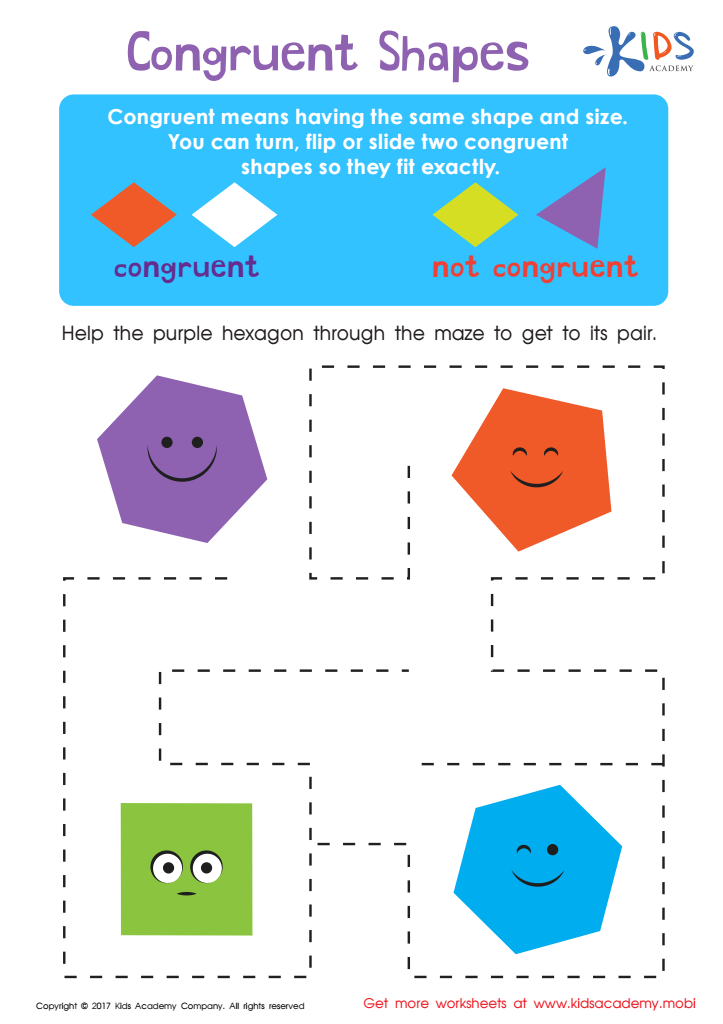
Congruent Shapes Worksheet
 Assign to My Students











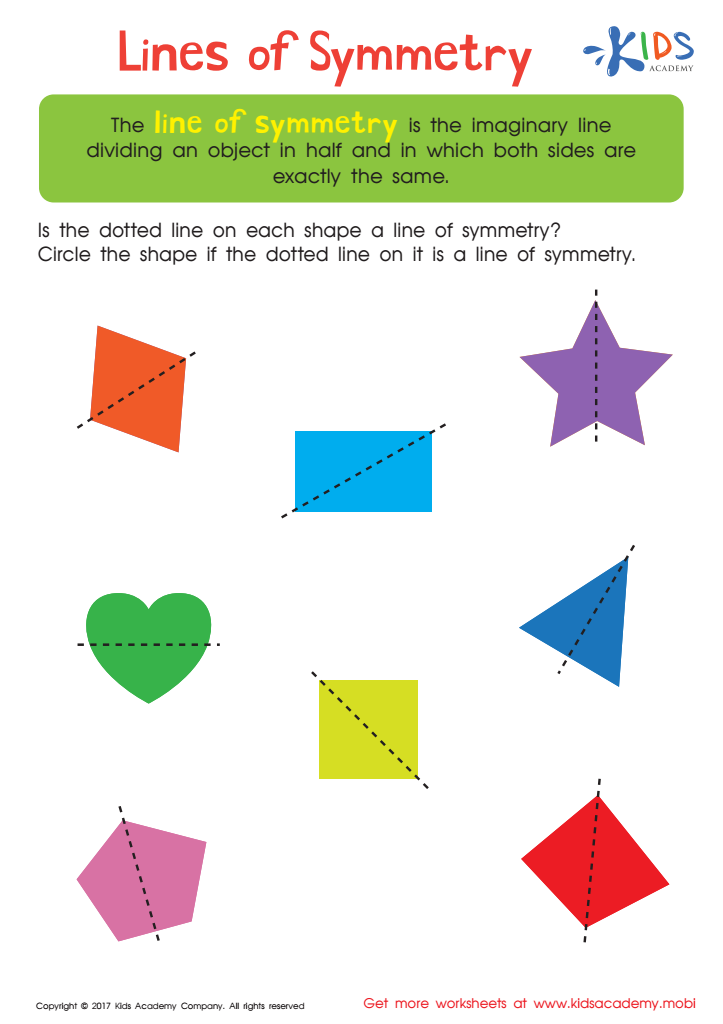
Lines of Symmetry Printable
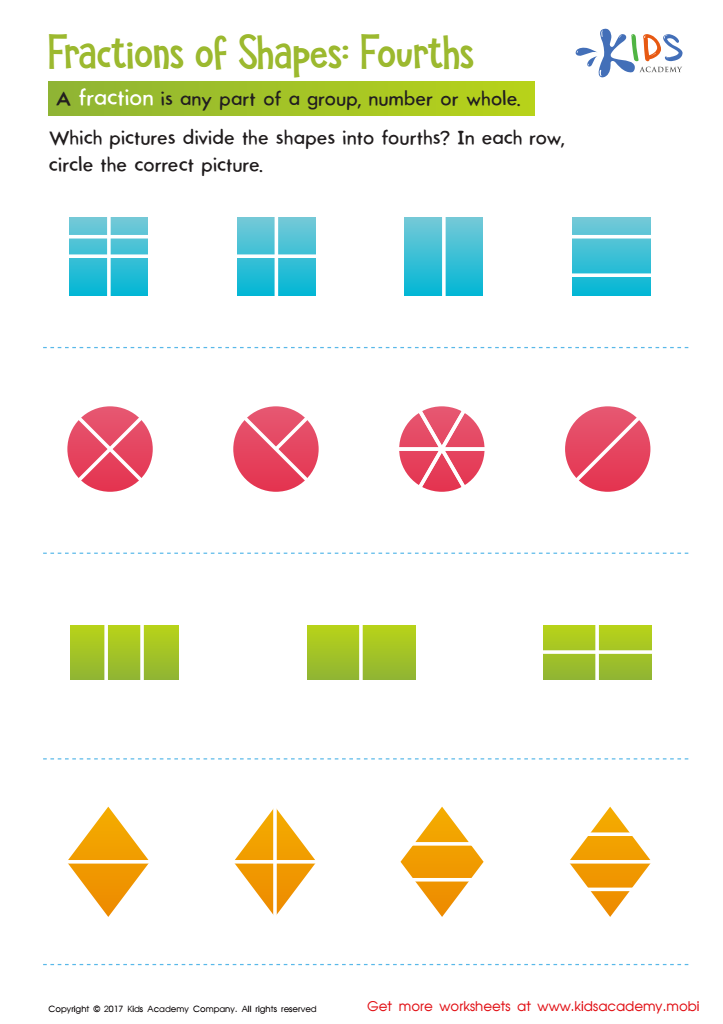
Fractions of Shapes Worksheet








Recognizing shapes is a fundamental aspect of early childhood education, especially for children aged 5-7. During this developmental stage, students are naturally curious and eager to explore their environment. By engaging with shape recognition activities, parents and teachers can foster critical thinking and problem-solving skills. Understanding shapes lays the groundwork for more complex mathematical concepts, such as symmetry, angles, and spatial reasoning, which will be essential as children progress in their education.
Moreover, shape recognition helps enhance fine motor skills through hands-on activities and foster creativity through art and design. As children identify and manipulate shapes, they develop their observational skills, learn to categorize and differentiate objects, and build their vocabulary as they describe what they see.
Beyond academics, recognizing shapes can reinforce confidence and independence. When children successfully identify and work with shapes, they experience a sense of accomplishment, motivating them to tackle new challenges. Therefore, incorporating shape recognition into the learning experience is not just beneficial for cognitive development, but it also promotes holistic growth—socially, emotionally, and intellectually. Ultimately, parents and teachers play a crucial role in enriching the learning journey through engaging with these foundational concepts.