Comparing sizes Extra Challenge Math Worksheets for Ages 5-7
5 filtered results
-
From - To
Unlock your child's potential with our "Comparing Sizes Extra Challenge Math Worksheets" designed specifically for ages 5-7. These engaging worksheets provide an enjoyable way for young learners to explore and grasp the concept of size comparison. Through stimulating activities, children will enhance their critical thinking and analytical skills as they compare various objects and figures. Ideal for home or classroom use, these worksheets reinforce foundational math concepts while encouraging a love for learning. Explore the world of sizes together and watch your child gain confidence in their abilities. Try our worksheets today and make math a fun adventure!
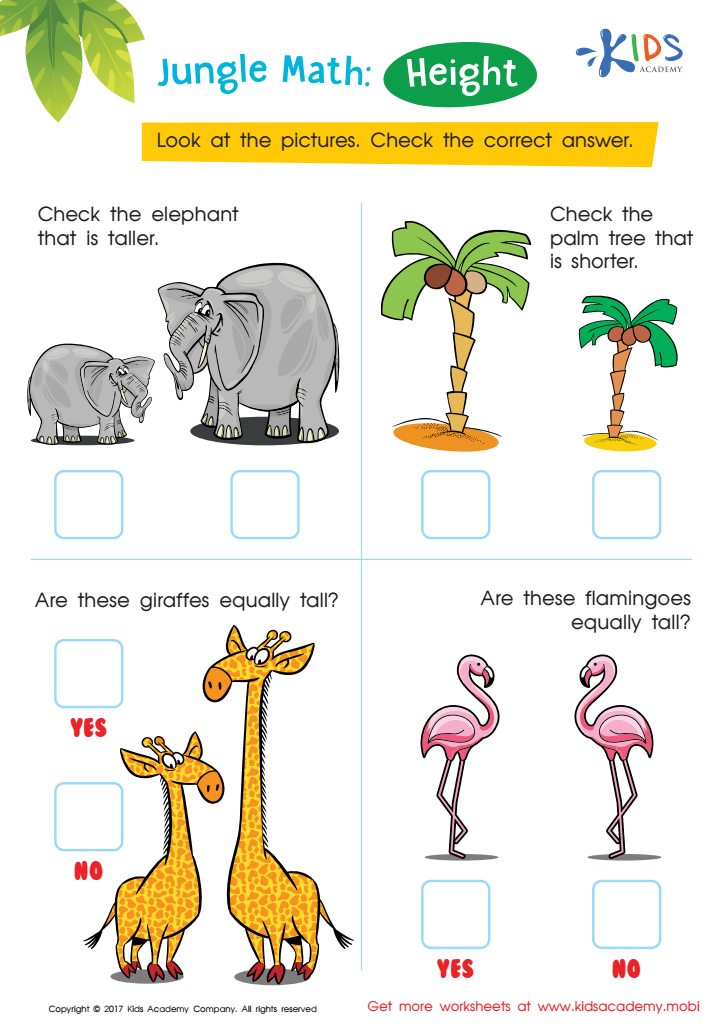
Which Is Taller Worksheet
 Assign to My Students
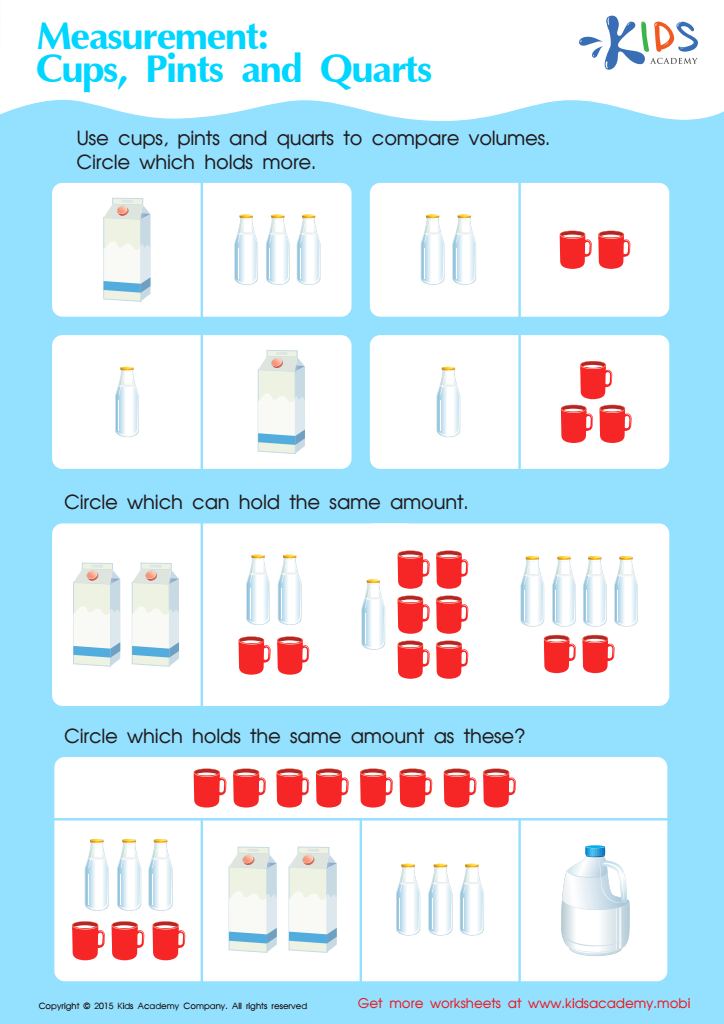
Measurement: Compare Volumes Worksheet
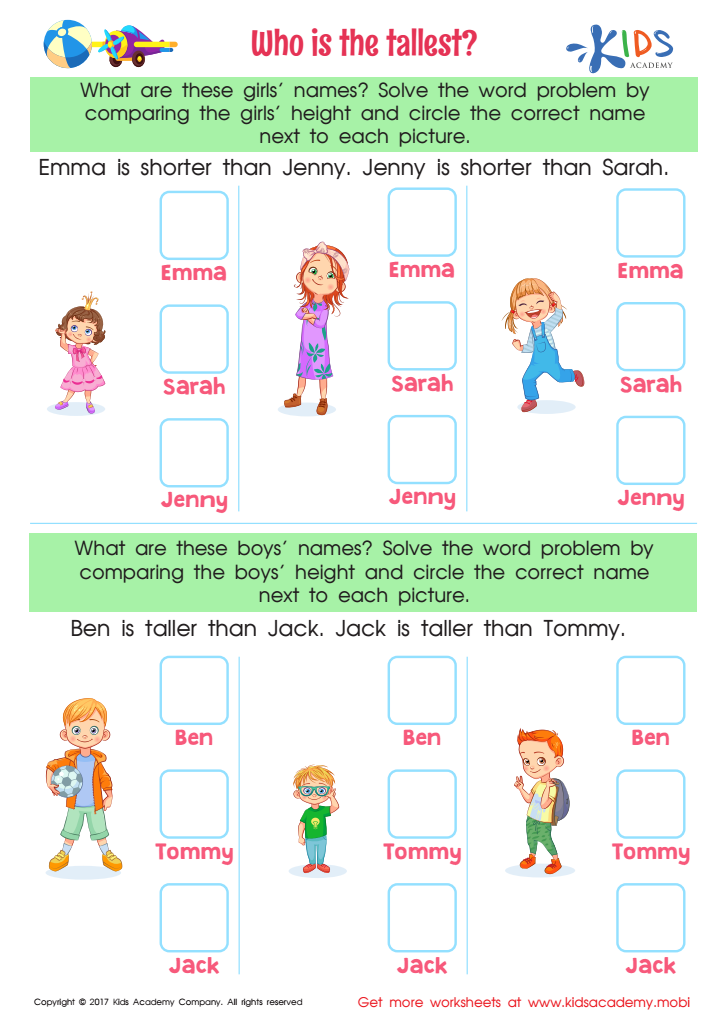
Who Tallest Printable
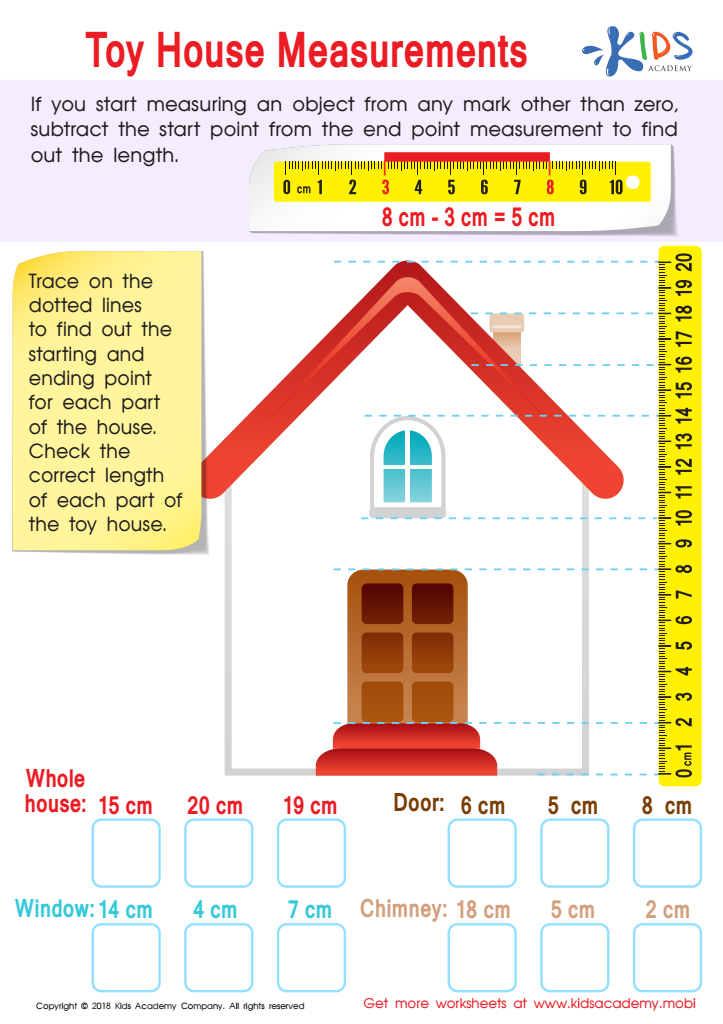
Toy House Measurements Worksheet
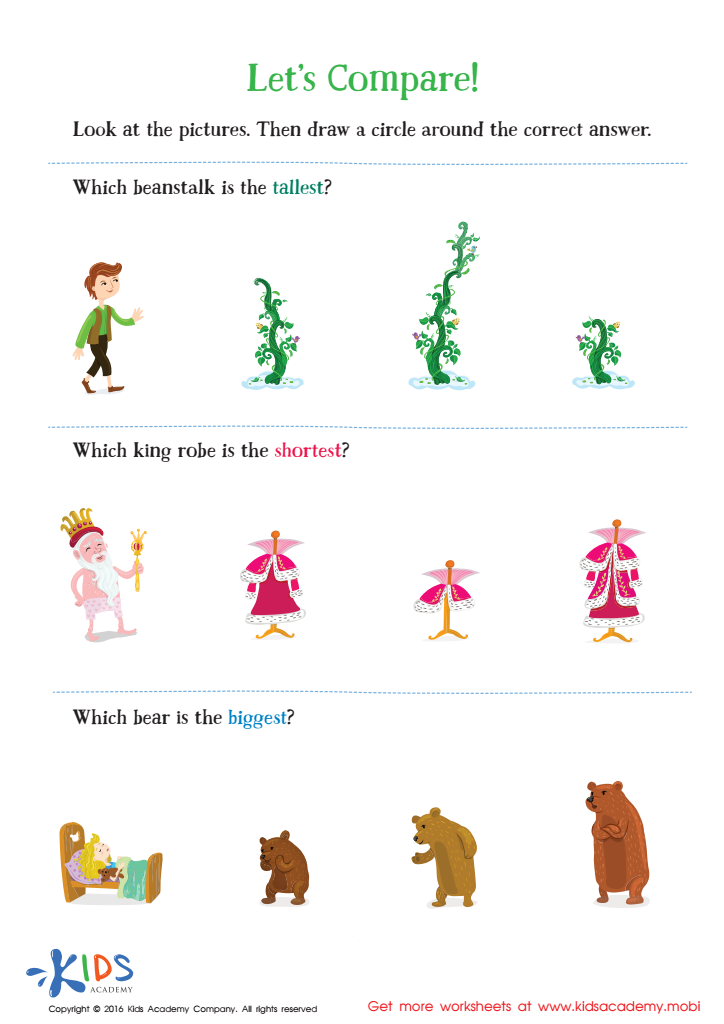
Fairy Tale Worksheet: Let's Compare






%20(1).jpg)
Comparing sizes is a foundational math skill for young learners aged 5-7, making it essential for parents and teachers to emphasize its importance. This skill not only enhances mathematical reasoning but also fosters critical thinking and problem-solving abilities. When children learn to compare sizes, they develop their understanding of concepts such as 'larger than,' 'smaller than,' and 'equal to.' This foundational understanding lays the groundwork for more complex math functions in future grades.
Moreover, engaging in size comparison activities can boost a child's confidence. As they grasp these concepts, they become more comfortable dealing with numbers and measurements, creating a positive attitude toward math.
In addition, comparing sizes involves real-world applications, which brings math to life. Whether sorting toys, measuring ingredients for a recipe, or analyzing their own growth, children can relate math to everyday tasks. This promotes a deeper appreciation for mathematics beyond the classroom, making learning practical and meaningful.
Furthermore, promoting early math skills fosters collaboration during group activities, encouraging communication and teamwork. By acknowledging and supporting comparative size activities, parents and teachers can greatly contribute to a child’s holistic development, setting strong groundwork for future academic success.