Recognizing shapes Extra Challenge Math Worksheets for Ages 5-7
3 filtered results
-
From - To
Boost your child's geometry skills with our "Recognizing Shapes Extra Challenge Math Worksheets for Ages 5-7." Perfect for young learners, these exciting worksheets feature fun and engaging activities designed to improve shape recognition and spatial awareness. Each page offers various tasks that encourage kids to identify, match, and differentiate shapes while keeping them entertained. Enhance your child's learning experience, build a strong math foundation, and support their critical thinking skills with these educational resources. Ideal for both classroom use and home practice, our worksheets make learning shapes an enjoyable and rewarding adventure!
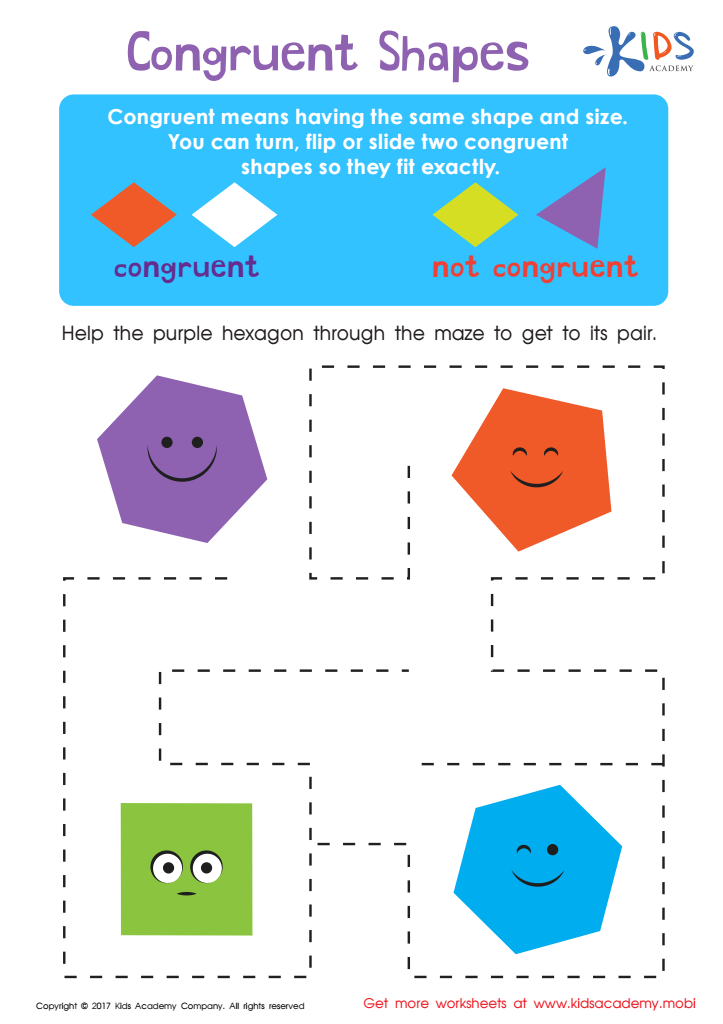
Congruent Shapes Worksheet
 Assign to My Students
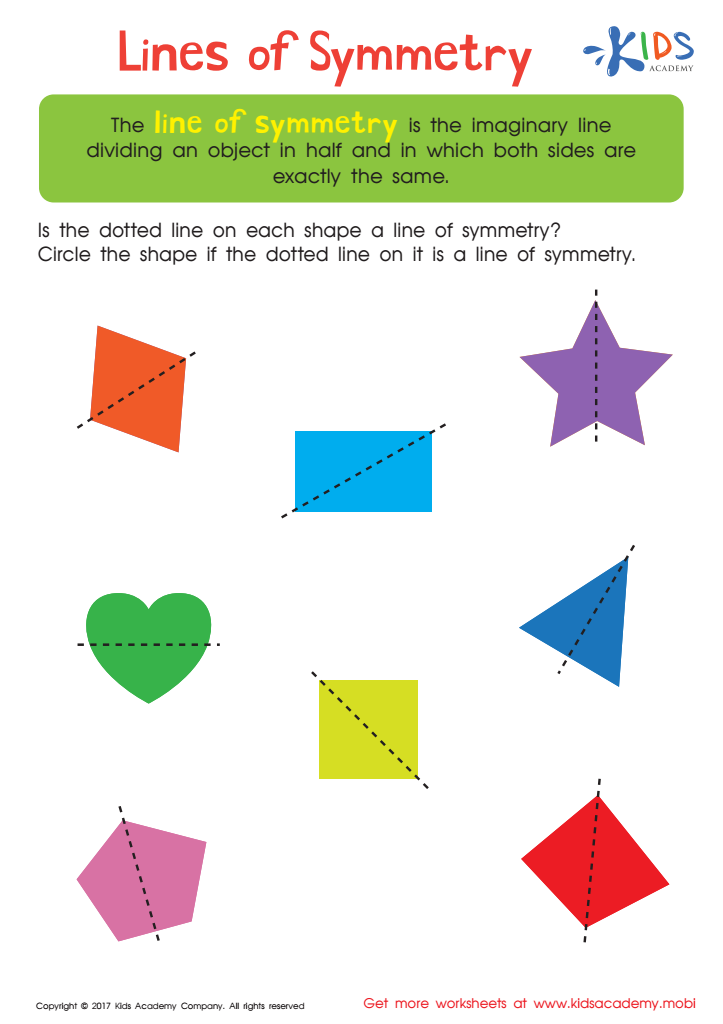
Lines of Symmetry Printable
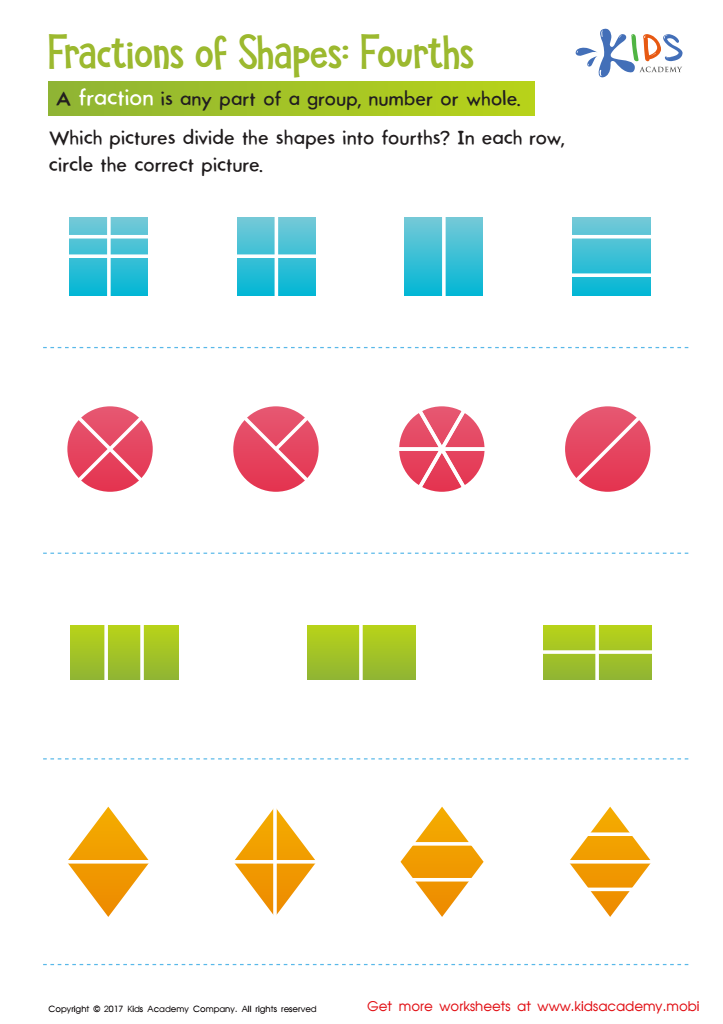
Fractions of Shapes Worksheet







Recognizing shapes is an essential foundational skill for young children, particularly those aged 5-7, as it directly influences their cognitive development and later academic success. Engaging in the Extra Challenge Math for recognizing shapes does more than teach kids the names of various geometric figures; it strengthens their spatial awareness, critical thinking, and problem-solving skills. When children differentiate between shapes, they learn to observe and define the properties and attributes of objects, which is crucial for developing their ability to categorize and organize information.
Additionally, early proficiency in recognizing shapes supports learning in other subject areas, such as reading, writing, and science. For instance, understanding shapes and patterns aids in letter and number recognition, essential skills for school readiness. Similarly, in science, grasping geometric concepts enhances children's ability to comprehend the physical world and engage more deeply in logic-based reasoning.
Parents and teachers should prioritize shape recognition challenges because they introduce an element of fun into learning, fostering a love for mathematics from a young age. By making shape recognition an enjoyable activity, children develop a positive attitude towards math, which encourages continual exploration and curiosity about learning. Given these multifaceted benefits, emphasizing shape recognition in early education ensures a strong, well-rounded academic foundation for children.