Spelling practice Extra Challenge Grammar Worksheets for Ages 5-7
5 filtered results
-
From - To
Enhance your child's spelling skills with our "Spelling Practice Extra Challenge Grammar Worksheets" designed specifically for ages 5-7. These engaging worksheets combine fun activities with effective grammar exercises, allowing young learners to master spelling while honing their language skills. Each worksheet features colorful illustrations and age-appropriate tasks that capture children's interest and promote active participation. With a variety of challenges, from matching words to completing sentences, these resources ensure a comprehensive understanding of spelling rules. Perfect for classroom use or home practice, our worksheets provide parents and teachers with an invaluable tool for nurturing confident, skilled writers. Start the learning adventure today!
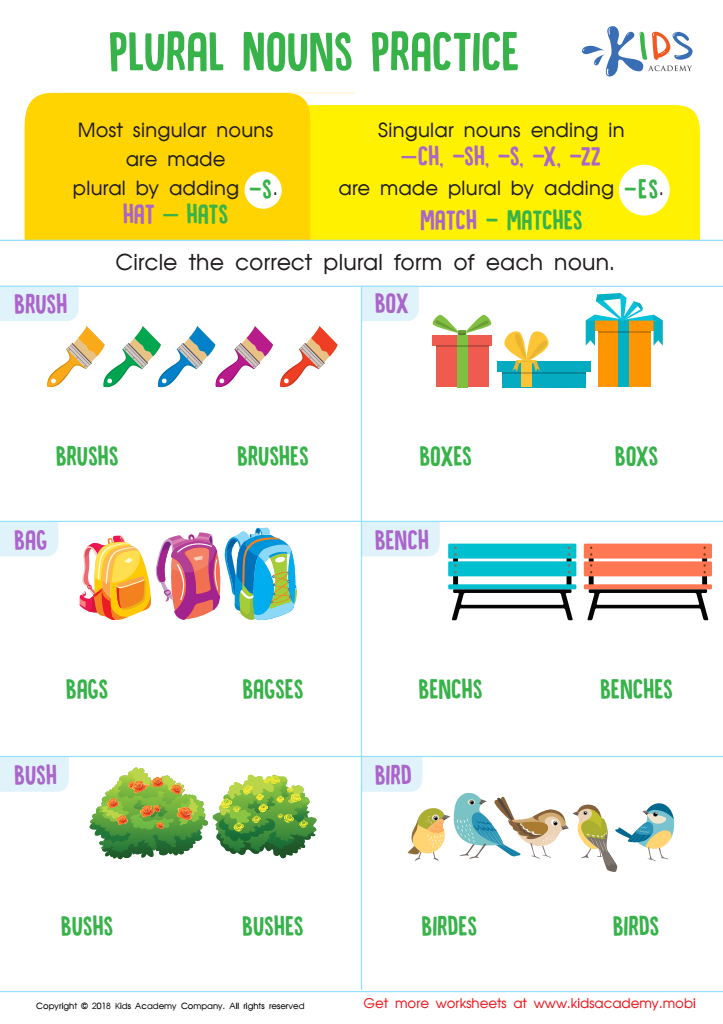
Plural Nouns Practice Worksheet
 Assign to My Students
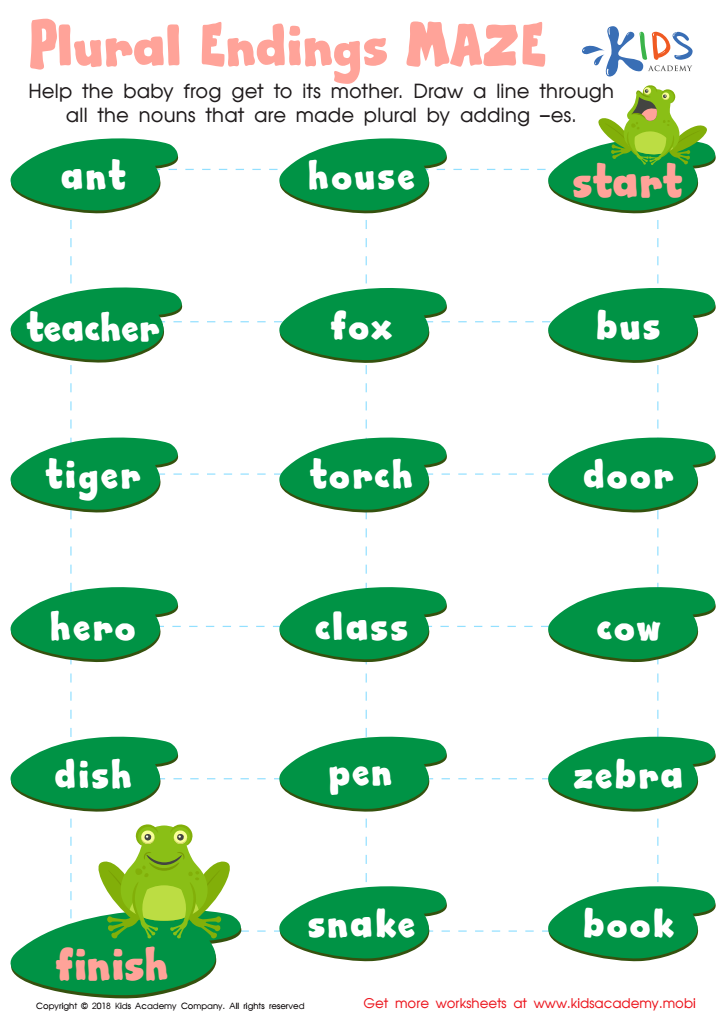
Plural Endings Maze Worksheet
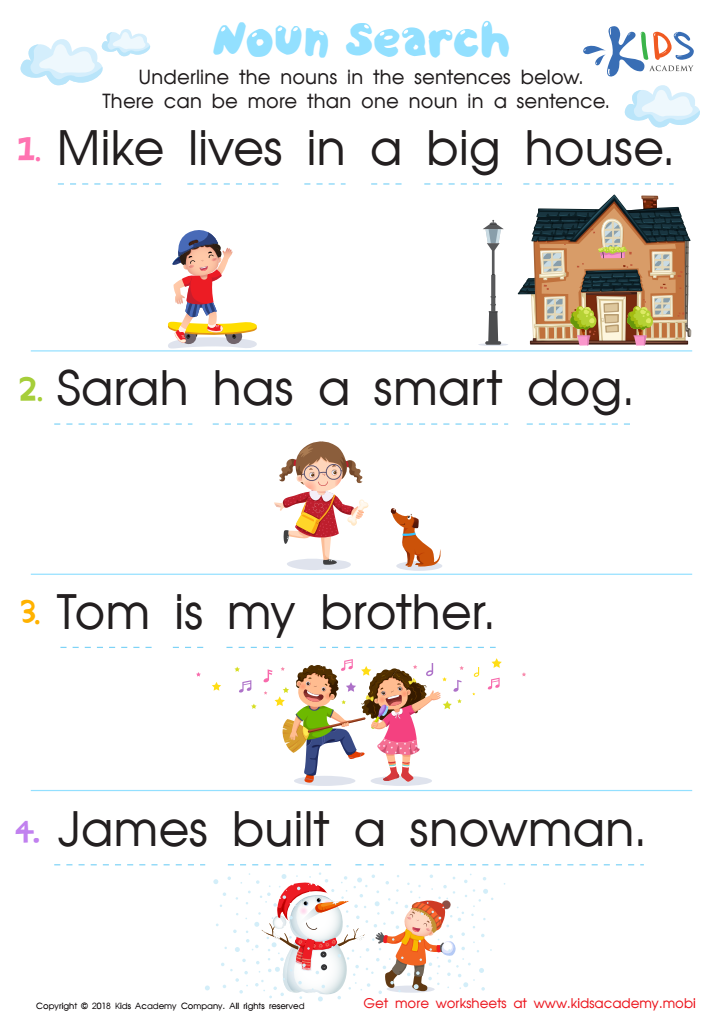
Noun Search Worksheet
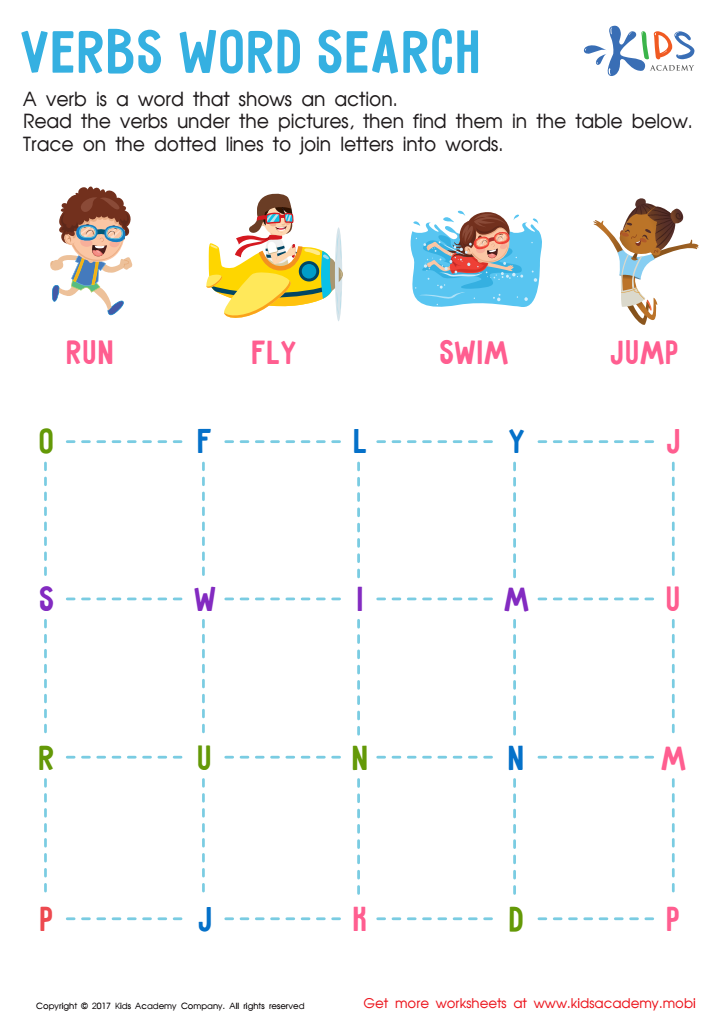
Verbs Word Search Worksheet
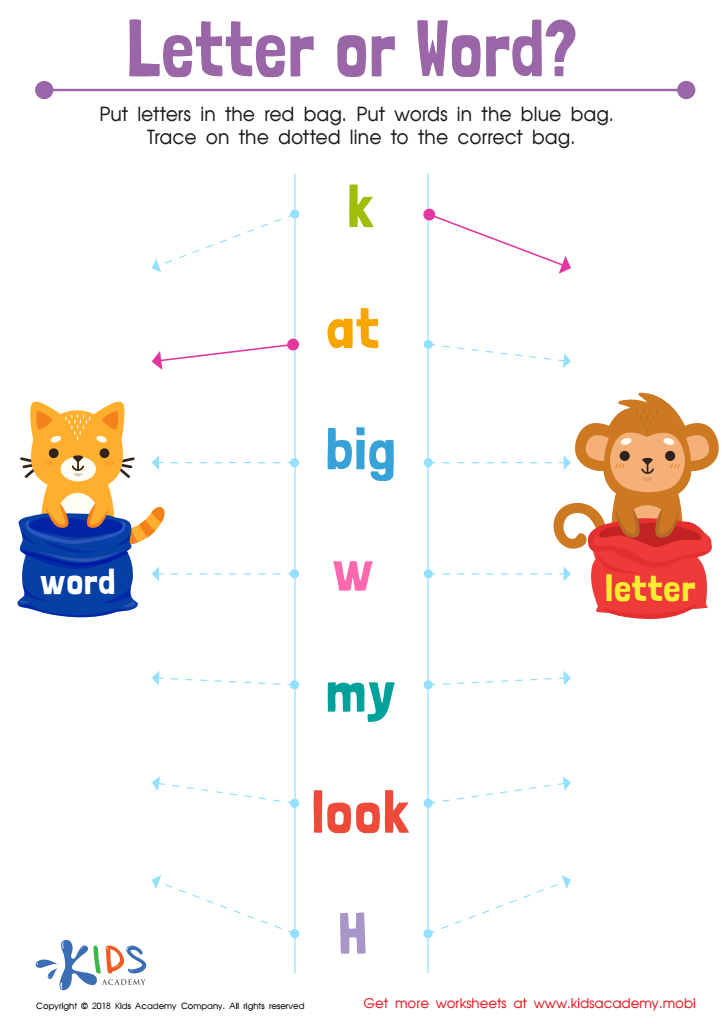
Letter or Word? Worksheet


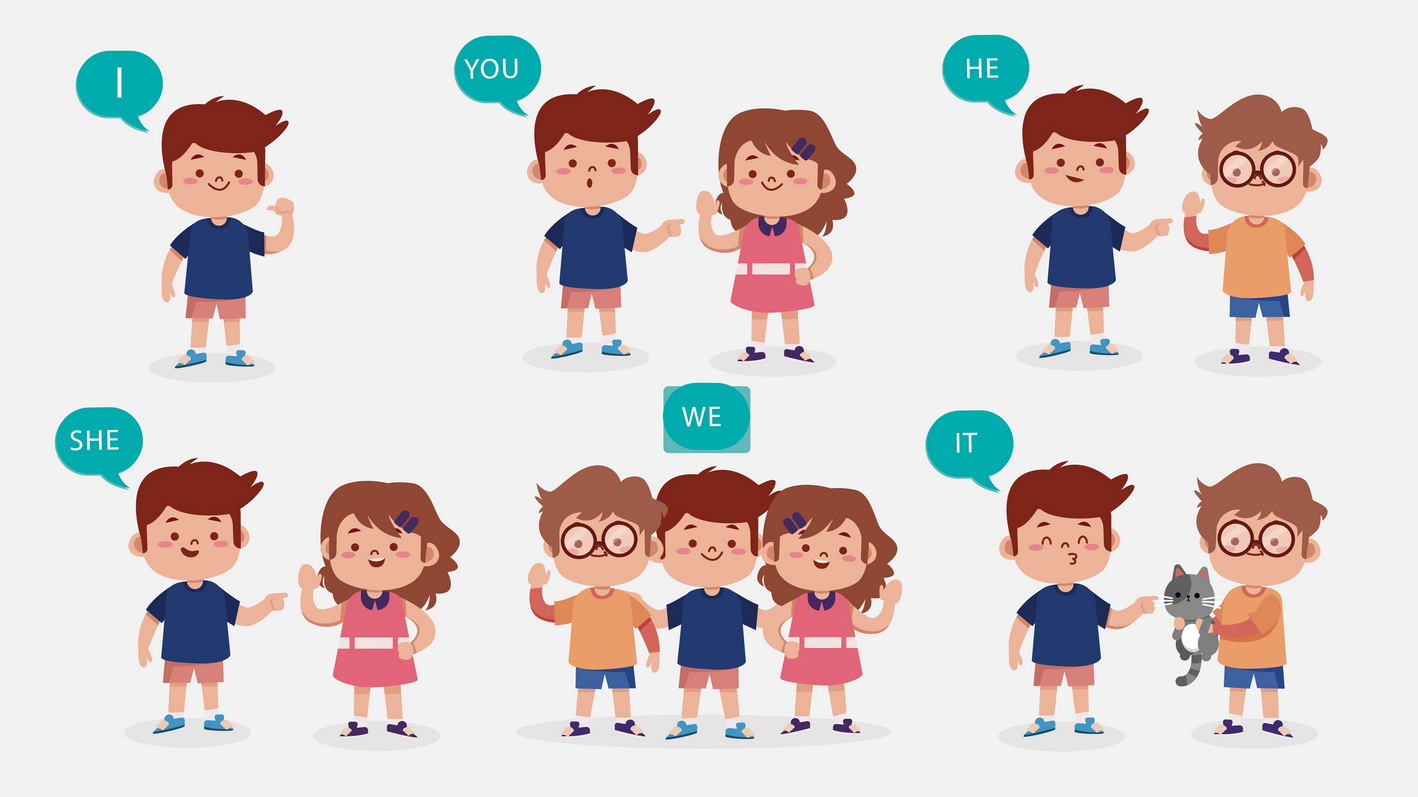

.jpg)


Parents and teachers should prioritize spelling practice and grammar exercises for children aged 5-7, as these foundational skills are crucial for language development and effective communication. At this early age, children are developing their literacy abilities, and strong spelling skills can enhance reading fluency. This improves their confidence in both written and verbal expression.
Engaging in spelling practice also promotes cognitive development, as children learn to recognize patterns in letters, associate sounds with symbols, and understand word structures. This understanding paves the way for improved reading comprehension, as children begin decoding and encoding words more effectively.
Furthermore, incorporating grammar exercises at this stage helps children gain a fundamental understanding of sentence structure, punctuation, and proper word usage. These components are essential for clear and coherent writing.
Moreover, engaging parents and teachers in children’s learning fosters a supportive environment that encourages children to take risks with their language skills. As they practice spelling and grammar in a playful and engaging manner—such as through games and fun activities—they develop a lifelong love for language.
Therefore, prioritizing spelling practice and grammar for young learners sets the stage for academic success while building critical language skills essential for effective communication in all areas of life.