Letter recognition Extra Challenge ABC Letters Worksheets for Ages 5-8
7 filtered results
Difficulty Level
Grade
Age
-
From - To
Subject
Activity
Standards
Introducing the Letter Recognition Extra Challenge: ABC Letters Worksheets for Ages 5-8! Designed for young learners eager to master the alphabet, these engaging and interactive worksheets offer a fun yet challenging way to enhance letter recognition skills. Perfect for children aged 5-8, each activity is thoughtfully crafted to stimulate their minds, reinforce learning, and build confidence. Whether your child is just beginning to learn their ABCs or looking to polish their skills, these worksheets provide the extra challenge they need. Embark on a journey of learning, discovery, and achievement with our expertly designed resources.
Favorites
With answer key
Interactive
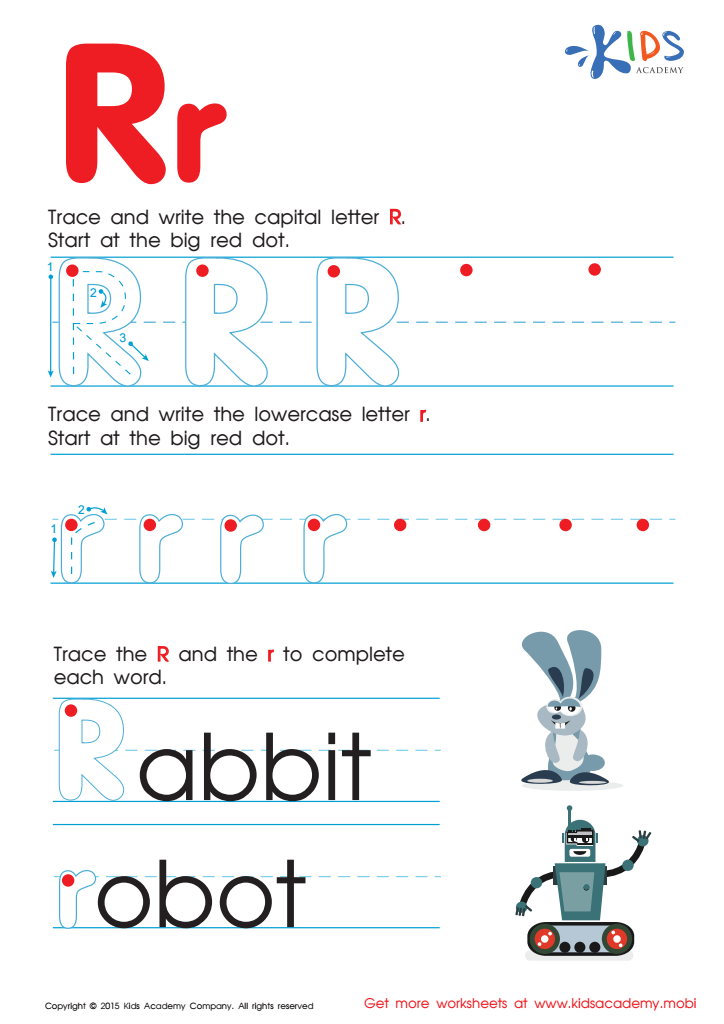
Letter R Tracing Page
Trace and write the letter "R" with this worksheet for kindergarten. Start with the uppercase, then move on to the lowercase. Write the letters several times for practice. Then help complete the words for the rabbit and robot, spelling carefully. More ABC worksheets can be found at Kids Academy.
 Assign to My Students
Letter R Tracing Page
Worksheet

Letter X Tracing Page
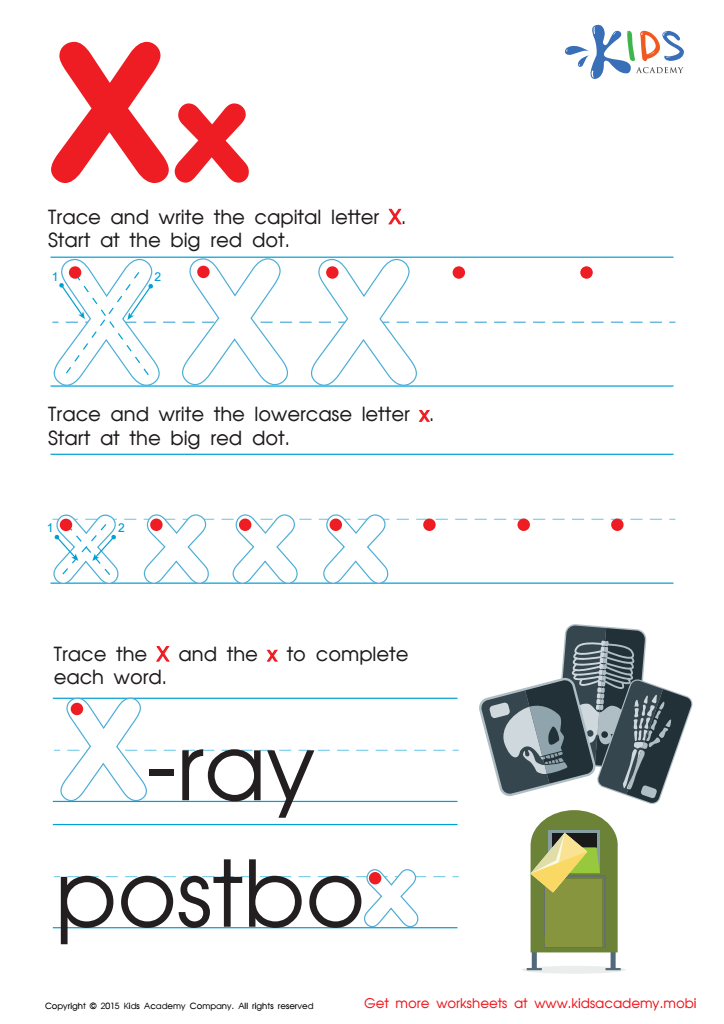
Trace the uppercase letter "X" to learn, then write it yourself and practice. Then do the same with the lowercase "x" before completing the words "X-ray" and "postbox". Enjoy our alphabet printables!
Letter X Tracing Page
Worksheet
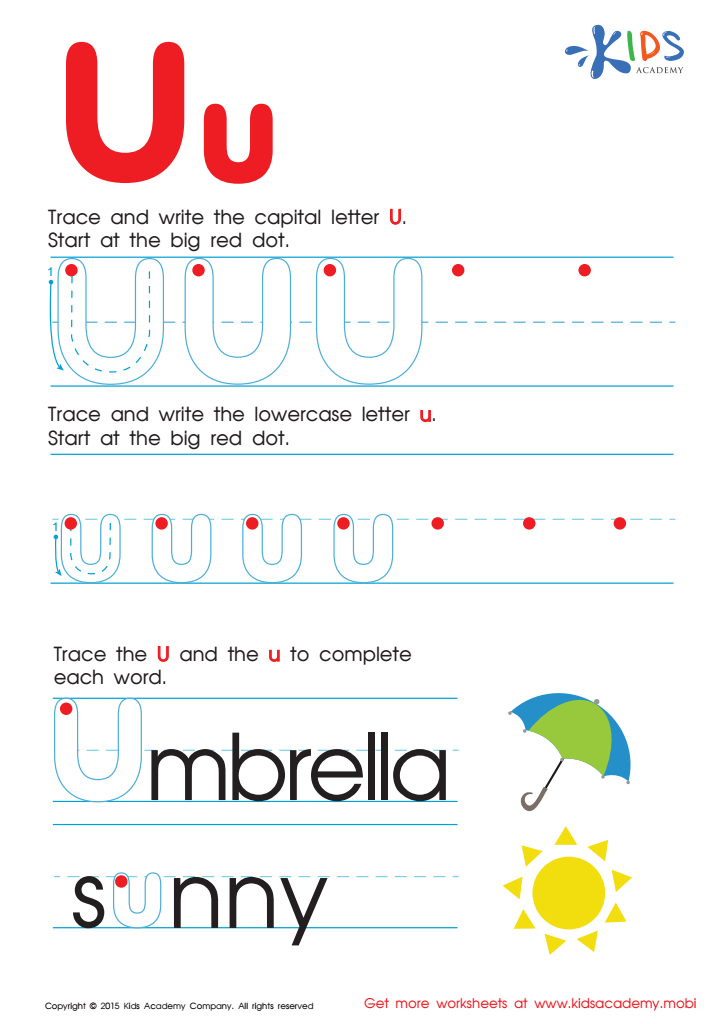
Letter U Tracing Page
Ready to trace and write the letter "U"? Use our worksheet and practice tracing both uppercase and lowercase letters. Complete the words "umbrella" and "sunny" with a capital "U". Check our full collection of alphabet printables for more activities.
Letter U Tracing Page
Worksheet
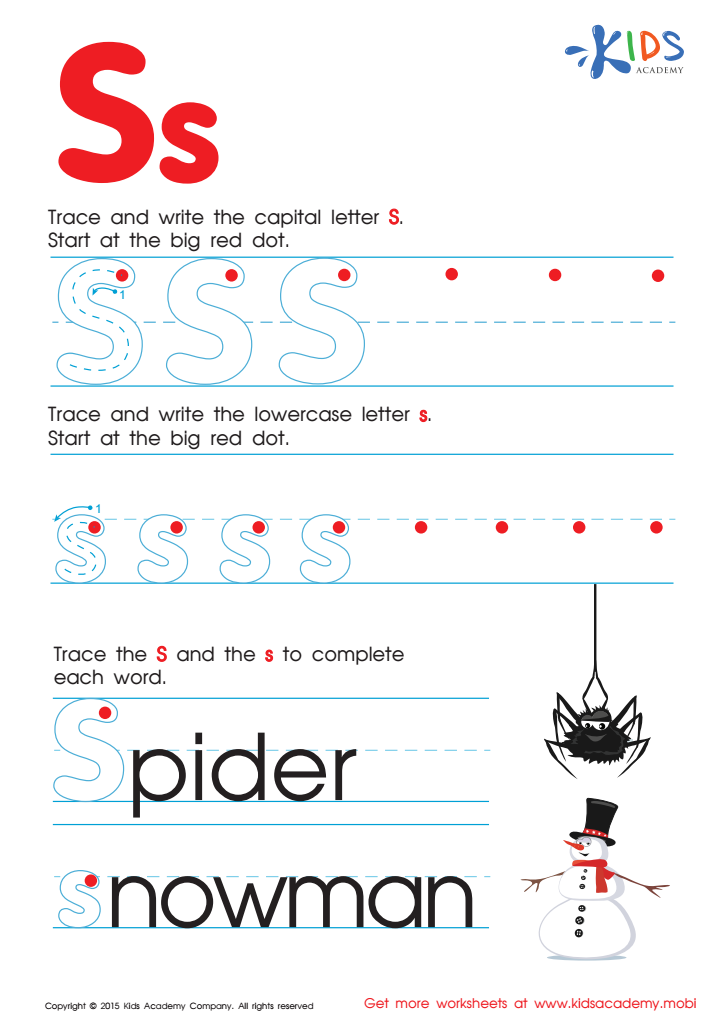
Letter S Tracing Page
Trace and write the capital and lowercase "S" on this ABC worksheet for kindergarten. Start with the big red dot and be careful. When you finish, help the spider and snowman in the pictures restore their words with the capital and lowercase letters. Continue learning the alphabet with Kids Academy.
Letter S Tracing Page
Worksheet
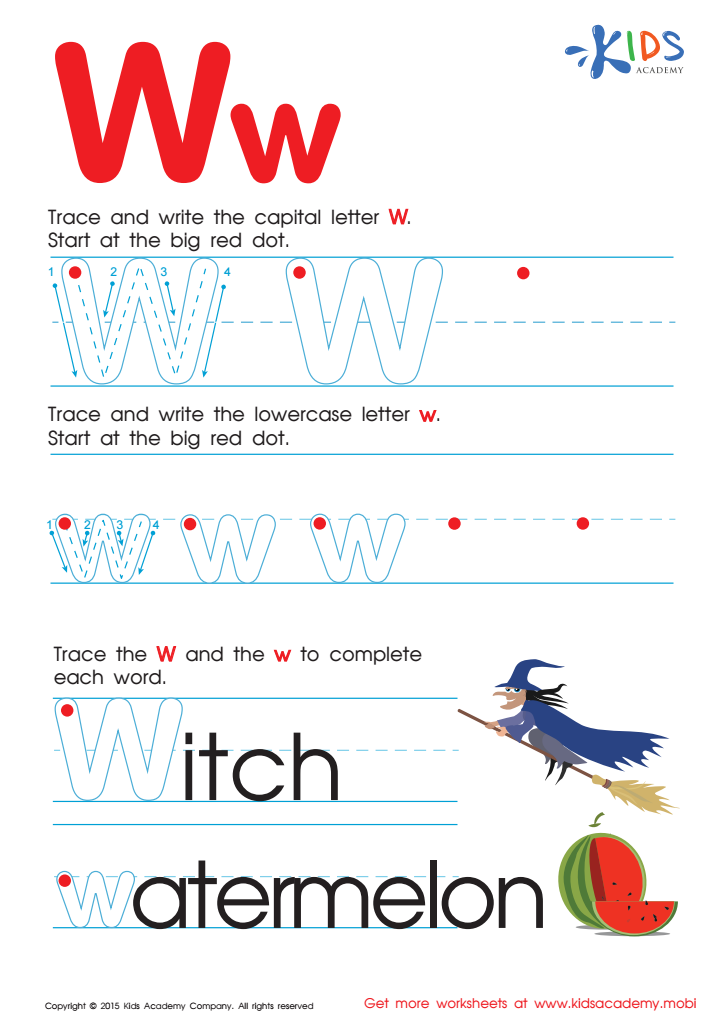
Letter W Tracing Page
Trace and write the capital and lowercase letter W with this free letter tracing worksheet by Kids Academy. Complete the words "Witch" (capital) and "watermelon" (lowercase). Check out our other kindergarten alphabet worksheets!
Letter W Tracing Page
Worksheet
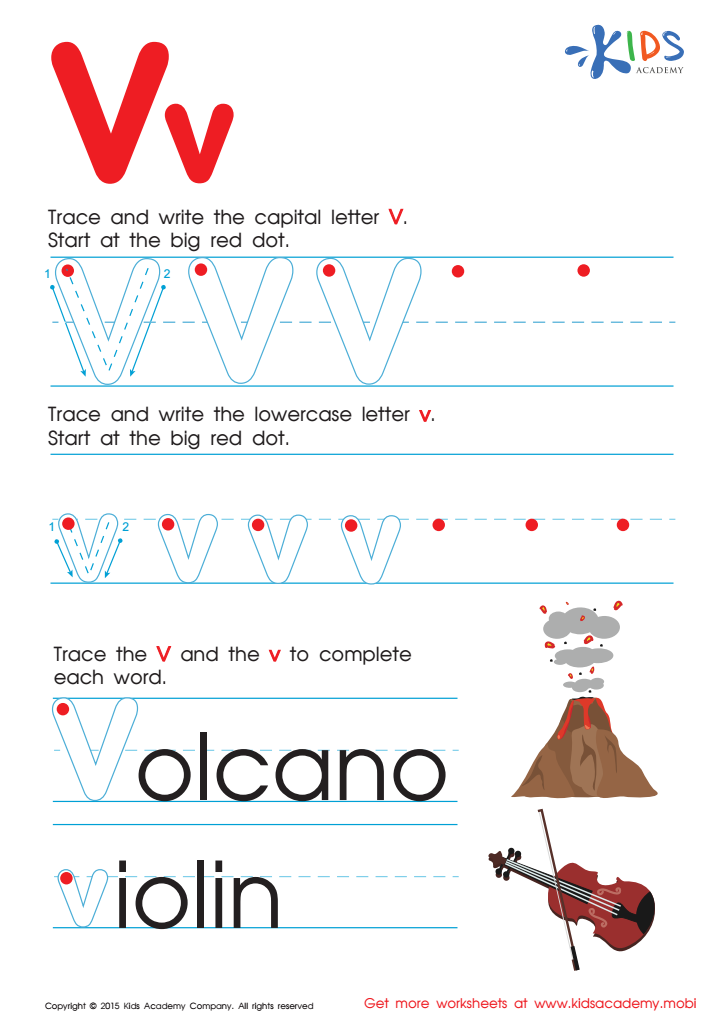
Letter V Tracing Page
Trace the uppercase and lowercase letter "V" with our kindergarten tracing worksheet. Begin at the red dot and follow the lines. Write it several times. Complete the words "Volcano" and "violin". Get more alphabet activities at Kids Academy.
Letter V Tracing Page
Worksheet
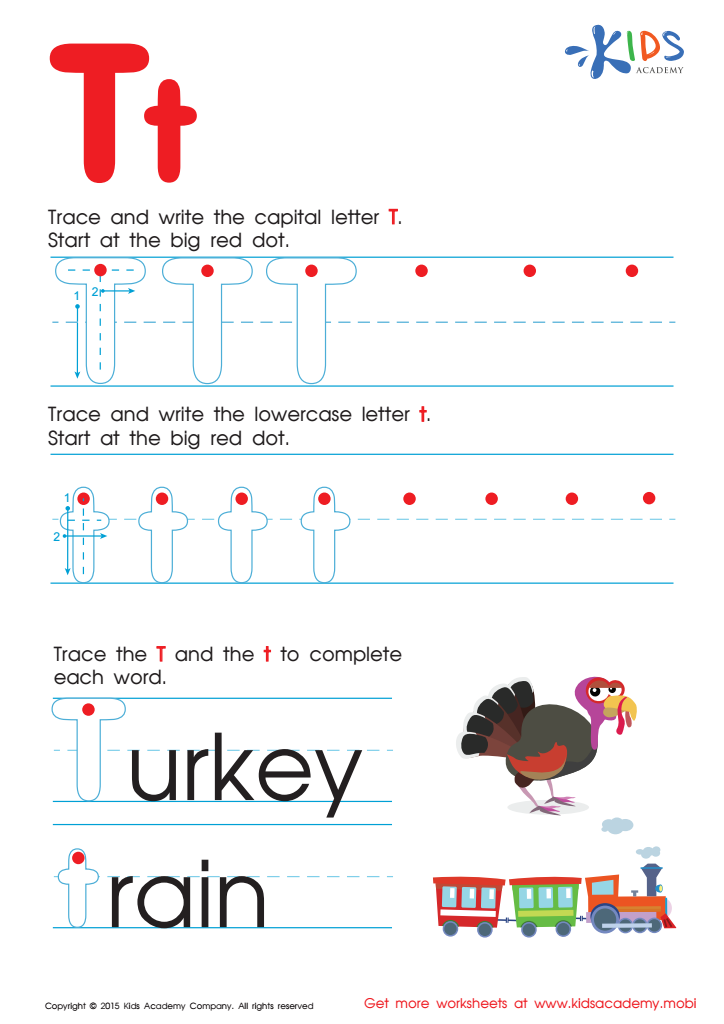
Letter T Tracing Page
Trace letters, complete words, draw pictures and see your kids having fun!
Kids Academy offers alphabet tracing worksheets to learn to write letters. Start with the big red dot, trace the letter, then write it. Practice uppercase and lowercase. Have fun completing words with a Turkey or a rain-train and draw pictures. Get more printable worksheets to make learning enjoyable.
Letter T Tracing Page
Worksheet
Join Kids Academy for Free
Who is primarily going to use this learning content?







Letter recognition is foundational for early literacy, and focusing on it through specialized activities like the "Letter Recognition Extra Challenge ABC Letters" for ages 5-8 can have several key benefits. First and foremost, mastering letter recognition ensures that children can identify and distinguish between the 26 letters of the alphabet, both in their uppercase and lowercase forms. This skill is crucial as it lays the groundwork for children to develop reading and writing abilities.
Additionally, an "extra challenge" approach can help strengthen cognitive development by encouraging kids to go beyond basic recognition to more complex tasks, aiding in their overall academic growth. These challenges often incorporate games and activities that make learning engaging and fun, fostering a positive attitude towards education.
For parents and teachers, this provides a structured and effective method to ensure children develop these essential skills early, prepared for future learning scenarios. When children struggle with such fundamental concepts, future learning becomes incrementally more challenging. Addressing these skills early can prevent potential reading difficulties and build a strong foundation for academic success. Therefore, investing time and effort in these recognition activities ensures children are equipped with the essential basics, setting them up for a successful scholastic journey.