Vowel Recognition Extra Challenge Short Vowels Worksheets for Ages 5-8
4 filtered results
Difficulty Level
Grade
Age
-
From - To
Subject
Activity
Standards
Unlock your child's literacy potential with our "Vowel Recognition Extra Challenge Short Vowels Worksheets," tailored specifically for ages 5-8! These engaging and interactive worksheets help young learners master short vowel sounds through diverse activities that promote phonemic awareness. As kids complete fun exercises, they improve their ability to identify vowels, enhancing their reading and writing skills. With brightly colored designs and age-appropriate challenges, these worksheets capture children's attention while ensuring they're learning effectively. Perfect for homeschooling or classroom use, our exclusive printable resources offer an exciting way to build a strong foundation in language arts. Get started today and watch your child thrive!
Favorites
With answer key
Interactive
Short Vowel Sound U Worksheet
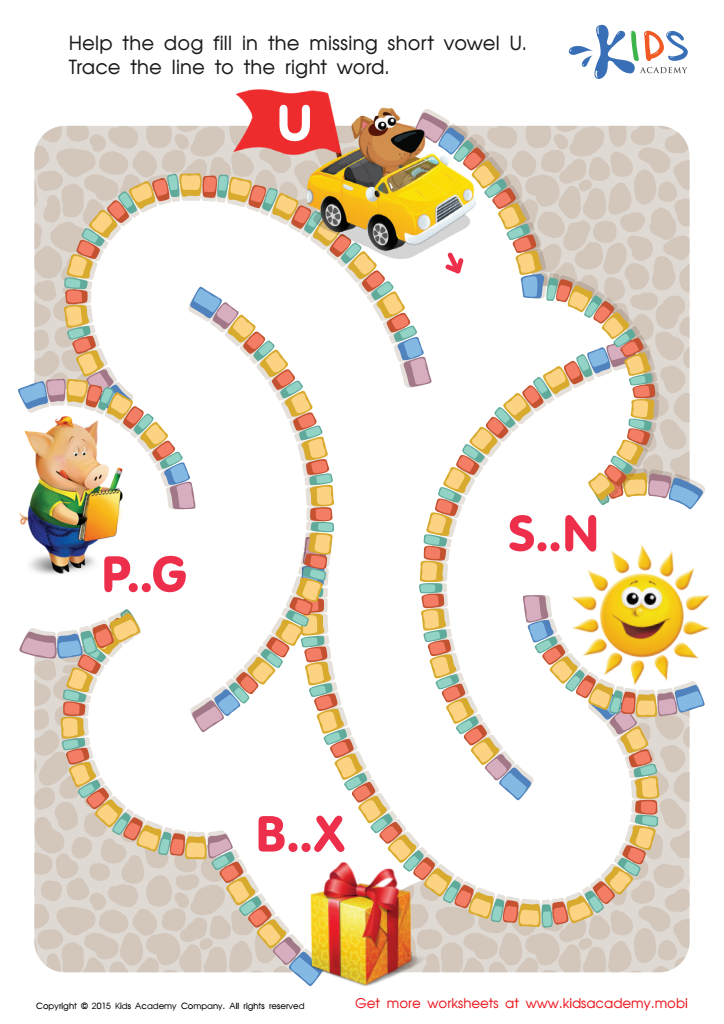
Practice abc phonics to help young learners link sounds to letters. This free printable phonics worksheet helps your kid learn the short vowel sound U. Guide them through the maze to help the dog complete the word "sun". Make sure they say the word out loud to emphasize the short U sound. Check out more phonics worksheets with mazes here.
 Assign to My Students
Short Vowel Sound U Worksheet
Worksheet
Short Vowel Sound I Worksheet
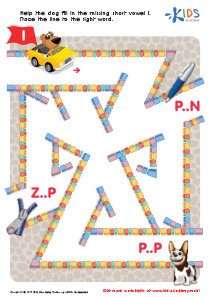
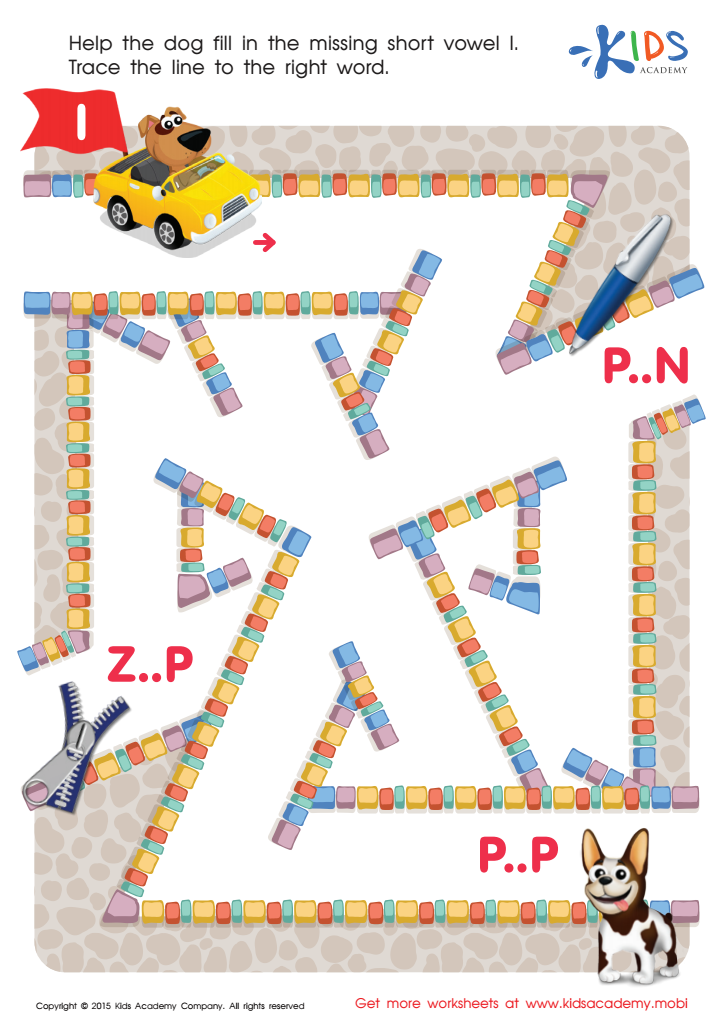
This free printable phonics worksheet will get your kid prepped for reading! It's a maze to help the dog complete the word “zip” with the missing letter I. Have your kid say the word aloud to learn the I sound. It's a great way to practice reading, writing and spelling skills. Check out here for more phonics worksheets!
Short Vowel Sound I Worksheet
Worksheet
Short Vowel Sound E Worksheet
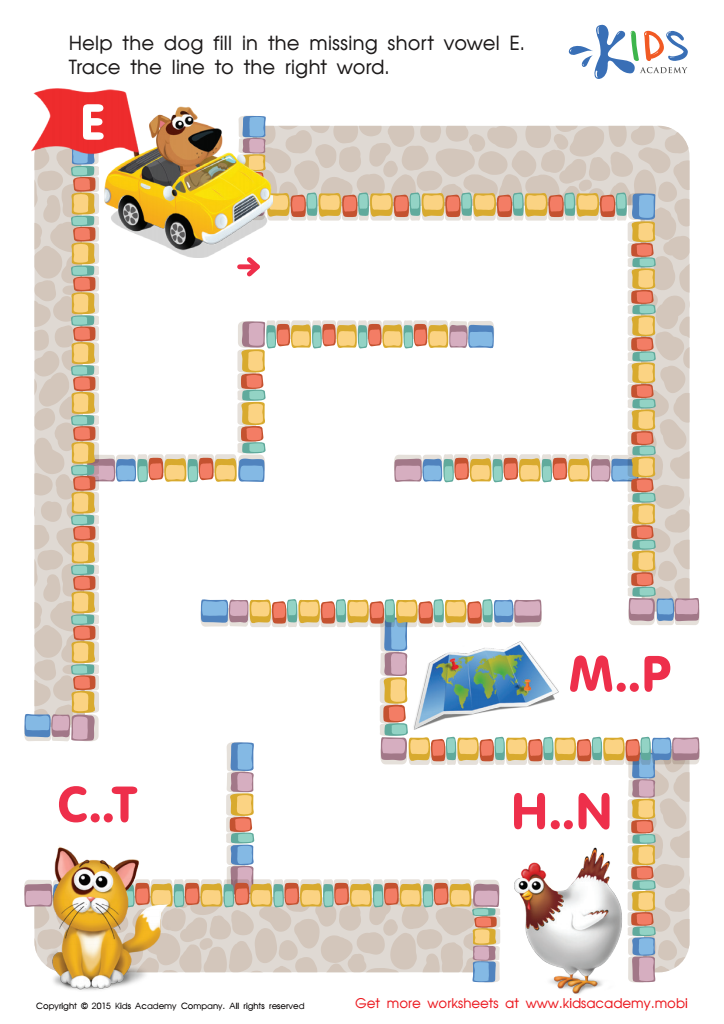
This free printable phonics worksheet helps kids learn the short vowel sound E. Kids need to help the dog complete the word “hen” by finding their way through a maze. It teaches kids to see the connection between letters and sounds and also strengthens their writing and spelling skills. Fun and educational, this phonics worksheet is great for kids. Want more? Check out here.
Short Vowel Sound E Worksheet
Worksheet
Short Vowel Sound O Worksheet
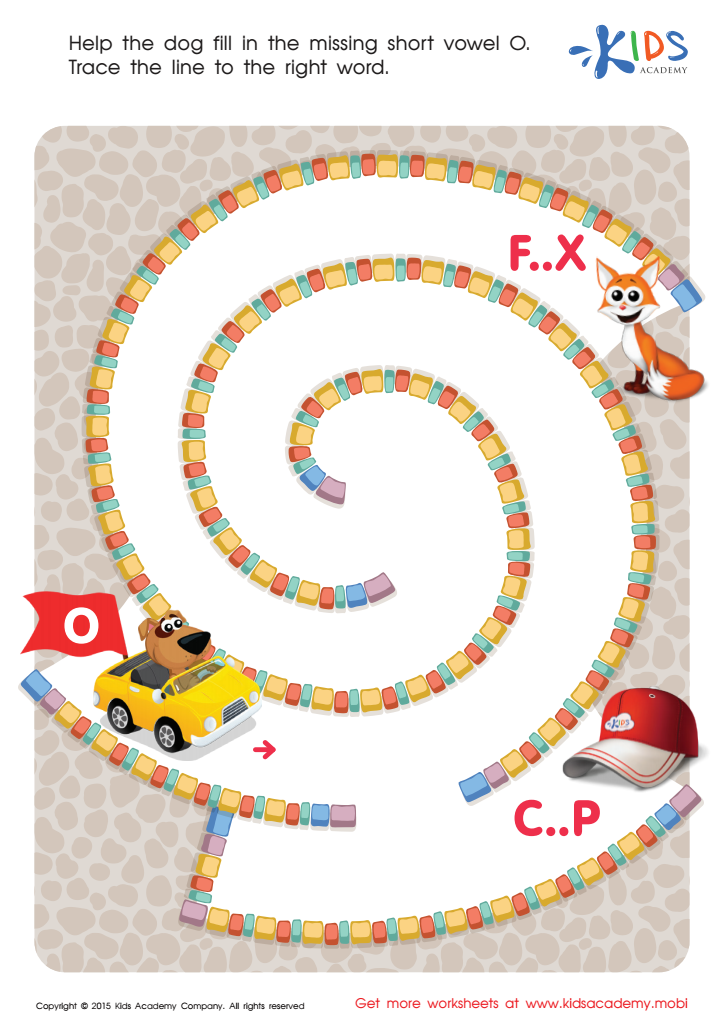
Help your child learn the short vowel sound O with this fun and free printable phonics worksheet! They'll need to complete the maze to help the dog finish the word "fox" with the missing letter O. Engage their fine motor muscles while they color or trace the maze with crayon or pencil. This educational activity is sure to bring a smile to your little learner's face! For more phonics worksheets, check here.
Short Vowel Sound O Worksheet
Worksheet
Join Kids Academy for Free
Who is primarily going to use this learning content?



Vowel recognition is a critical skill for early literacy development, particularly for children aged 5-8 who are building their reading and writing foundations. "Extra Challenge Short Vowels" activities enhance this learning by focusing specifically on short vowels, which are often more challenging for young learners. Understanding short vowels is essential because they form the backbone of many words, affecting pronunciation and meaning.
For parents and teachers, promoting vowel recognition can lead to improved reading fluency and comprehension. When children readily identify short vowels, they become more confident in sounding out words, which ultimately nurtures a love for reading. Such activities can also support phonemic awareness—an essential skill that helps with spelling and vocabulary development.
Additionally, engaging in vowel recognition challenges promotes cognitive development and reinforces critical thinking skills, as children learn to categorize and differentiate sounds. These activities can easily be integrated into daily routines or classroom settings, fostering a fun and interactive learning environment. By prioritizing vowel recognition through Extra Challenge Short Vowels activities, parents and teachers empower children to become independent learners who are enthusiastic about their literacy journey.