
Historical Knowledge Extra Challenge Worksheets for Ages 5-8
3 filtered results
Difficulty Level
Grade
Age
-
From - To
Subject
Activity
Standards
Challenge young minds with our Historical Knowledge Extra Challenge Worksheets designed for ages 5-8. These engaging worksheets push students to explore significant events, figures, and cultures, enhancing their understanding of history in a fun, interactive way. Perfect for young learners, these printables blend creativity with education, fostering critical thinking and a love for history. Each worksheet offers unique problems and activities that go beyond regular history lessons, prompting kids to dive deeper into the past. Ideal for classroom or home use, these worksheets are excellent resources to enrich your child's historical knowledge and cognitive skills. Try them today!
Favorites
With answer key
Interactive
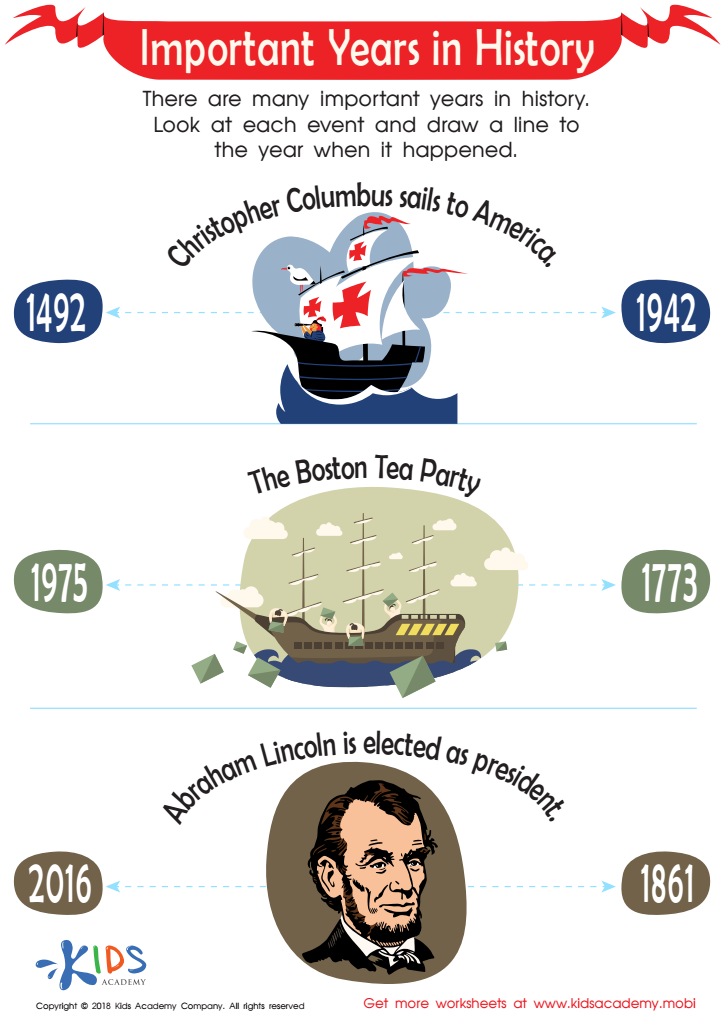
Important Years in History Worksheet
Ask your students if they can name any important dates in history. Then, look at the images in the worksheet with them. Read the sentences above each one to them and have them trace a line to the year when the event occurred.
 Assign to My Students
Important Years in History Worksheet
Worksheet
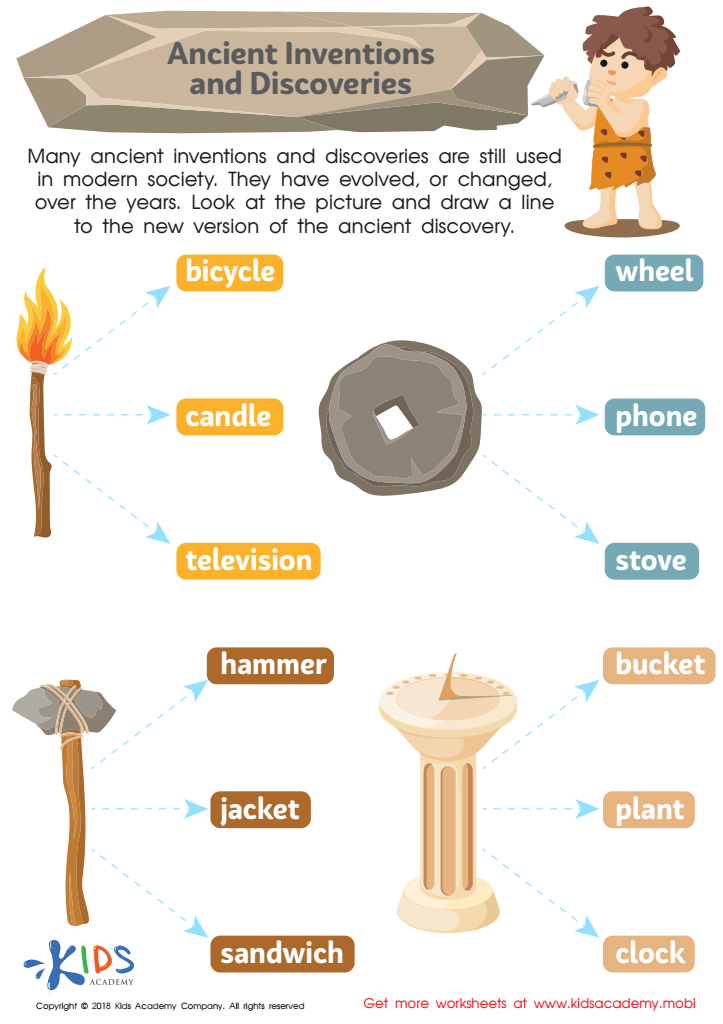
Ancient Inventions and Discoveries Worksheet
Kids may think inventions are high-tech, but many of the world's most important inventions are ancient! This Kids Academy worksheet helps kids learn about the wheel, clock, tools and candles - inventions that changed the world! Kids will simply review the pictures and trace the dotted lines to the right answers. Great for social studies!
Ancient Inventions and Discoveries Worksheet
Worksheet
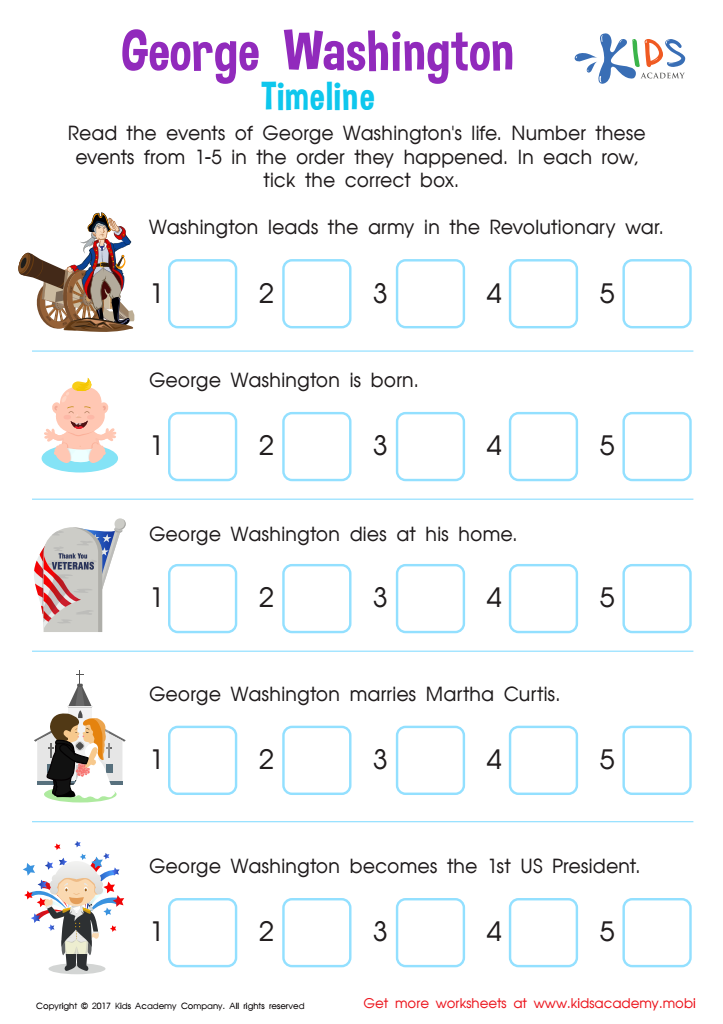
George Washington Timeline Worksheet
Help your child learn about George Washington and practice sequencing events! This printable worksheet will boost their reading and comprehension skills while they review historical facts. It's a great challenge to keep them engaged and learning.
George Washington Timeline Worksheet
Worksheet
Join Kids Academy for Free
Who is primarily going to use this learning content?





Parents and teachers should care about Historical Knowledge Extra Challenge for ages 5-8 because early exposure to history fosters a deeper understanding of the world. At this crucial developmental stage, children are naturally curious and highly impressionable, making it an ideal time to cultivate an appreciation for history.
Engaging with historical knowledge helps young learners develop critical thinking skills. By examining past events, children learn to ask questions, recognize different perspectives, and understand cause and effect relationships. These abilities are essential not only for academic success but also for becoming informed, empathetic citizens.
Additionally, early introduction to history enhances cultural awareness. Understanding diverse cultures and historical contributions fosters a sense of respect and inclusion, which is invaluable in our increasingly interconnected world. It also nurtures a sense of identity, as children learn the stories and milestones that have shaped their own communities and heritage.
Making history fun and challenging can ignite a passion for learning. Activities such as interactive storytelling, role-playing, and hands-on projects make historical knowledge relevant and engaging. This approach helps children associate history with excitement and discovery, setting a positive tone for future educational pursuits.
In summary, prioritizing historical knowledge challenges for young children builds foundational skills, promotes cultural awareness, and makes learning enjoyable, all of which contribute to their overall personal and academic growth.








