Fraction visualization Extra Challenge Geometry Worksheets for Ages 5-8
3 filtered results
-
From - To
Enhance your child's understanding of fractions with our Extra Challenge Geometry Worksheets, designed specifically for ages 5-8. These engaging resources focus on fraction visualization, allowing young learners to grasp fundamental concepts through interactive exercises. Through colorful illustrations and hands-on activities, your child will explore the relationships between parts and wholes, mastering essential geometry skills. Perfect for at-home learning or classroom reinforcement, our worksheets foster critical thinking and problem-solving abilities. Give your child the tools they need to succeed and develop a strong foundation in mathematics with our thoughtfully crafted fraction visualization challenges. Download today and ignite a passion for learning!
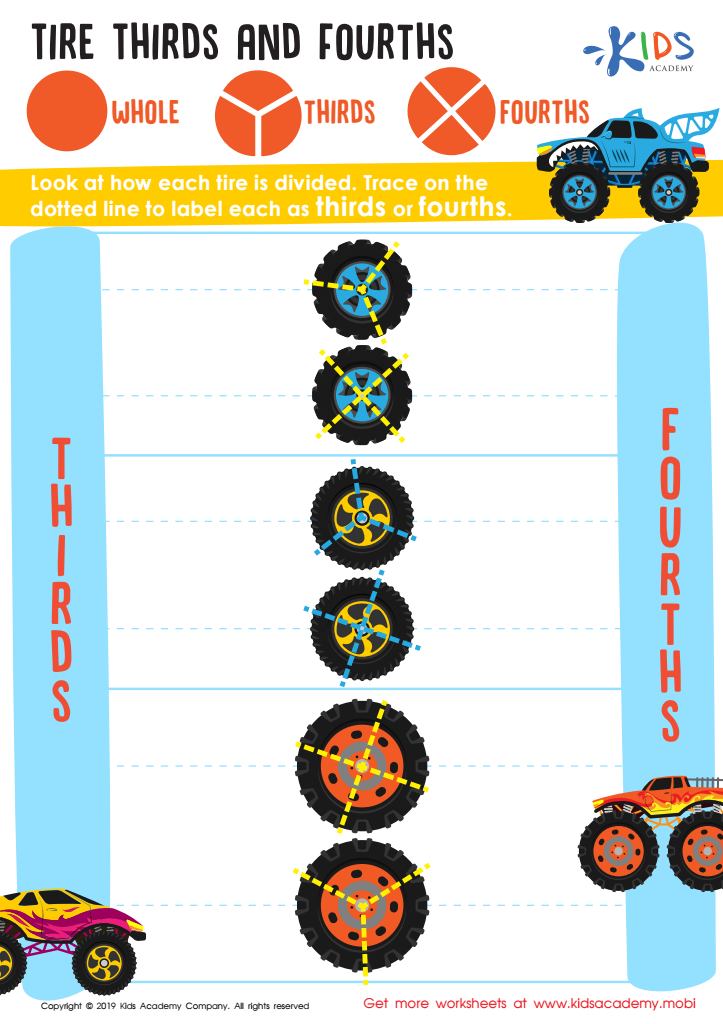
Tire Thirds and Fourths Worksheet
 Assign to My Students











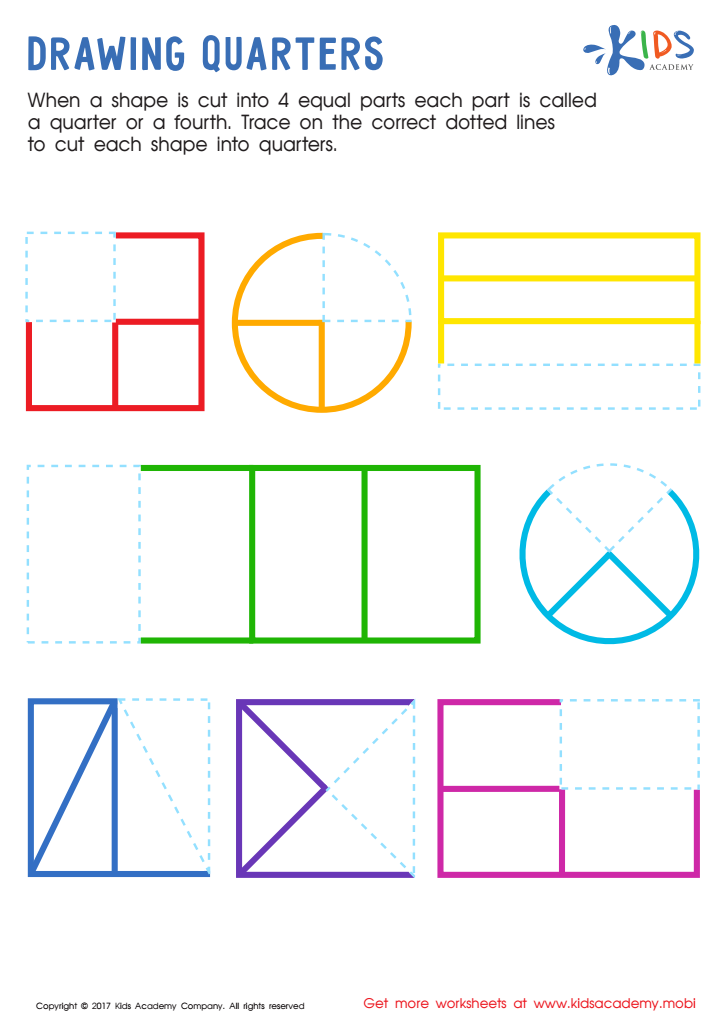
Drawing Quarters Worksheet
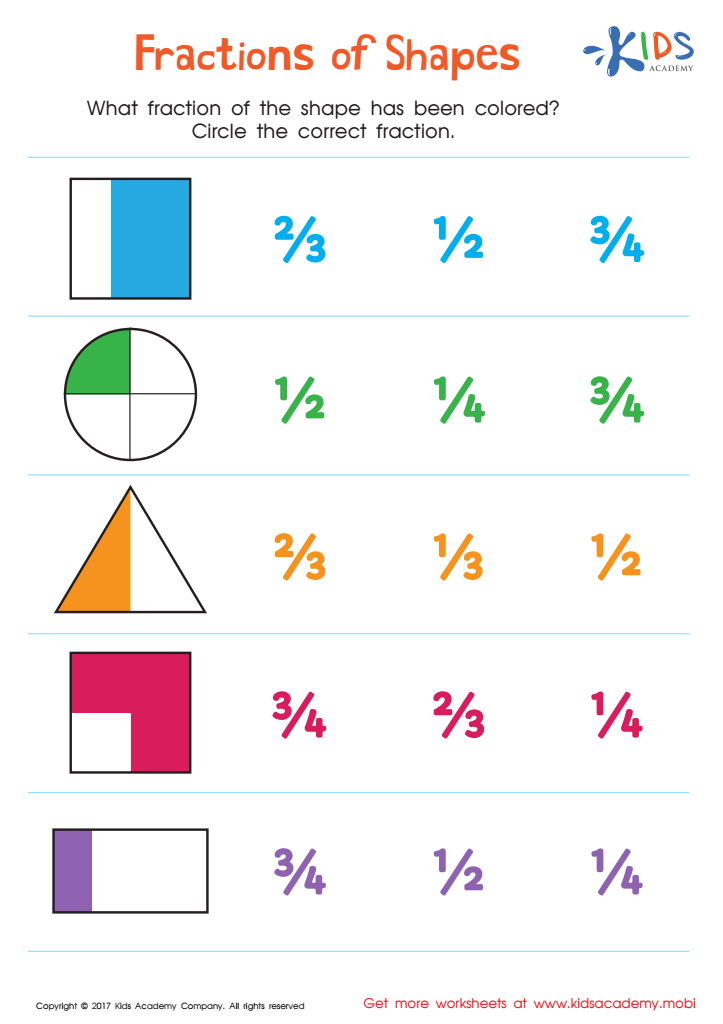
Fractions of Shapes: Math Concept Worksheet








Fraction visualization is a crucial aspect of mathematics education for young learners, particularly for children aged 5-8. Engaging in activities that connect fractions with geometric concepts helps children grasp the foundational ideas of division and part-whole relationships in a visual and tangible way.
For parents and teachers, understanding and promoting this area of learning can foster a deeper comprehension of math that goes beyond memorization. When children visualize fractions through shapes and colors, they can see how parts make up a whole, which aids comprehension significantly. This early understanding not only enhances their mathematical skills but also builds critical thinking and problem-solving abilities.
Furthermore, engaging challenges in geometry related to fractions can make learning enjoyable and interactive. This approach sparks curiosity and motivation, essential for sustaining a love of learning. Parents and teachers should recognize that strong math skills are foundational for academic success, impacting students' futures in various subjects.
Incorporating fraction visualization and geometry into early education empowers children with essential skills and confidence. By nurturing these abilities early on, parents and teachers can prepare learners for more complex mathematical concepts in later grade levels and ensure a strong academic trajectory.