Number identification Extra Challenge Math Worksheets for Ages 5-8
3 filtered results
-
From - To
Boost your child’s number identification skills with our Extra Challenge Math Worksheets tailored for ages 5-8! Designed to provide engaging and fun learning experiences, these worksheets include a variety of activities that encourage children to recognize, count, and compare numbers. With colorful illustrations and grade-appropriate challenges, kids will enjoy honing their numeracy skills while building confidence in their math abilities. Perfect for classroom or at-home practice, our worksheets support early learners in developing essential math foundations. Explore our collection today and help your child take their number identification skills to the next level while having fun!
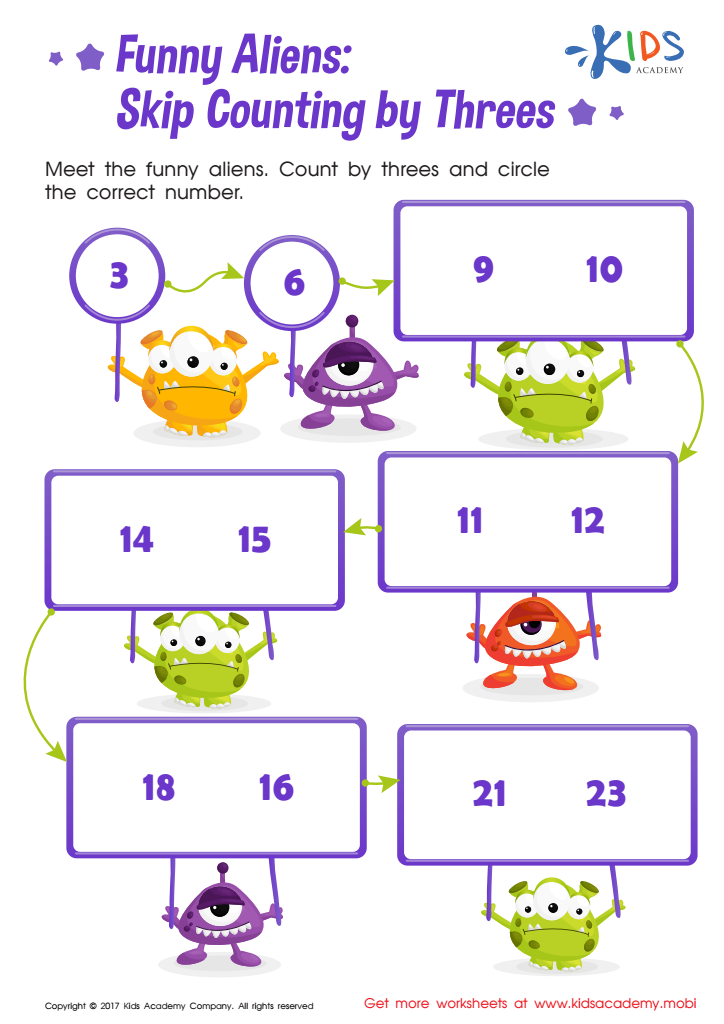
Skip Counting by 3s: Funny Aliens Printable
 Assign to My Students
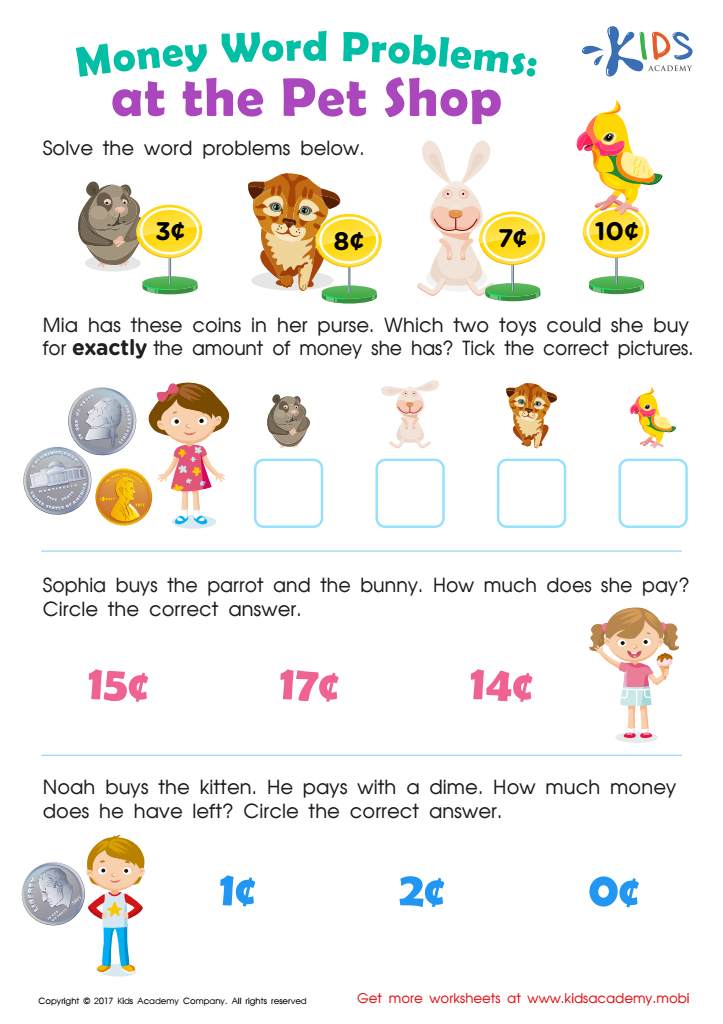
Pet Shop Worksheet
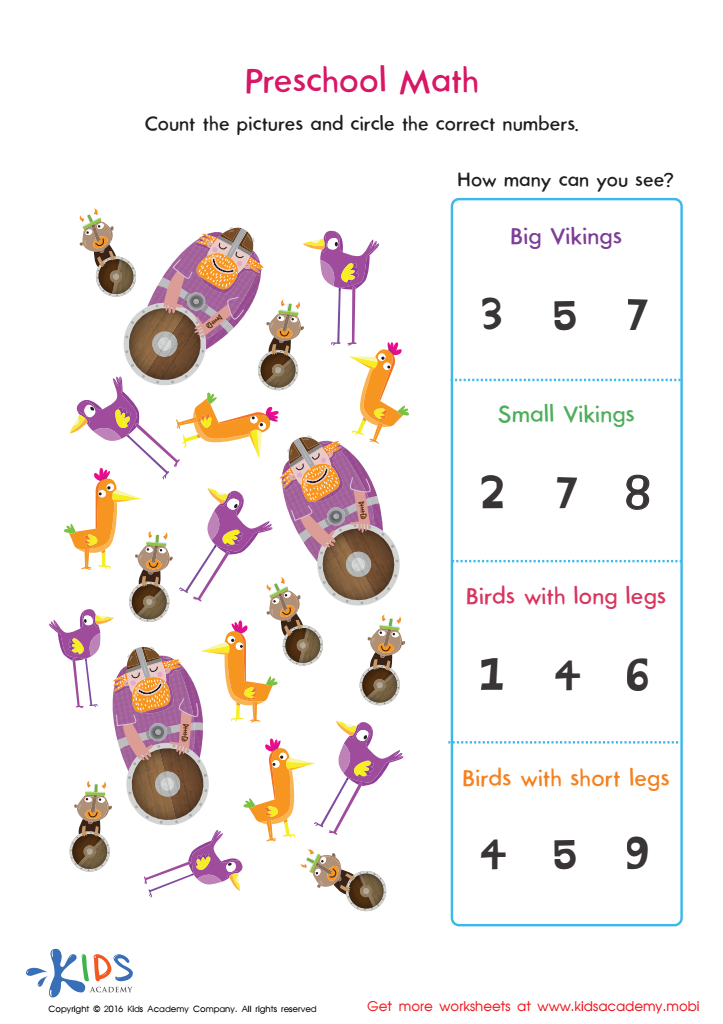








Number identification is a foundational skill crucial for young learners aged 5-8, setting the stage for future mathematical competency. Parents and teachers should care deeply about programs like Extra Challenge Math for several compelling reasons.
First, mastering number identification enhances confidence in children. As they can recognize and articulate numbers, their overall enthusiasm for math grows, leading to a positive learning experience. This confidence translates into a more proactive approach to tackling new challenges.
Second, number identification serves as a building block for more complex mathematical concepts, such as addition, subtraction, and place value. Early proficiency ensures students receive a solid foundation that is pivotal for their future academic success.
Moreover, these programs can accommodate different learning styles, offering varied instructional strategies and activities ensuring that each child receives personalized attention. Engaging games and challenges can motivate children, making math enjoyable rather than daunting.
Lastly, fostering early numeracy skills helps address achievement gaps, ensuring that all students have a fair shot at educational equity. By prioritizing number identification through structured programs, parents and teachers contribute to developing a generation of confident, capable mathematicians ready to excel.