Understanding graphs Extra Challenge Math Worksheets for Ages 5-8
3 filtered results
-
From - To
Unlock the world of data visualization with our "Understanding Graphs Extra Challenge Math Worksheets" designed specifically for ages 5-8! These engaging worksheets offer a fun and interactive way for young learners to explore various types of graphs, including bar graphs, pie charts, and line plots. Through colorful illustrations and age-appropriate exercises, children will develop essential skills in interpreting data, making comparisons, and identifying trends. Perfect for reinforcing classroom learning or supplementing home study, these challenging activities help build a strong foundation in mathematical reasoning and critical thinking. Encourage your child to become a confident problem-solver with our delightful graph challenge sheets!
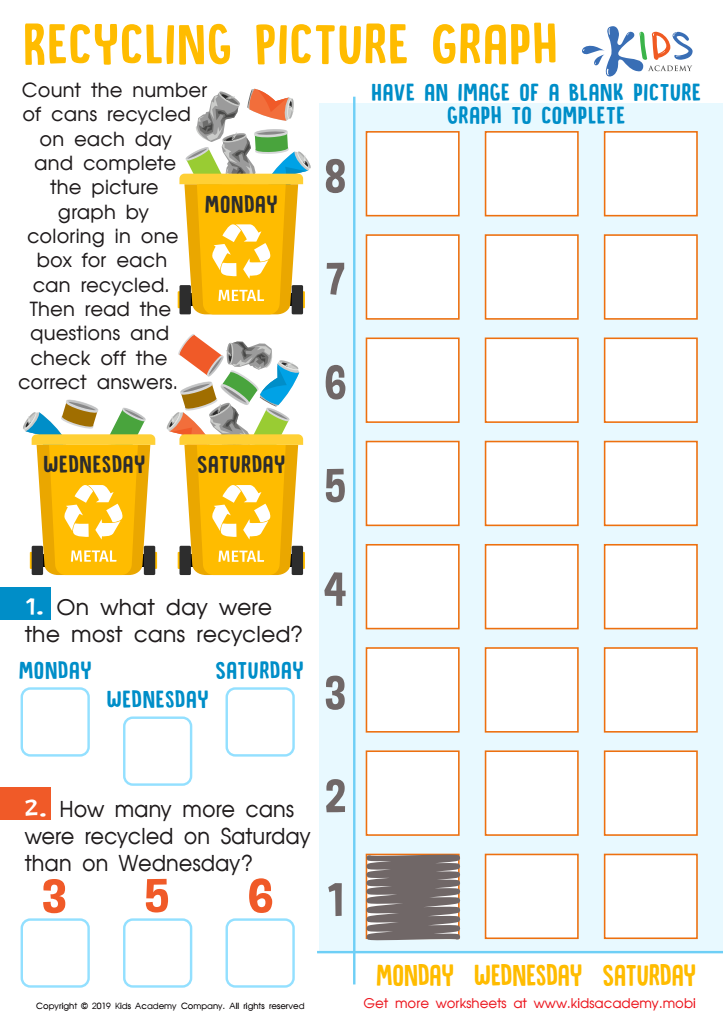
Recycling Picture Graph Worksheet
 Assign to My Students
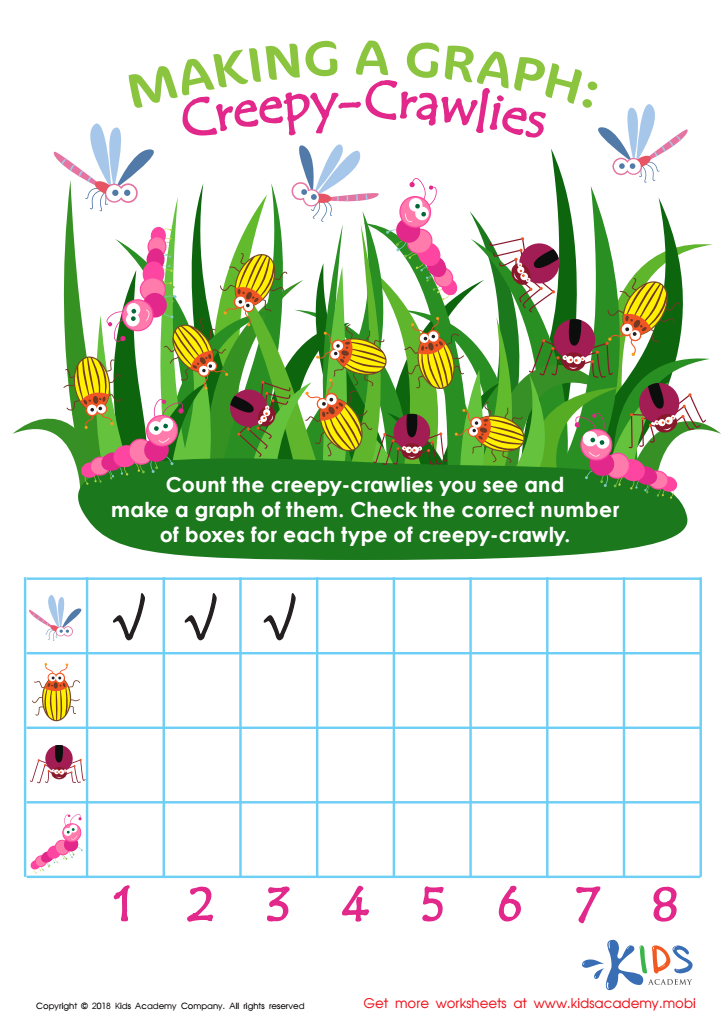
Making a Graph: Creepy Crawlies Worksheet
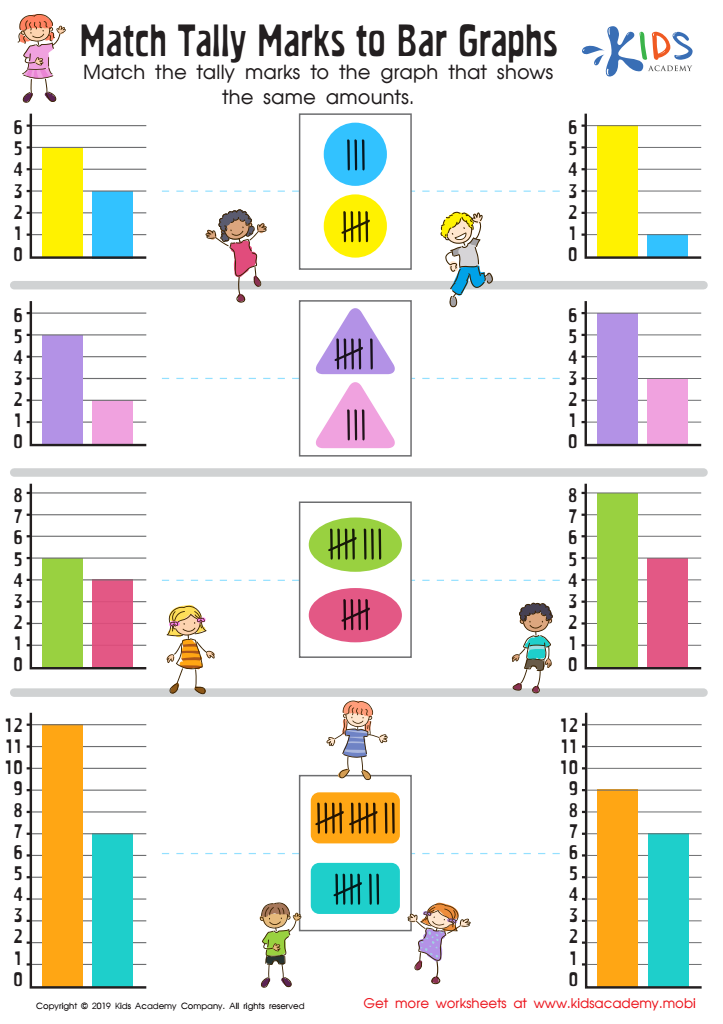
Match Tally Marks to Bar Graphs Worksheet







.jpg)
Understanding graphs is a crucial skill for children aged 5-8, as it lays the foundation for their mathematical and analytical skills. Graphs are visual representations that help young learners make sense of data, identify patterns, and draw conclusions. By engaging with graphs, children develop critical thinking skills that are essential not just in math but in various aspects of life.
Parents and teachers should care about the "Understanding Graphs Extra Challenge Math" curriculum because it introduces students to the fundamentals of data representation in an engaging way. At this age, children are naturally curious, and presenting graphs as interactive challenges captures their attention and fosters a love for learning. This curriculum encourages children to analyze data visually, which enhances their numerical skills and comprehension.
Moreover, mastering graphs at an early age builds confidence as students discover how to interpret information independently. These skills are vital in our data-driven world, where the ability to analyze and present information visually is increasingly important. Ultimately, nurturing graph comprehension in young learners equips them with essential tools for academic success, creativity, and informed decision-making, making it a priority for both parents and educators.