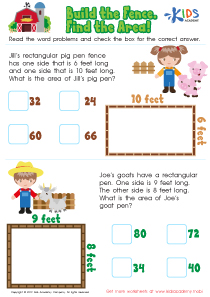
Shape Recognition Extra Challenge Matching Worksheets for Ages 5-8
3 filtered results
-
From - To
Explore our "Shape Recognition Extra Challenge Matching Worksheets" designed specifically for children aged 5-8! These engaging worksheets provide an exciting way for young learners to develop and reinforce their shape recognition skills. With a variety of shapes such as squares, circles, triangles, and more, children will enjoy matching shapes to their corresponding images. These activities foster critical thinking and boost cognitive development while making learning fun! Perfect for classrooms or at-home practice, our worksheets offer diverse challenges that cater to different learning levels. Download now to inspire your child's love for shapes and enhance their foundational math skills!
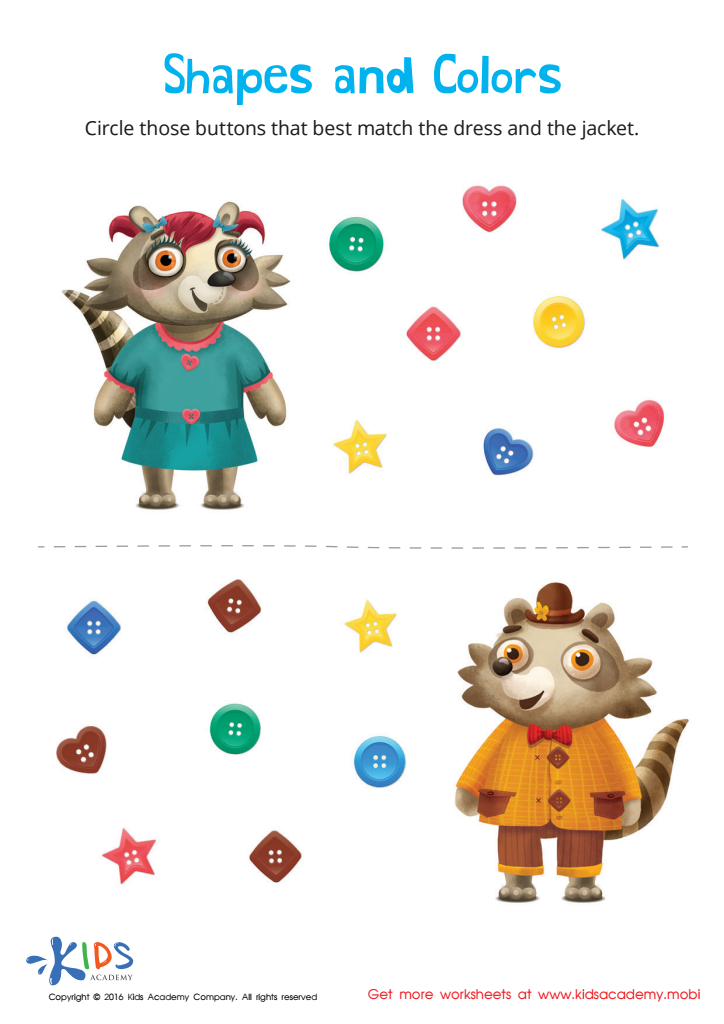
Matching: Shapes and Colors Worksheet
 Assign to My Students
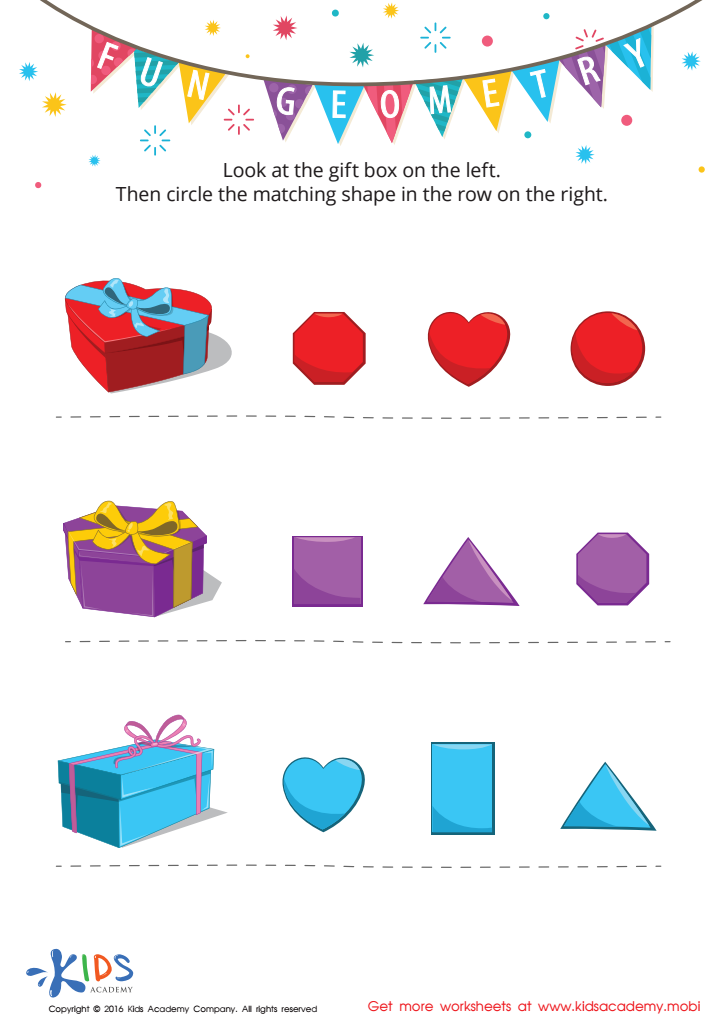
Fun Geometry Worksheet
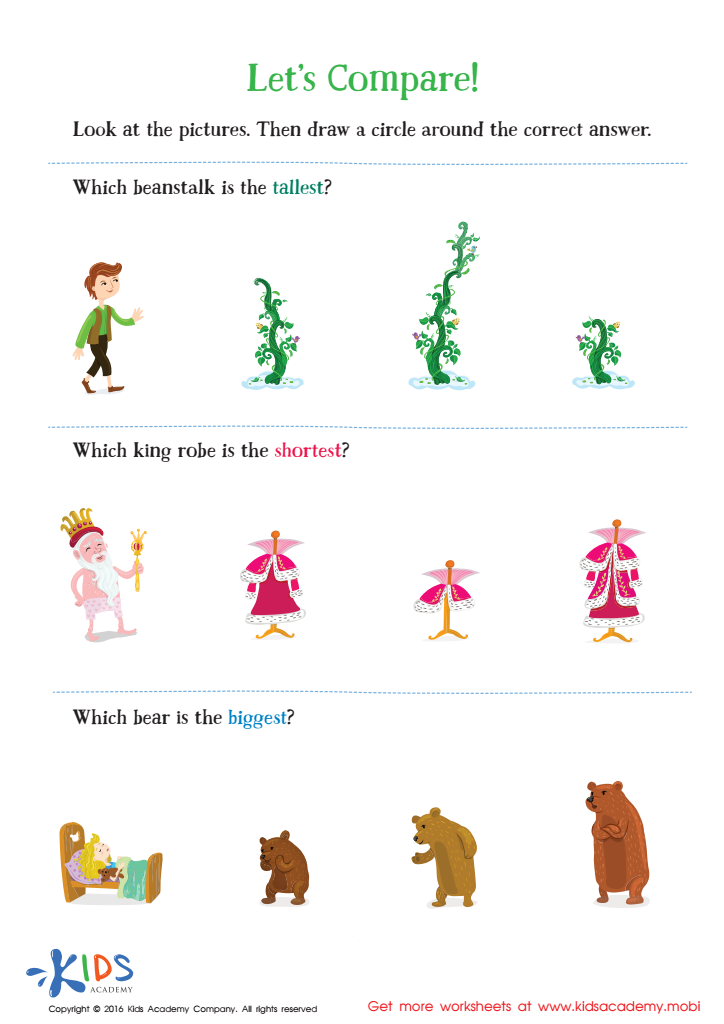
Fairy Tale Worksheet: Let's Compare








Shape Recognition Extra Challenge Matching is a valuable educational activity for children ages 5-8, and both parents and teachers should care about it for several reasons. First, shape recognition is fundamental in early childhood development, serving as a key foundation for later mathematical skills. By engaging in activities that promote shape identification and differentiation, children enhance their cognitive abilities and spatial awareness.
This specific activity adds an extra challenge, fostering critical thinking as children not only recognize shapes but also learn to match them under varying contexts, which cultivates problem-solving skills. Additionally, it encourages hand-eye coordination and fine motor skills as children manipulate shapes through matching processes.
Furthermore, participating in games like this can create a more enjoyable and engaging learning environment, appealing to different learning styles. As children interact socially with peers or family, these activities also promote cooperative learning and verbalization of concepts, strengthening communication skills.
Overall, Shape Recognition Extra Challenge Matching is not just a fun game; it is a comprehensive educational tool that nurtures essential skills during a critical developmental stage, making it important for parents and teachers to prioritize such enriching activities in early learning.