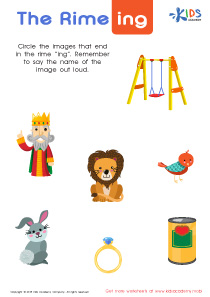
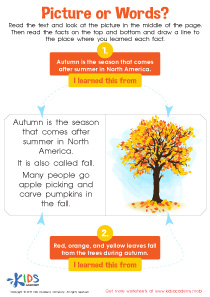
Story sequencing Extra Challenge Reading Comprehension Worksheets for Ages 5-8
3 filtered results
-
From - To
Expand your child's reading skills with our "Story Sequencing Extra Challenge Reading Comprehension Worksheets" designed specifically for ages 5-8. These engaging worksheets help young learners develop critical sequencing abilities by rearranging story events, enhancing their understanding of narrative structure. Each worksheet presents fun, age-appropriate stories that challenge kids to think analytically and improve their comprehension. Encourage creativity and boost reading confidence as children practice recognizing patterns in stories. Ideal for classrooms or at-home learning, these worksheets offer a great resource for parents and educators looking to reinforce essential reading skills in a fun and interactive way!
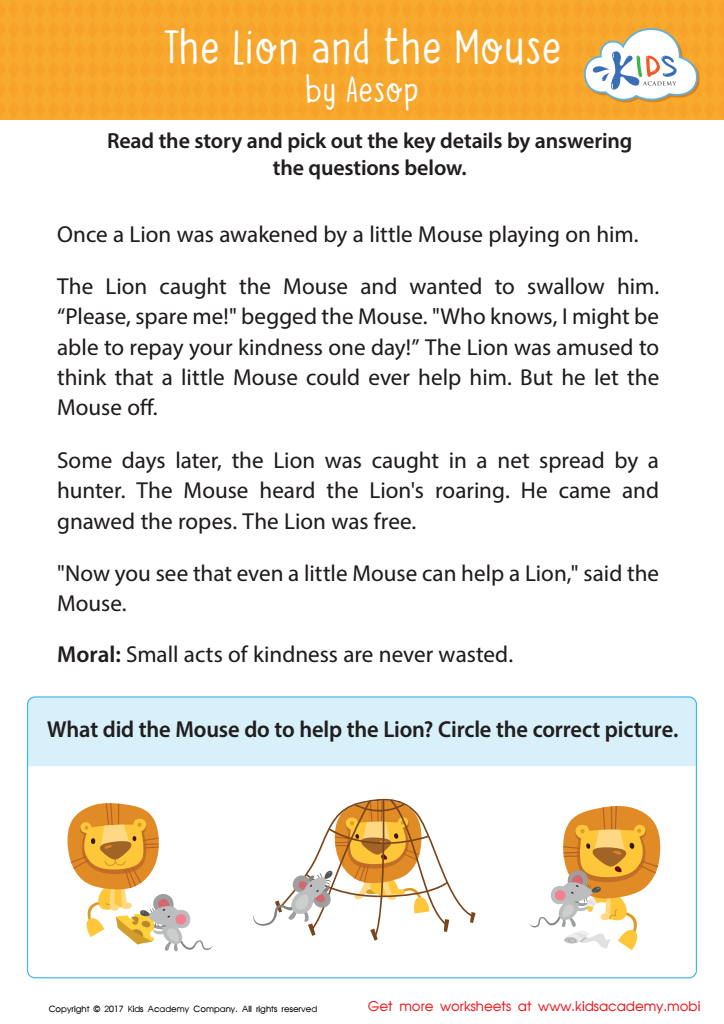
The Lion and The Mouse Sequencing Worksheet
 Assign to My Students
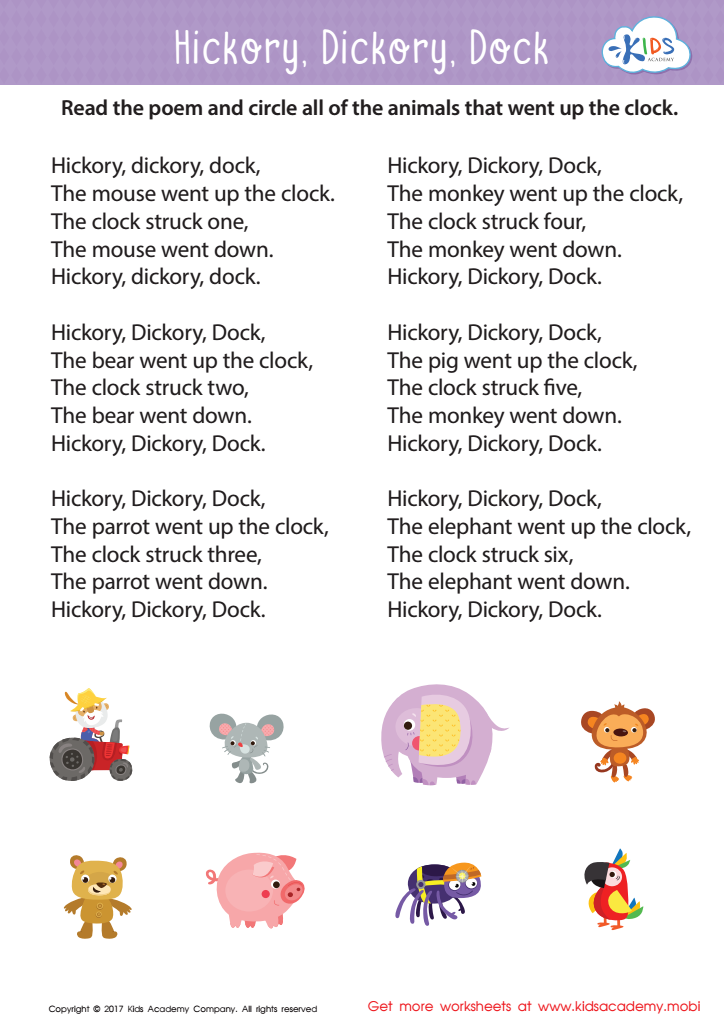
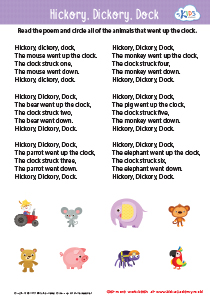
Hickory Dickory Dock Sequencing Worksheet
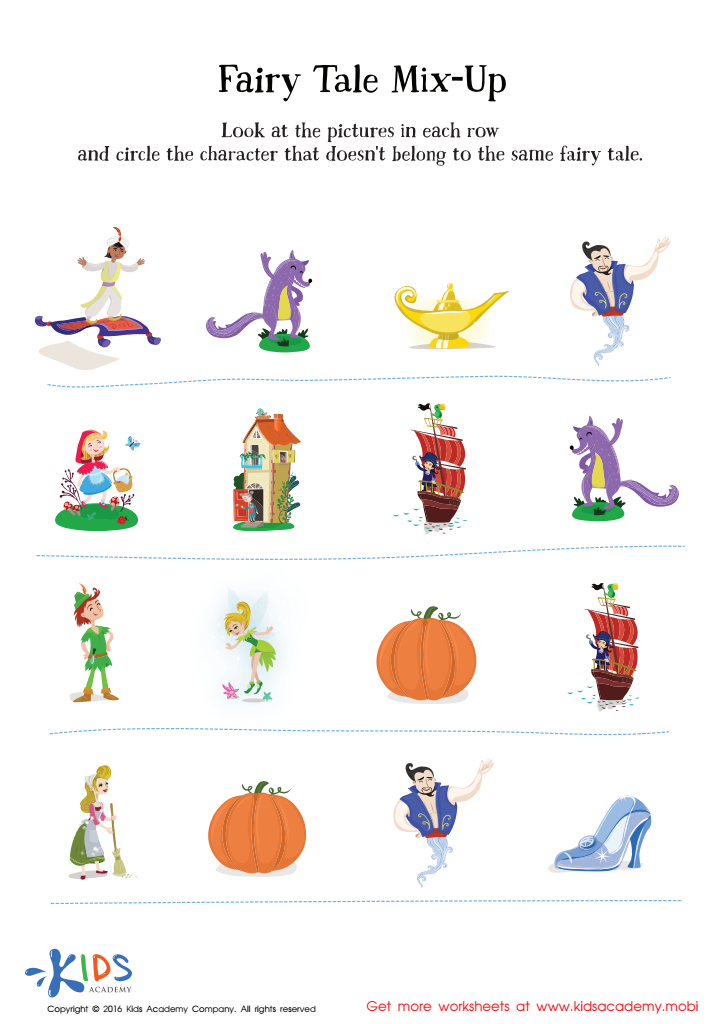
Fairy Tale Worksheet: Story Mix Up



.jpg)




Story sequencing is a fundamental reading comprehension skill that significantly impacts children’s ability to understand and engage with texts. For parents and teachers of children aged 5-8, fostering this skill is essential to their development as independent readers.
First, story sequencing helps children grasp the structure of narratives, enabling them to identify key events, characters, and settings. This clarity enhances their overall comprehension, making it easier for them to recall details and draw connections between different parts of a story. When children can sequence events, they develop stronger critical thinking and organizational skills, which are vital for their academic success.
Additionally, mastering story sequencing cultivates creativity and imagination, encouraging children to create their own narratives in a logical manner. It also promotes language development, as children learn to articulate their thoughts regarding the flow of storytelling.
Moreover, sequencing activities facilitate meaningful discussions between parents and children or teachers and students, strengthening their bonds and promoting a collaborative learning environment.
In short, prioritizing story sequencing comprehension in early education not only boosts reading skills but also contributes to a child’s overall cognitive and emotional growth, which is why it is a crucial focus for both parents and educators.