Alphabet Recognition Extra Challenge Alphabet Worksheets for Ages 5-9
4 filtered results
Difficulty Level
Grade
Age
-
From - To
Subject
Activity
Standards
Introducing our "Alphabet Recognition Extra Challenge Alphabet Worksheets for Ages 5-9". These engaging and educational printables are designed to help young learners master the alphabet while enhancing their letter recognition skills through fun, challenging activities. Perfect for kids aged 5-9, these worksheets offer a variety of exercises like matching, tracing, and finding missing letters that ensure interactive learning. Ideal for early grade teachers and parents alike, these tools support your child’s phonics foundation and build confidence in reading and writing. Explore our collection to give your child the extra challenge they need to excel in alphabet mastery!
Favorites
With answer key
Interactive
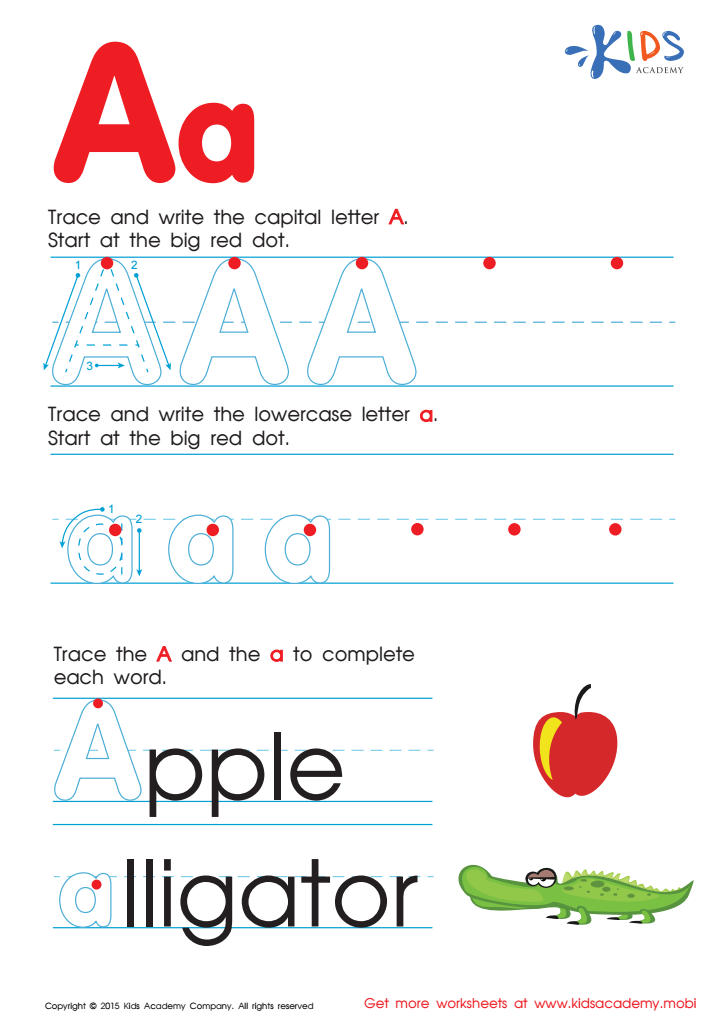
Letter A Tracing Page
Trace and write the letter "A"! Start with the big red dot, then do the capital and lowercase versions. Then write it again with two words - apple and alligator. Download more tracing worksheets at Kids Academy.
 Assign to My Students
Letter A Tracing Page
Worksheet
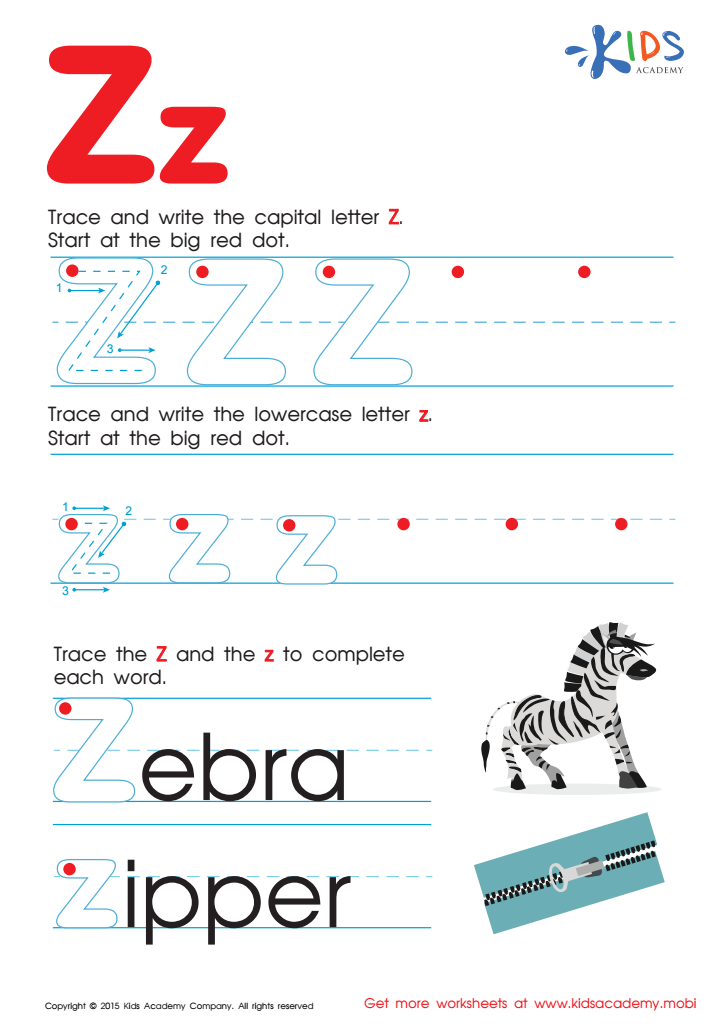
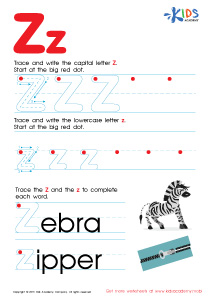
Letter Z Tracing Page
Trace and write capital "Z" and lowercase "z". Complete words "zebra" and "zipper". Be attentive and have fun! (80 words)
Letter Z Tracing Page
Worksheet
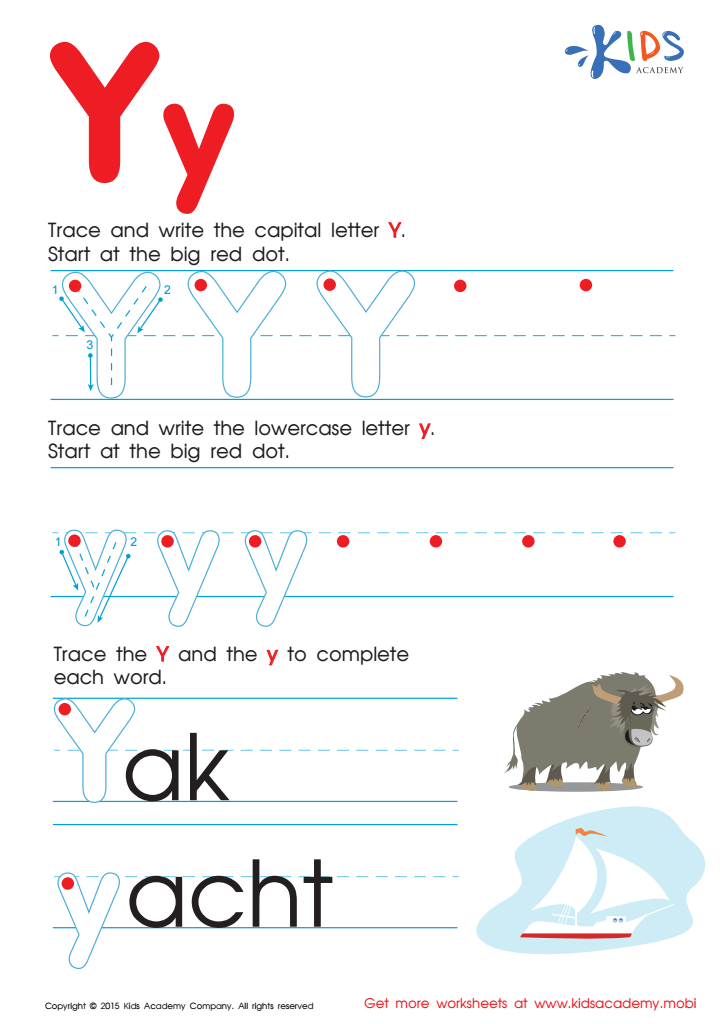
Letter Y Tracing Page
Trace the capital letter "Y" on the red dot, then trace and write the lowercase letter. Complete the words to help the Yak walk and the yacht swim. More worksheets at Kids Academy.
Letter Y Tracing Page
Worksheet
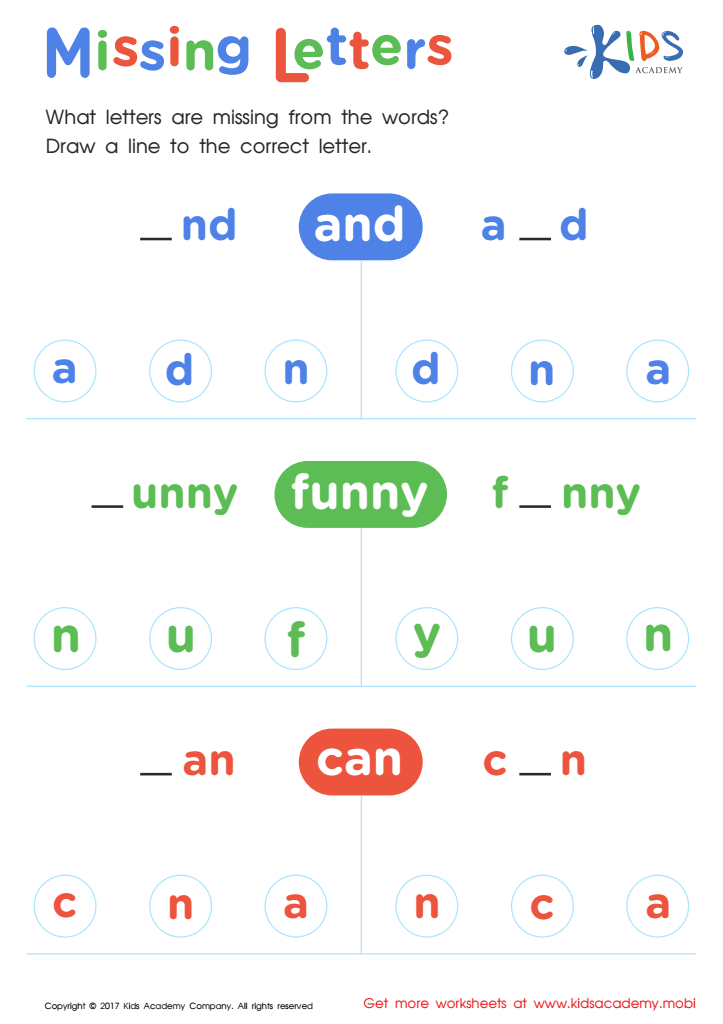
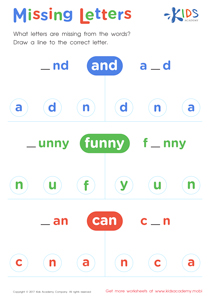
Missing Letters Worksheet
Review sight words with this fun matching worksheet from Kids Academy! Look at the sight words in the middle, read them aloud and find the missing letter on each side for each word. Draw a line to the correct letter to complete the sheet!
Missing Letters Worksheet
Worksheet
Join Kids Academy for Free
Who is primarily going to use this learning content?








Alphabet recognition is a foundational skill, crucial for early literacy development and overall academic success. When parents and teachers engage children aged 5-9 in activities like the Alphabet Recognition Extra Challenge, they foster important pre-reading skills that form the basis for future learning.
By focusing on alphabet recognition, children not only learn to identify letters but also begin to understand the relationships between sounds and symbols, known as phonemic awareness. This skill is essential for deciphering words, reading fluently, and comprehending text. Children who master the alphabet early often find it easier to tackle more complex literacy tasks, improving their confidence and enjoyment in learning.
Extra challenges are particularly beneficial because they provide opportunities for deeper engagement and critical thinking. When children are given puzzles or games involving letters, they practice problem-solving, increase their attention span, and develop persistence. This active learning method can be fun and interactive, keeping children motivated and excited about learning.
Moreover, early proficiency in alphabet recognition can help identify areas where a child might need additional support, allowing for timely intervention. This proactive approach can mitigate potential learning difficulties, ensuring steady academic progress and laying a solid foundation for lifelong learning. Engaging in these extra challenges shows that parents and teachers are committed to their child’s educational journey, paving the way for their future success.