Handwriting practice Extra Challenge Alphabet Worksheets for Ages 5-9
5 filtered results
Difficulty Level
Grade
Age
-
From - To
Subject
Activity
Standards
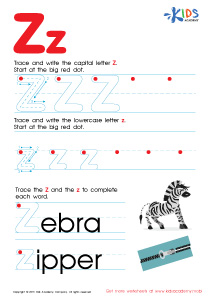
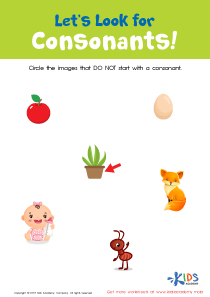
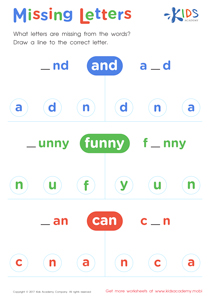
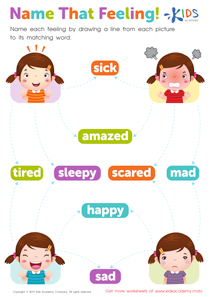
Enhance your child's handwriting skills with our Handwriting Practice Extra Challenge Alphabet Worksheets, specially designed for ages 5-9. These engaging worksheets provide fun and interactive opportunities for young learners to develop their writing abilities while mastering the alphabet. Featuring a variety of exercises, children will practice letter formation, improve fine motor skills, and gain confidence in their handwriting. Our extra challenge worksheets encourage progress through stimulating activities that keep kids excited about learning. Perfect for home or classroom use, these resources will support your child's writing journey, making learning letters a rewarding and enjoyable experience! Download now and watch them thrive!
Favorites
With answer key
Interactive
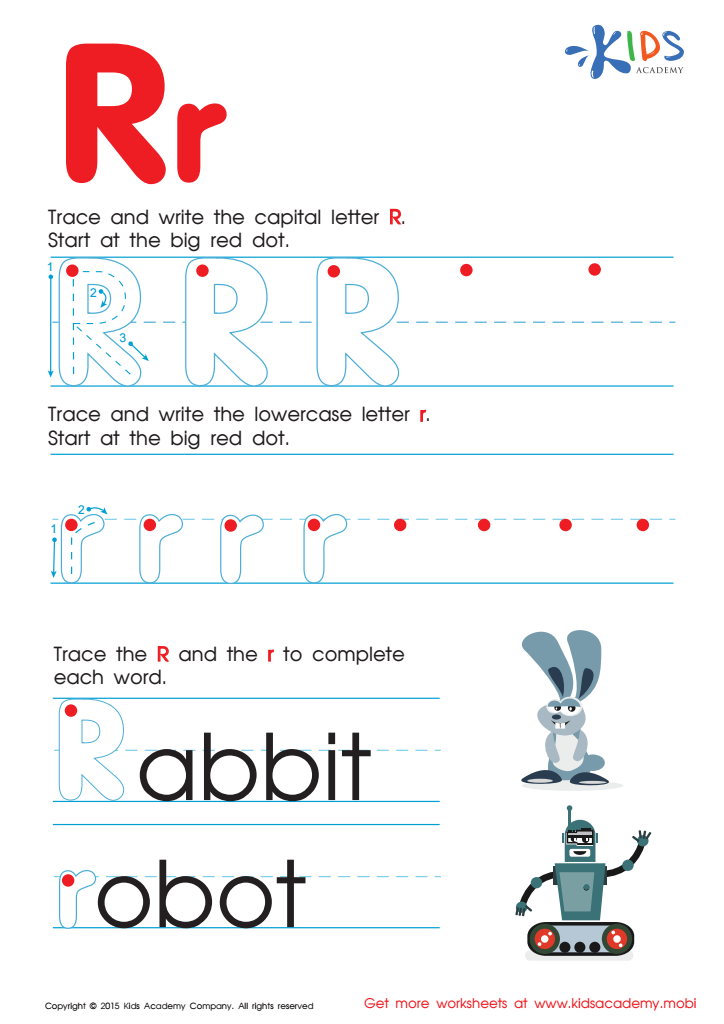
Letter R Tracing Page
Trace and write the letter "R" with this worksheet for kindergarten. Start with the uppercase, then move on to the lowercase. Write the letters several times for practice. Then help complete the words for the rabbit and robot, spelling carefully. More ABC worksheets can be found at Kids Academy.
 Assign to My Students
Letter R Tracing Page
Worksheet
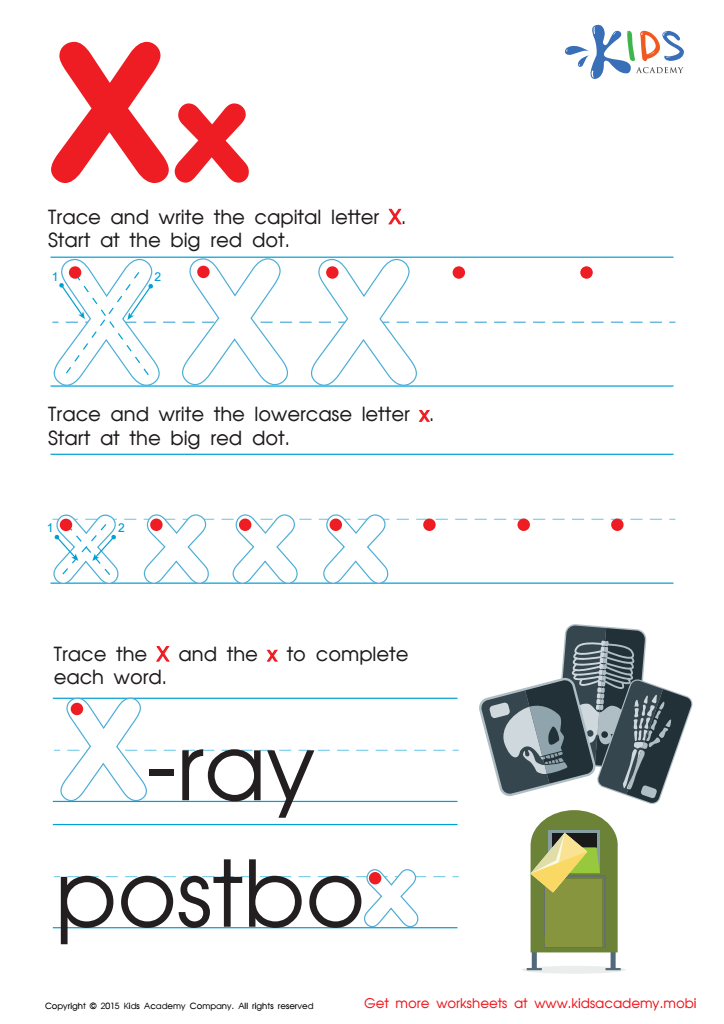
Letter X Tracing Page
Trace the uppercase letter "X" to learn, then write it yourself and practice. Then do the same with the lowercase "x" before completing the words "X-ray" and "postbox". Enjoy our alphabet printables!
Letter X Tracing Page
Worksheet
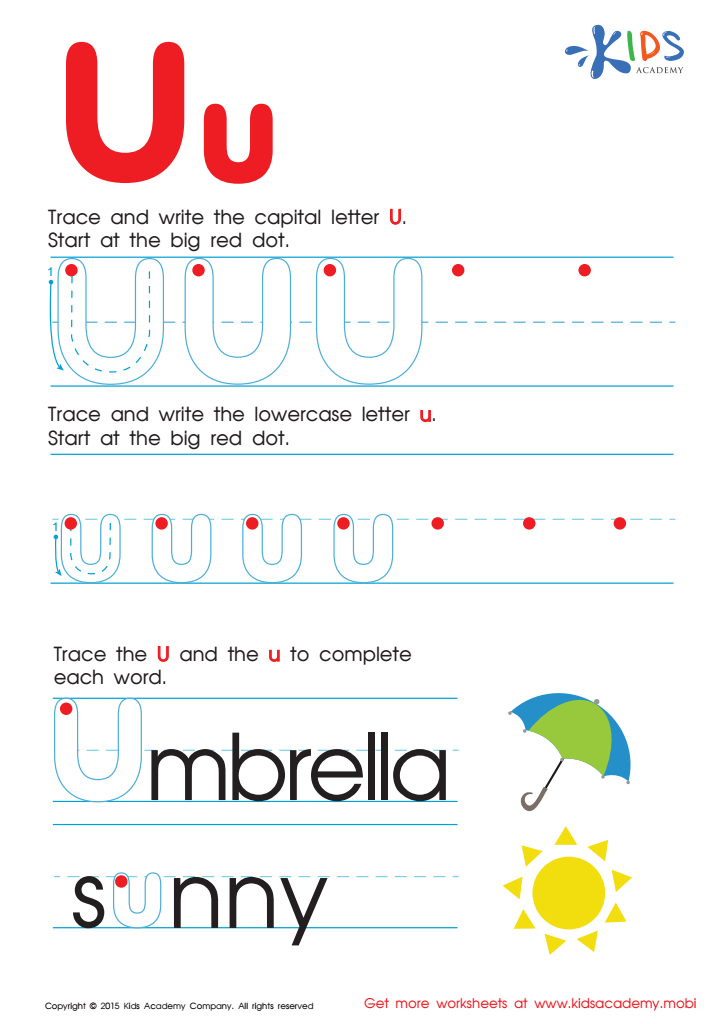
Letter U Tracing Page
Ready to trace and write the letter "U"? Use our worksheet and practice tracing both uppercase and lowercase letters. Complete the words "umbrella" and "sunny" with a capital "U". Check our full collection of alphabet printables for more activities.
Letter U Tracing Page
Worksheet
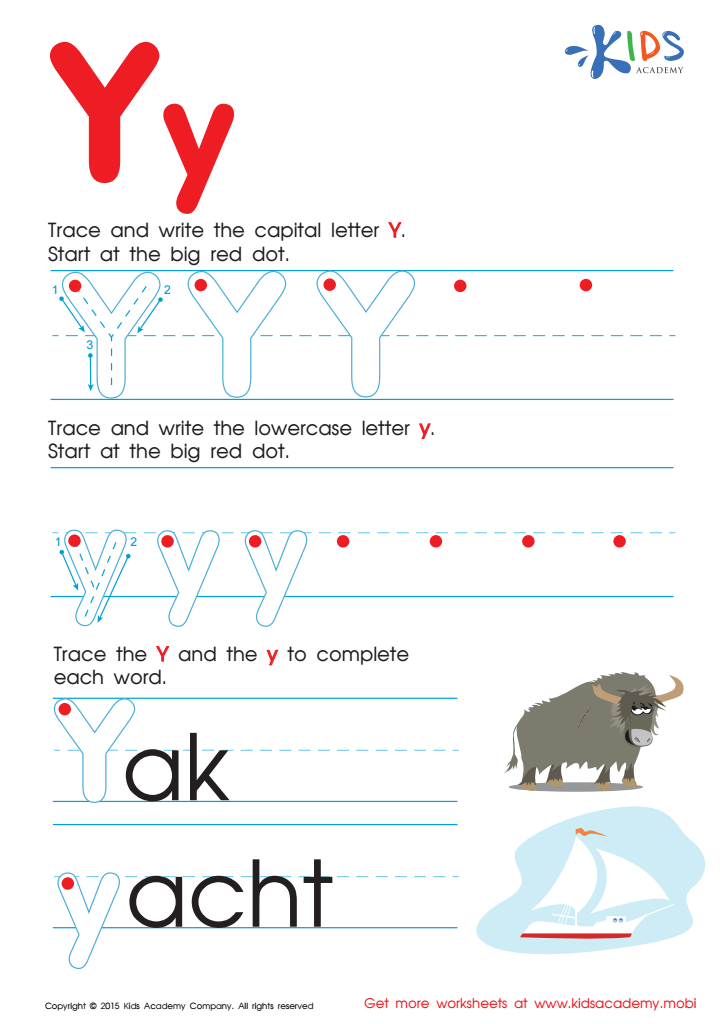
Letter Y Tracing Page
Trace the capital letter "Y" on the red dot, then trace and write the lowercase letter. Complete the words to help the Yak walk and the yacht swim. More worksheets at Kids Academy.
Letter Y Tracing Page
Worksheet
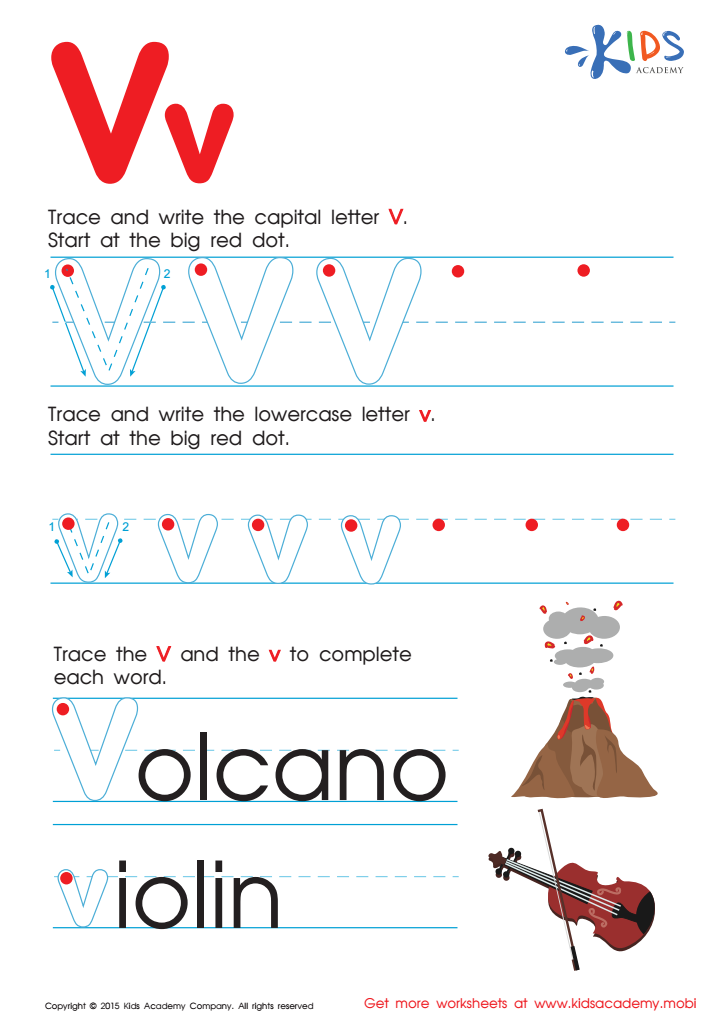
Letter V Tracing Page
Trace the uppercase and lowercase letter "V" with our kindergarten tracing worksheet. Begin at the red dot and follow the lines. Write it several times. Complete the words "Volcano" and "violin". Get more alphabet activities at Kids Academy.
Letter V Tracing Page
Worksheet
Join Kids Academy for Free
Who is primarily going to use this learning content?





.jpg)

Handwriting practice, particularly through challenges tailored for ages 5-9, plays a crucial role in a child's development, benefiting both parents and teachers. First and foremost, good handwriting fosters literacy skills. Proficient writing forms a strong foundation for reading, spelling, and overall communication. It instills discipline and fine motor skills as children learn to control their hand movements, which are vital attributes for academic success.
Moreover, handwriting practice enhances cognitive development. Engaging with letters and forming words encourages neural connections that support memory retention, problem-solving, and complex thinking skills. Such cognitive benefits extend beyond writing, influencing overall learning and academic performance.
Additionally, handwriting practice supports children in expressing their thoughts and feelings clearly. As they gain confidence in writing, they learn to articulate their ideas effectively. This becomes essential for social interactions and emotional intelligence.
Lastly, incorporating handwriting challenges into daily routines can make learning interactive and fun. This increased engagement can foster a positive attitude toward education, ultimately encouraging lifelong learning habits. Both parents and teachers should care about these practices, as they are instrumental in nurturing well-rounded, capable, and confident individuals prepared for the demands of their education and beyond.