Alphabet Recognition Extra Challenge Tracing Letters Worksheets for Ages 5-9
3 filtered results
-
From - To
Enhance your child's letter recognition with our Alphabet Recognition Extra Challenge Tracing Letters Worksheets, designed for ages 5-9. These engaging resources help kids practice tracing uppercase and lowercase letters while boosting their fine motor skills. Each worksheet offers an added challenge to keep young learners entertained and improving. Perfect for classroom use or at-home practice, our worksheets structure learning with fun, interactive exercises. Use these tools from Kids Academy to build a strong foundation in alphabet recognition and ensure that your child remains ahead in their literacy journey. Dive into a world of letters and learning today!
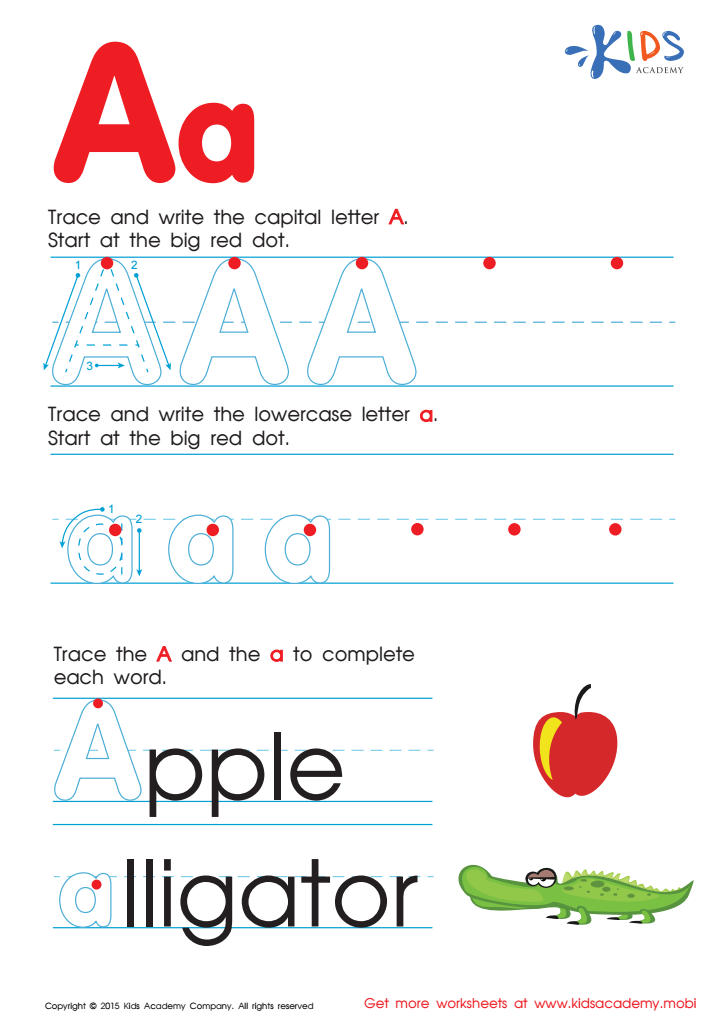
Letter A Tracing Page
 Assign to My Students
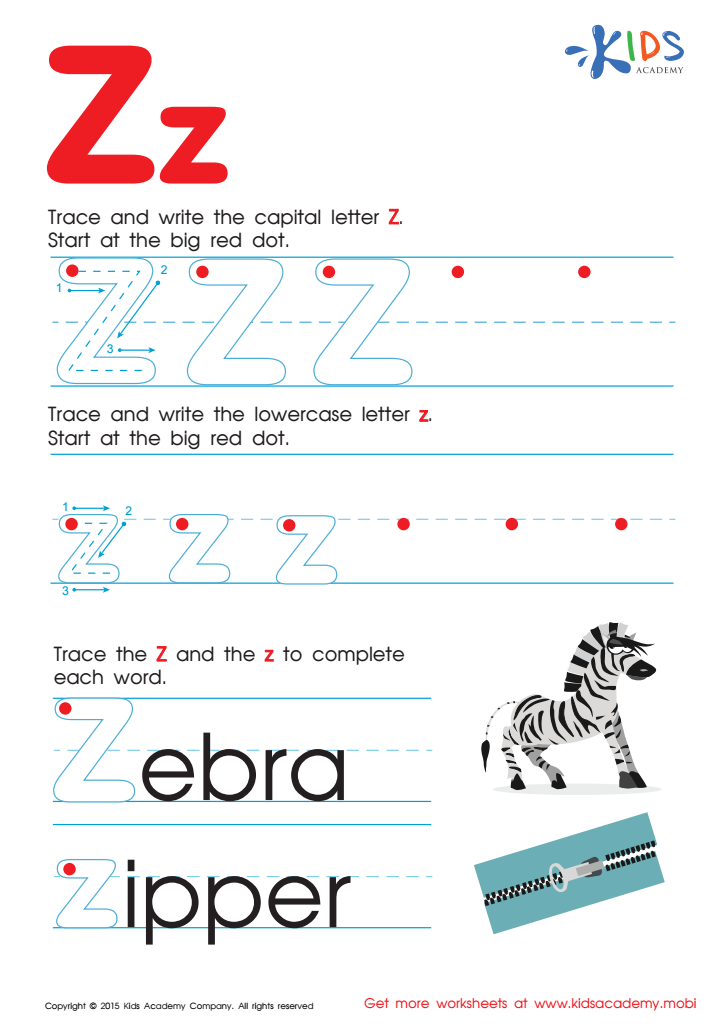
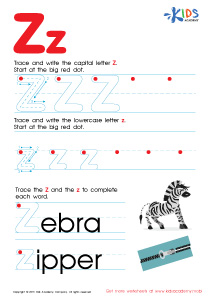
Letter Z Tracing Page
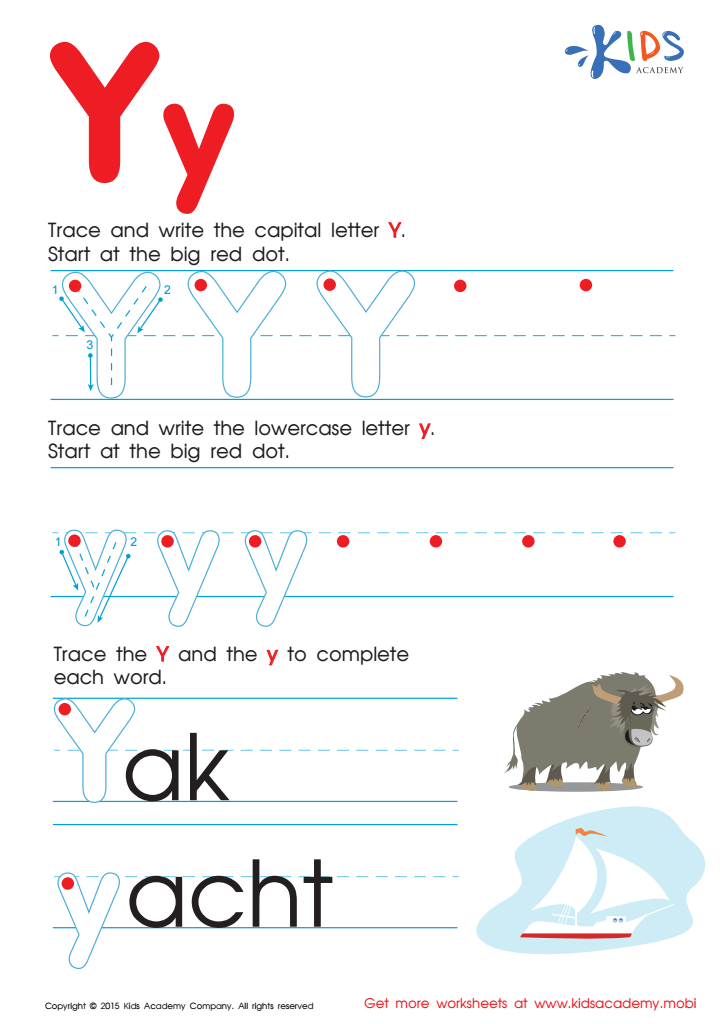
Letter Y Tracing Page







Alphabet Recognition Extra Challenge Tracing Letters activities are integral for children ages 5-9 as they lay the foundation for effective reading, writing, and communication skills. Parents and teachers should prioritize these activities because they cater to critical stages of brain development, enhancing fine motor skills, hand-eye coordination, and memory retention.
Firstly, tracing letters aids in familiarizing children with the alphabet, improving their recognition of letter shapes and sounds. This cognitive link is essential for efficient decoding of words in reading and constructing them in writing. Additionally, it reinforces proper pencil grip and control, crucial for legible handwriting.
The extra challenge aspect stretches a child's problem-solving abilities and perseverance, qualities valuable throughout their education. Tackling more complex tasks builds confidence, motivating children to embrace learning challenges with a positive attitude.
Moreover, alphabet tracing can be a fun and interactive learning experience that can be shared between parents, teachers, and peers, fostering stronger relationships and social skills. By incorporating varied activities and playful elements, it keeps young learners engaged and excited about education.
Overall, Alphabet Recognition Extra Challenge Tracing Letters forms a fundamental part of early literacy, empowering children with the tools they need for academic success and lifelong learning.