Alphabet Recognition Extra Challenge English for Beginners Worksheets for Ages 5-9
3 filtered results
-
From - To
Enhance your child's learning experience with our "Alphabet Recognition Extra Challenge Worksheets" designed for beginners aged 5-9. Perfect for young learners, these engaging worksheets help reinforce letter recognition while making learning fun! Through various exciting activities, children will not only identify uppercase and lowercase letters but also develop essential vocabulary and phonetic skills. This interactive approach fosters confidence as students tackle challenges suited to their age group, ensuring they master the alphabet with ease. Whether for home or classroom use, these worksheets are an ideal tool for teachers and parents aiming to enrich English language learning. Start your adventure in literacy today!

Letter A Tracing Page
 Assign to My Students
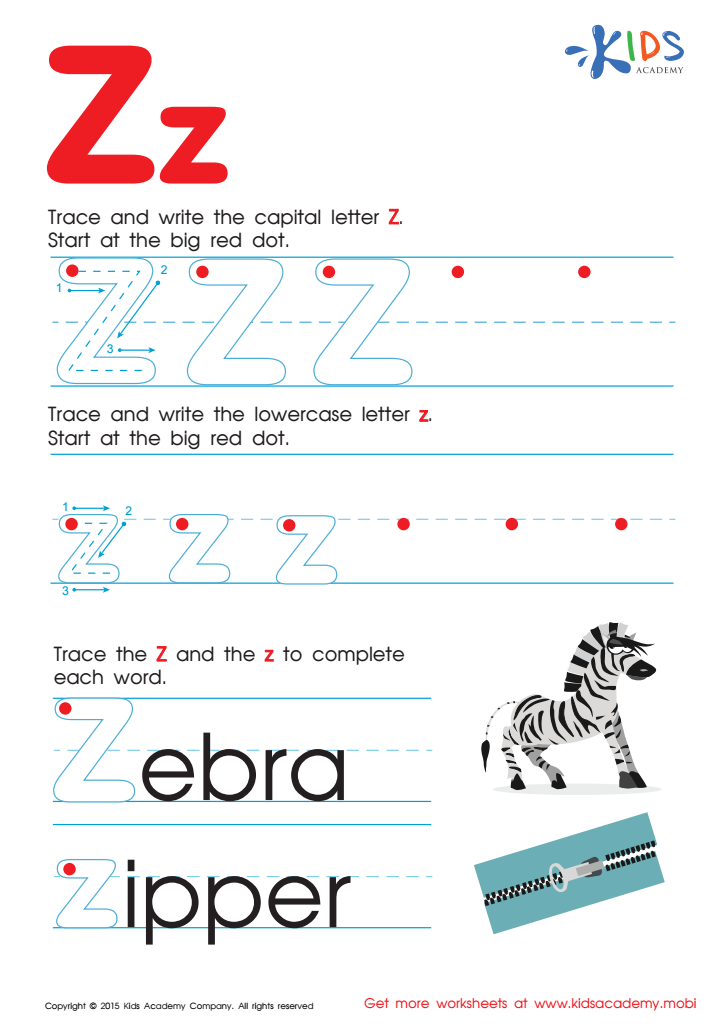
Letter Z Tracing Page
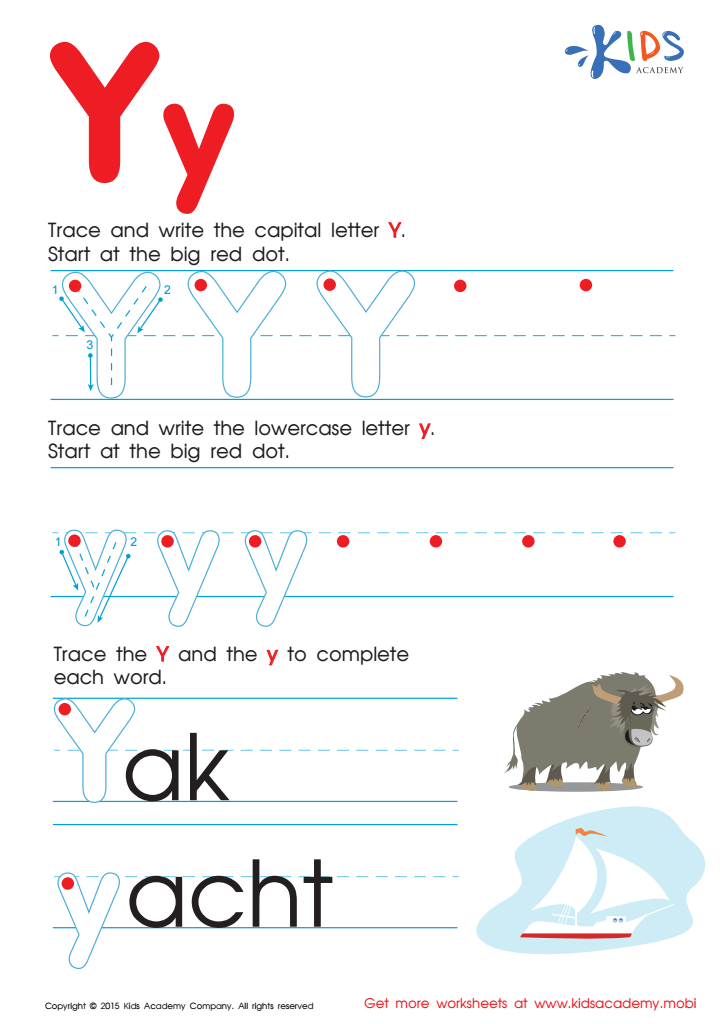
Letter Y Tracing Page





Alphabet recognition is a foundational literacy skill crucial for young learners, particularly those aged 5-9. “Alphabet Recognition Extra Challenge” provides an engaging way for beginners to master this skill, making it an essential resource for parents and teachers. Understanding letters lays the groundwork for reading, writing, and overall literacy development.
Parents and teachers should care because this targeted curriculum not only helps children identify letters, but it also reinforces phonemic awareness—an essential component in learning to read. By employing interactive and fun activities, children are more likely to retain information, fostering a love of learning. The early introduction of alphabet knowledge is linked to increased vocabulary and improved comprehension skills later on.
Moreover, the challenges included in the program promote critical thinking and problem-solving skills, vital for cognitive development. Encouraging participation in activities that require recognizing and manipulating letters transforms learning into a dynamic and enjoyable experience. Ultimately, supporting children through engaging literacy experiences prepares them for academic success and instills confidence in their abilities, making the "Alphabet Recognition Extra Challenge" an invaluable tool for developmental growth during these formative years.








