Introducing our "Letter Recognition Extra Challenge English for Beginners Worksheets" designed specifically for ages 5-9! These engaging worksheets offer a fun and educational way for young learners to master the alphabet. Perfect for early readers and ESL students, the activities include advanced letter tracing, matching games, and creative exercises that boost letter identification skills. Created by educational experts, these worksheets not only enhance phonics and literacy but also build a strong foundation for future learning. Whether at home or in the classroom, give your child the extra challenge they need to excel in their English language journey.

Check out this FREE Trial Lesson on English for Beginners for age 5-9!

X

Favorites
With answer key
Interactive
  • 5-9
  • Letter recognition
  • English for Beginners
  • Extra Challenge
Letter R worksheets
Letter R worksheets

Letter R Tracing Page

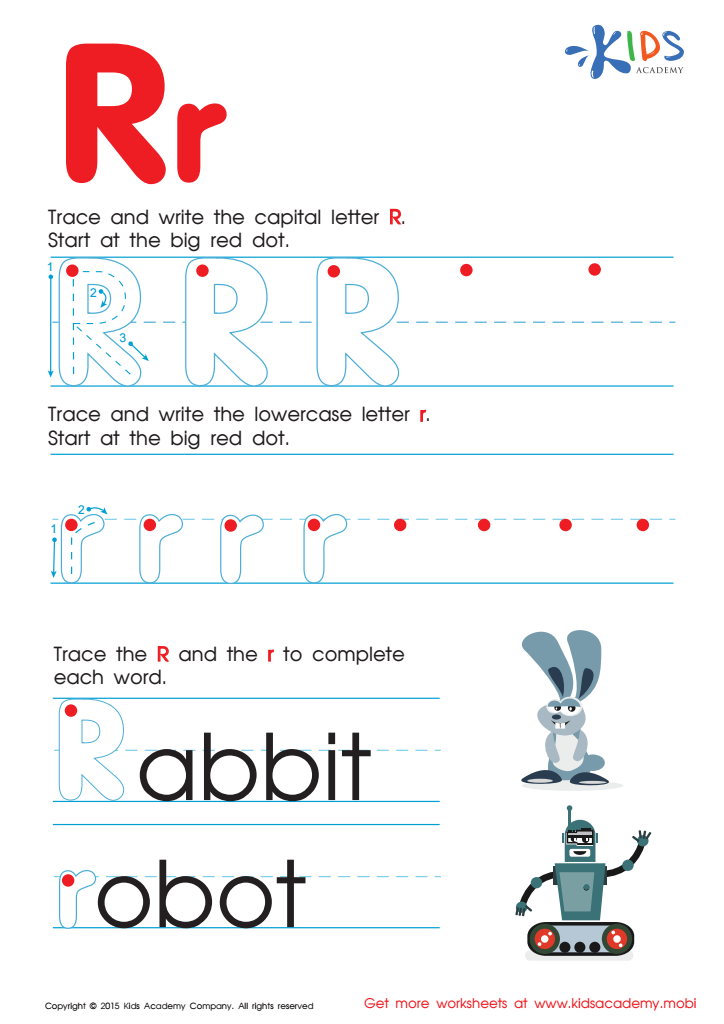
Trace and write the letter "R" with this worksheet for kindergarten. Start with the uppercase, then move on to the lowercase. Write the letters several times for practice. Then help complete the words for the rabbit and robot, spelling carefully. More ABC worksheets can be found at Kids Academy.
Letter R Tracing Page
Worksheet
Letter X worksheets
Letter X worksheets

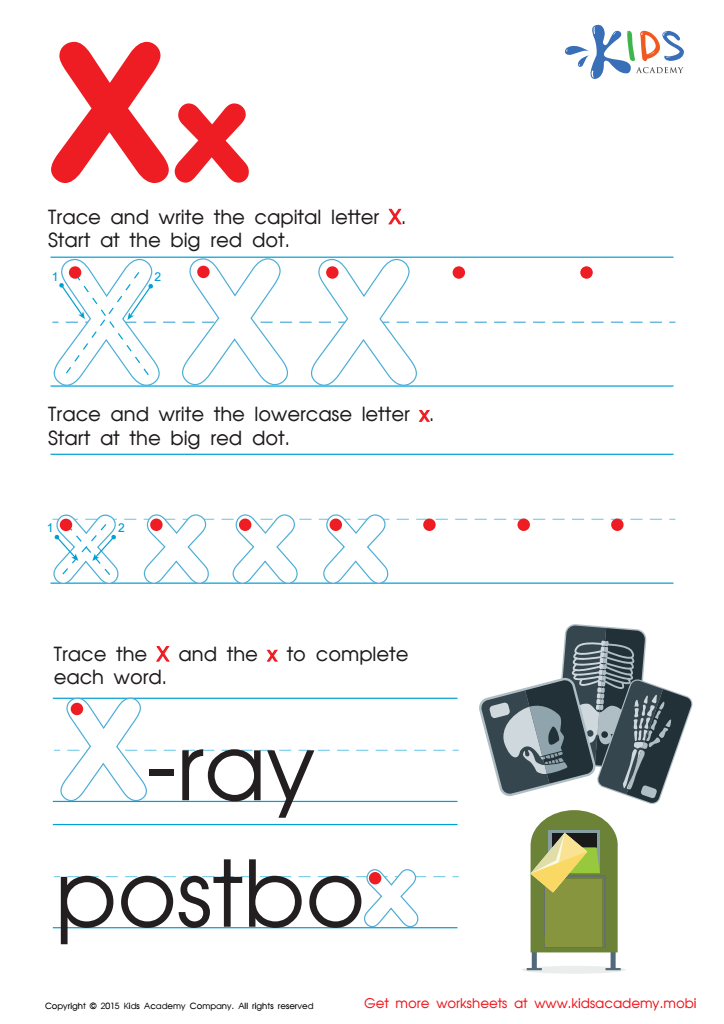
Letter X Tracing Page

Trace the uppercase letter "X" to learn, then write it yourself and practice. Then do the same with the lowercase "x" before completing the words "X-ray" and "postbox". Enjoy our alphabet printables!
Letter X Tracing Page
Worksheet
Letter U worksheets
Letter U worksheets

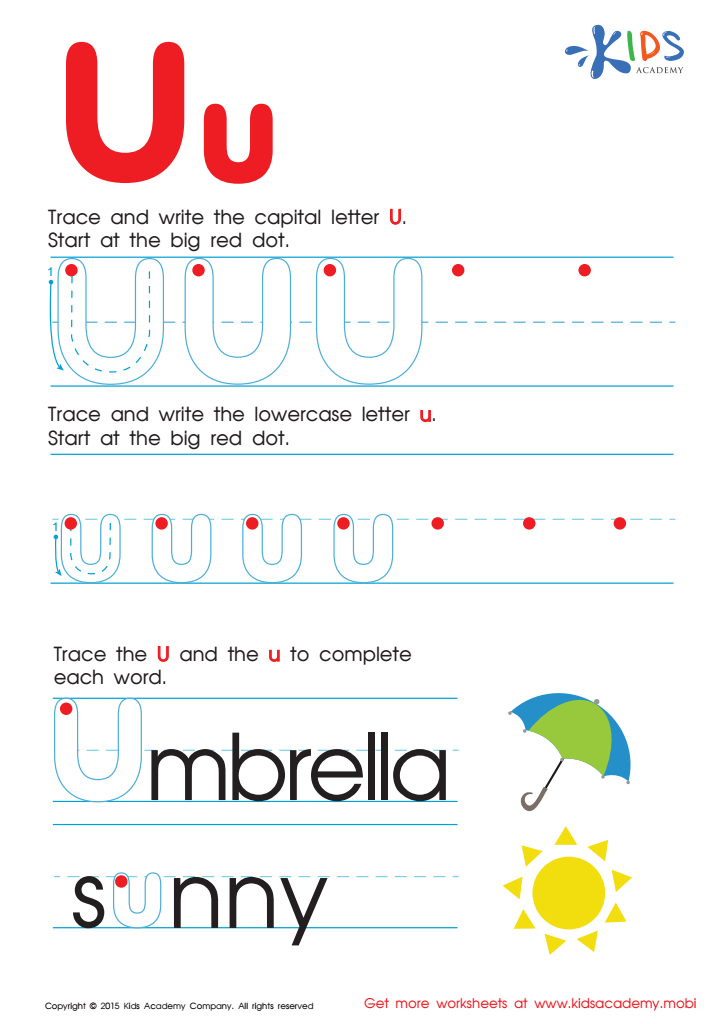
Letter U Tracing Page

Ready to trace and write the letter "U"? Use our worksheet and practice tracing both uppercase and lowercase letters. Complete the words "umbrella" and "sunny" with a capital "U". Check our full collection of alphabet printables for more activities.
Letter U Tracing Page
Worksheet
Letter S worksheets
Letter S worksheets

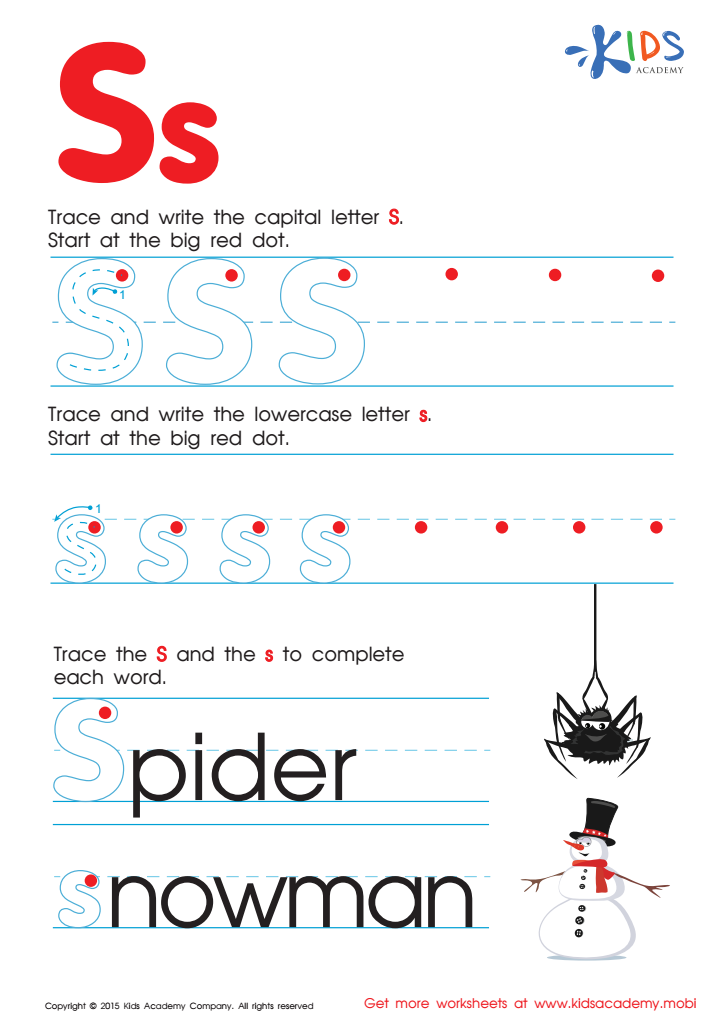
Letter S Tracing Page

Trace and write the capital and lowercase "S" on this ABC worksheet for kindergarten. Start with the big red dot and be careful. When you finish, help the spider and snowman in the pictures restore their words with the capital and lowercase letters. Continue learning the alphabet with Kids Academy.
Letter S Tracing Page
Worksheet
Letter W worksheets
Letter W worksheets

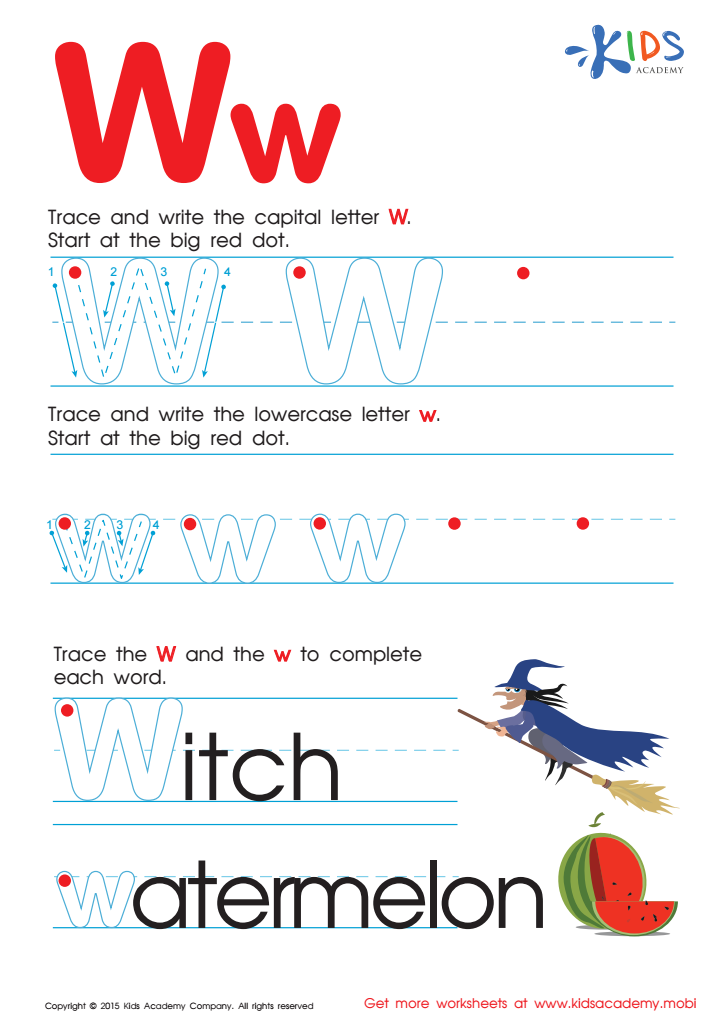
Letter W Tracing Page

Trace and write the capital and lowercase letter W with this free letter tracing worksheet by Kids Academy. Complete the words "Witch" (capital) and "watermelon" (lowercase). Check out our other kindergarten alphabet worksheets!
Letter W Tracing Page
Worksheet
Letter V worksheets
Letter V worksheets

Letter V Tracing Page

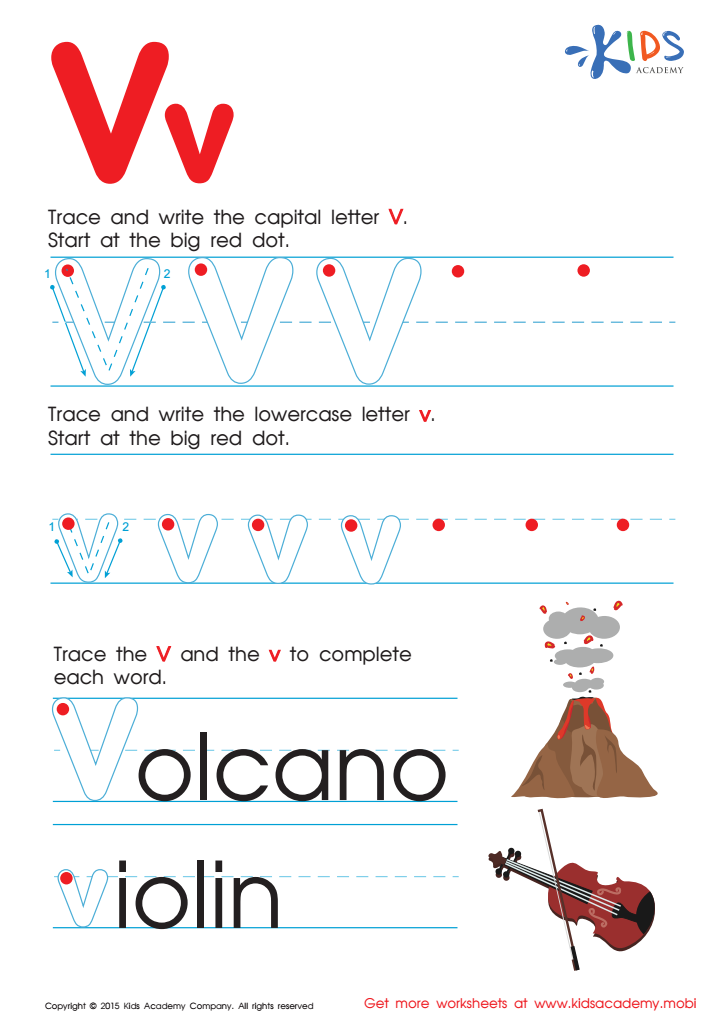
Trace the uppercase and lowercase letter "V" with our kindergarten tracing worksheet. Begin at the red dot and follow the lines. Write it several times. Complete the words "Volcano" and "violin". Get more alphabet activities at Kids Academy.
Letter V Tracing Page
Worksheet
Letter T worksheets
Letter T worksheets

Letter T Tracing Page

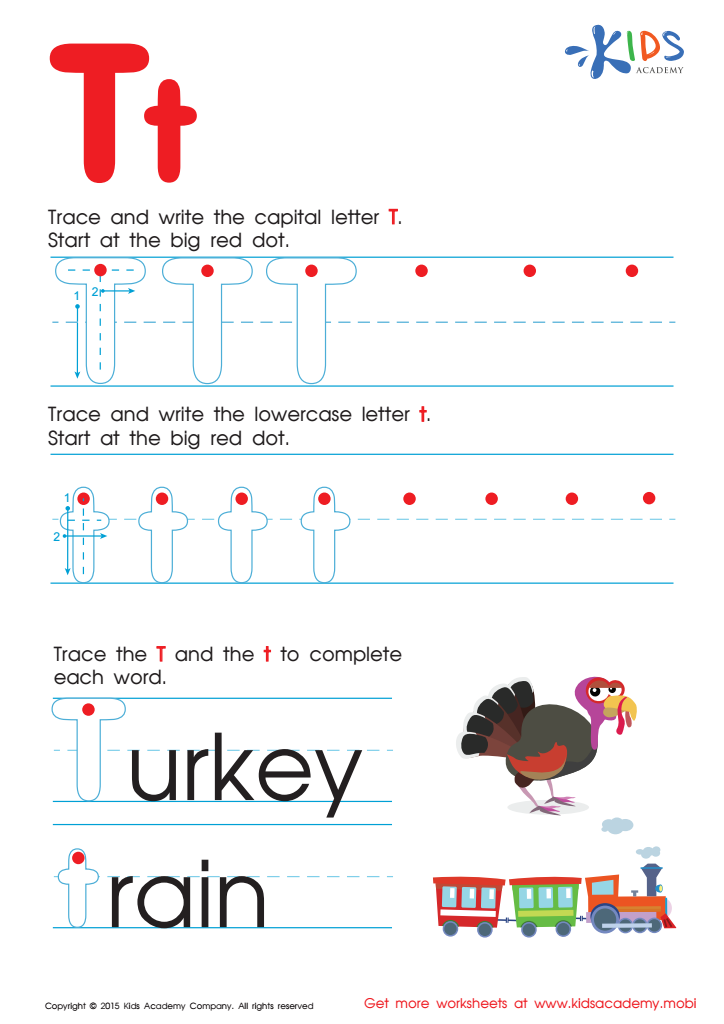
Trace letters, complete words, draw pictures and see your kids having fun! Kids Academy offers alphabet tracing worksheets to learn to write letters. Start with the big red dot, trace the letter, then write it. Practice uppercase and lowercase. Have fun completing words with a Turkey or a rain-train and draw pictures. Get more printable worksheets to make learning enjoyable.
Letter T Tracing Page
Worksheet


Parents and teachers should care about Letter Recognition Extra Challenge English for beginners aged 5-9 because it forms the foundation of literacy and academic success. During these formative years, children's cognitive and language skills are rapidly developing, making it an optimal time to solidify their understanding of letters and sounds. Engaging in letter recognition activities challenges young learners and fosters a joyful learning experience that can significantly boost their motivation and confidence.

Early mastery of letter recognition is crucial as it precedes and underpins more advanced reading skills, such as decoding and comprehension. Children who struggle with these foundational skills may find reading frustrating, leading to a negative attitude toward education. By providing extra challenges suited to their progressive learning stages, educators and parents can address individual differences and learning paces, ensuring that no child is left behind.

Moreover, these exercises often integrate interactive elements, such as games, puzzles, and hands-on activities, that cater to diverse learning styles, keeping children engaged and attentive. Caring about letter recognition challenges thus helps create an enriched learning environment that promotes persistence, phonemic awareness, and a love for reading—essential tools they will use throughout their educational journey and beyond.