
Enhancing critical thinking Extra Challenge Worksheets for Ages 5-9
4 filtered results
Difficulty Level
Grade
Age
-
From - To
Subject
Activity
Standards
Unlock your child's potential with our "Enhancing Critical Thinking Extra Challenge Worksheets" designed for ages 5-9. These engaging worksheets promote independent thinking, problem-solving, and creativity through fun, interactive exercises. Tailored for young learners, each activity encourages analytical skills, helping children to think critically and make connections between ideas. Whether at home or in the classroom, these worksheets support foundational learning, increasing confidence in their abilities. Explore a variety of topics and challenges that stimulate curiosity and expand intellectual horizons. Boost your child’s critical thinking skills today with resources that foster a love for learning and exploration!
Favorites
With answer key
Interactive
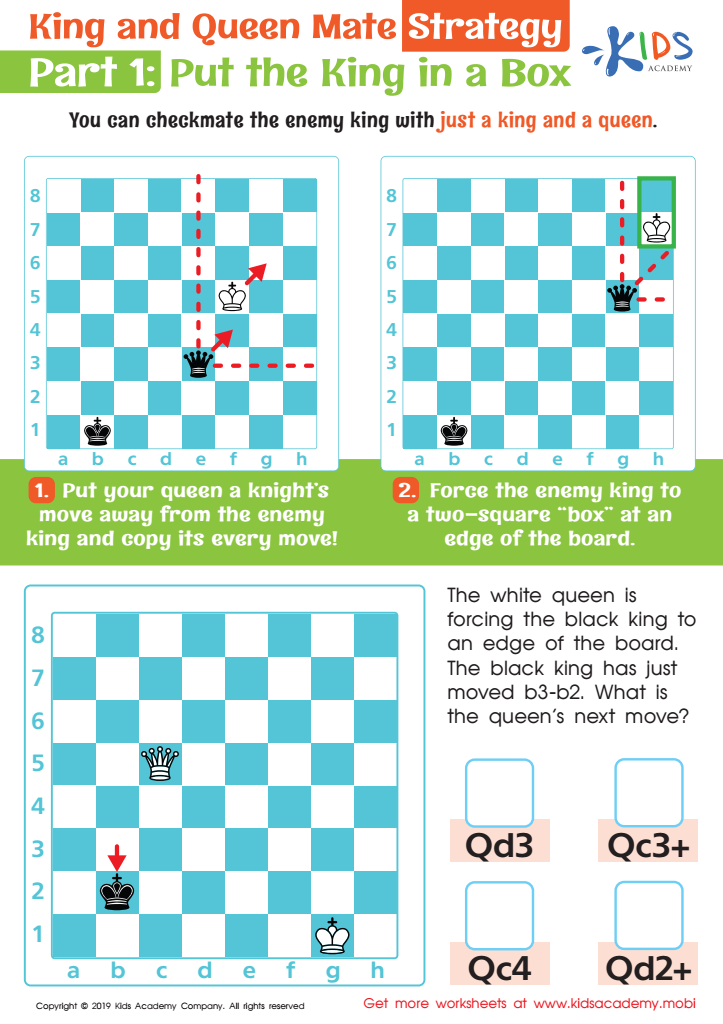
King and Queen Mate Strategy: Part 1 Worksheet
This worksheet will help your young chess player strategize. They’ll learn how to checkmate the opponent’s king using just a king and a queen. Descriptive sample boards will show them the strategy and then a practice board will test their knowledge. Allowing them to plan the queen’s next move to checkmate the opposing king.
 Assign to My Students
King and Queen Mate Strategy: Part 1 Worksheet
Worksheet
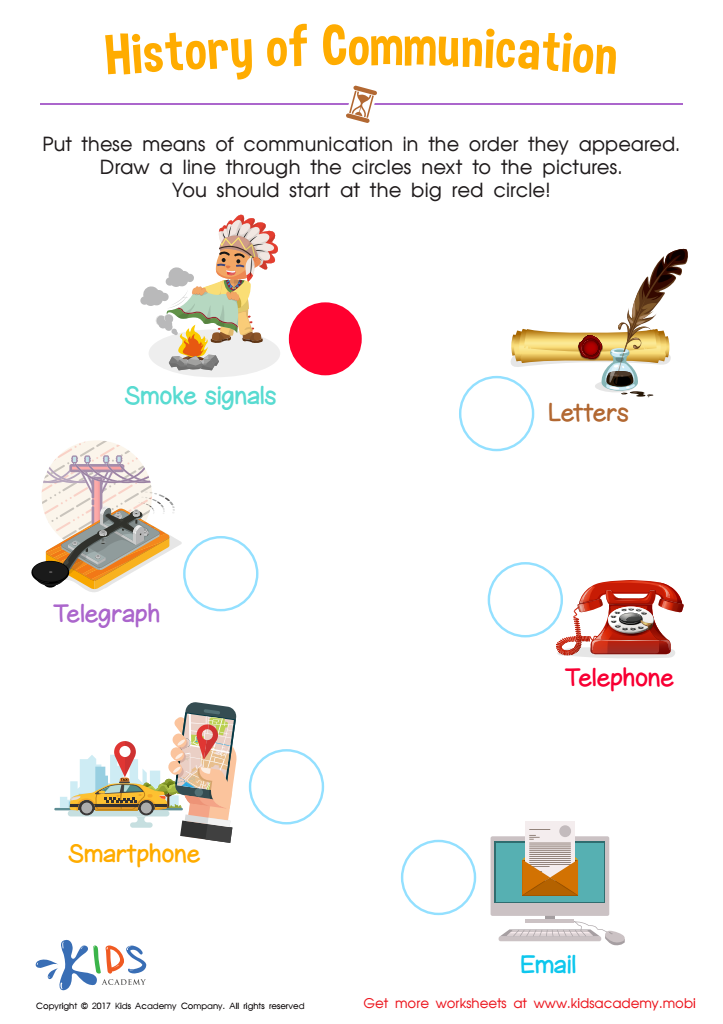
History of Communication Worksheet
Help your child understand history's communication evolution! With this worksheet, your child will learn about the various ways people communicated over time, and how that compares to today. It'll also foster an interest in history and bring the past to life!
History of Communication Worksheet
Worksheet
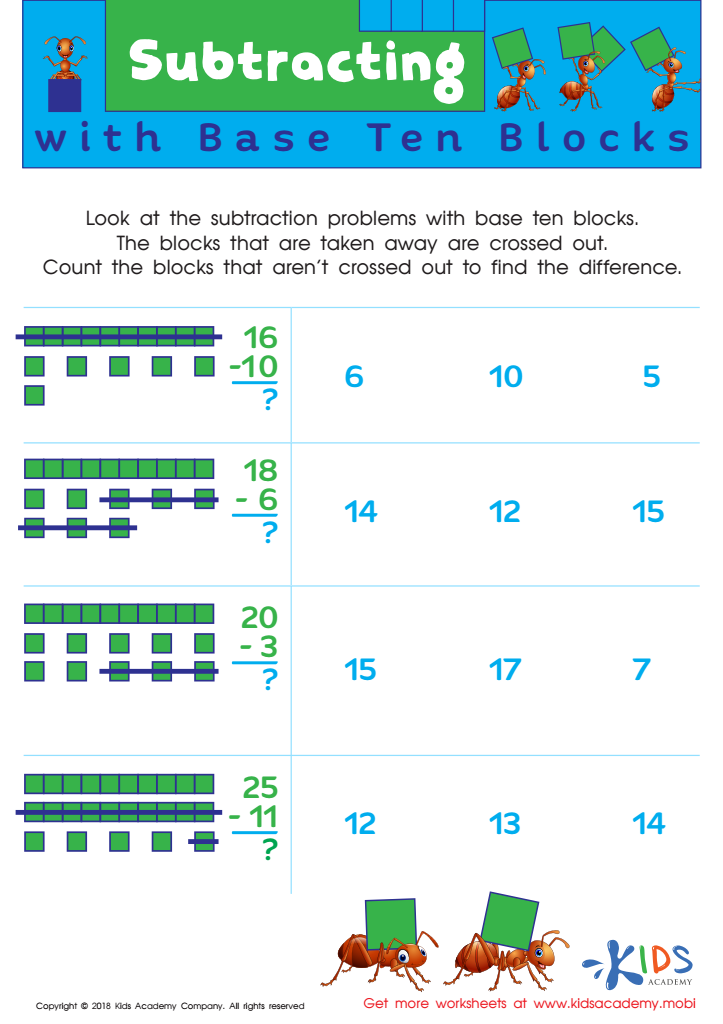
Subtracting with Base Blocks Worksheet
Little mathematicians can use base ten blocks to understand place value for subtraction. This worksheet helps them cross out blocks to solve problems with accuracy. Seeing equations like this boosts their number reasoning skills and helps them work with larger numbers.
Subtracting with Base Blocks Worksheet
Worksheet
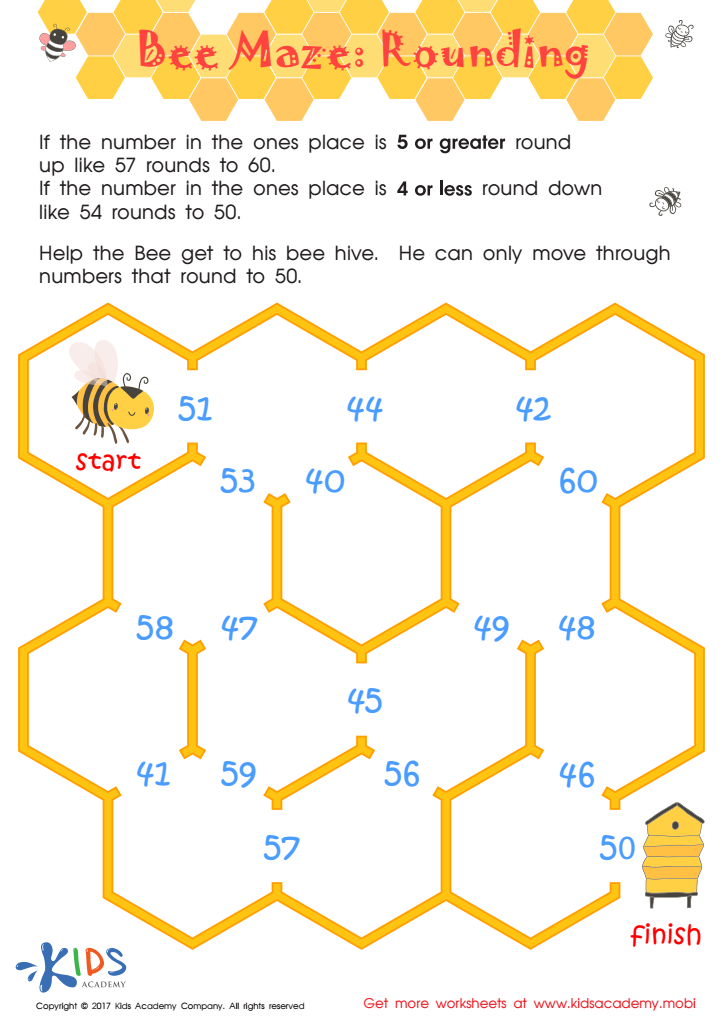
Bee Maze Worksheet
Help the bee find his way to the hive by rounding to the nearest 50!
Help the bee get to his hive with this fun, tricky rounding puzzle! This PDF worksheet challenges your child to round numbers up or down to 50. It reinforces the rules for rounding numbers and leads the bee through a maze. Get your child to help the bee reach the hive by rounding to 50!
Bee Maze Worksheet
Worksheet
Learning Skills
Enhancing critical thinking
Problem-solving skills development
Tactical thinking improvement
Chess strategy learning
Understanding game rules
Understanding communication history
Recognizing technological advancements
Developing analytical skills
Improving reading comprehension
Developing calculation skills
Join Kids Academy for Free
Who is primarily going to use this learning content?


.jpg)





Enhancing critical thinking in children aged 5-9 is crucial for their overall development and future success. At this age, children are naturally curious, and fostering critical thinking skills helps them build a strong foundation for lifelong learning. By promoting critical thinking, parents and teachers empower children to question, analyze, and evaluate information rather than simply accepting it at face value. This skill encourages them to solve problems creatively, leading to greater innovation and adaptability in an ever-changing world.
Moreover, critical thinking supports children's academic achievements. This age is formative, and by integrating critical thinking exercises into daily activities, educators can help children develop the ability to approach challenges systematically and think through solutions logically. This capability will serve them well not only in school but also in areas like social interactions and emotional regulation, as they learn to reflect on their decisions and understand different perspectives.
Additionally, nurturing critical thinking can enhance children's confidence and independence, equipping them with the tools necessary to make informed choices and become responsible citizens. Ultimately, by investing in critical thinking for young children, parents and teachers contribute to a more thoughtful, skilled, and aware generation.








