Identification skills Extra Challenge Worksheets for Ages 5-9
3 filtered results
-
From - To
Enhance your child’s observational and analytical abilities with our "Identification Skills Extra Challenge Worksheets" for ages 5-9. These engaging activities are designed to sharpen young minds by promoting attention to detail, pattern recognition, and critical thinking. Ideal for early learners, our worksheets provide a fun yet challenging experience, ensuring children build a strong foundation in essential identification skills. Whether at home or in the classroom, these printables support your kid's development with entertaining exercises tailored for young adventurers eager to explore and learn. Boost their confidence and academic growth with Kids Academy's expertly crafted resources!
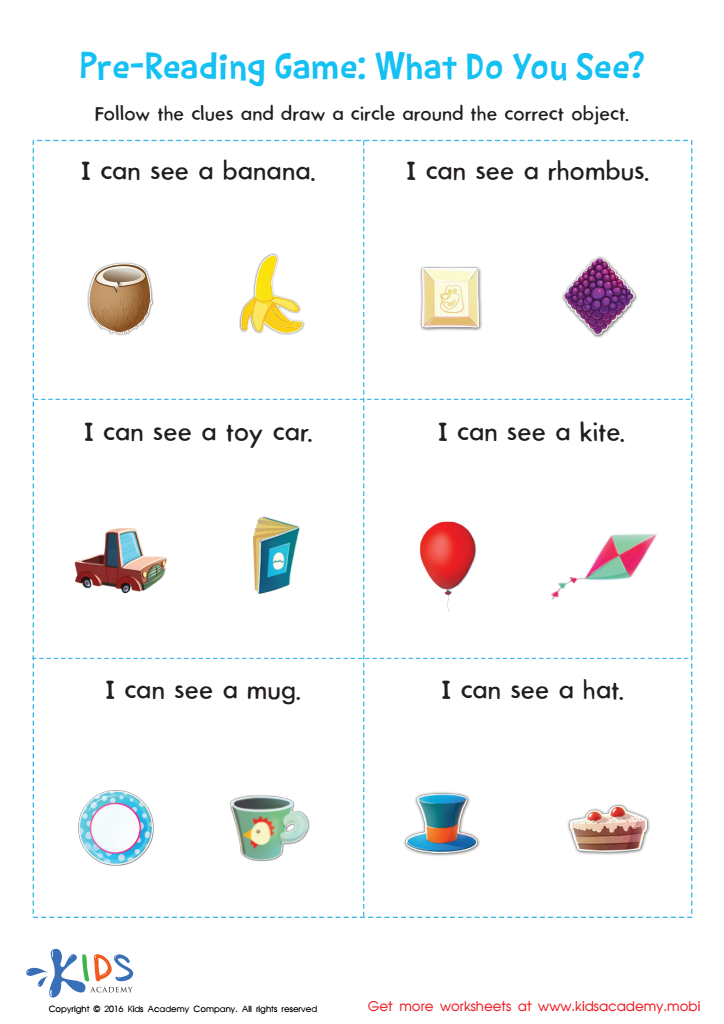
Pre–reading Worksheet: What Do You See?
 Assign to My Students
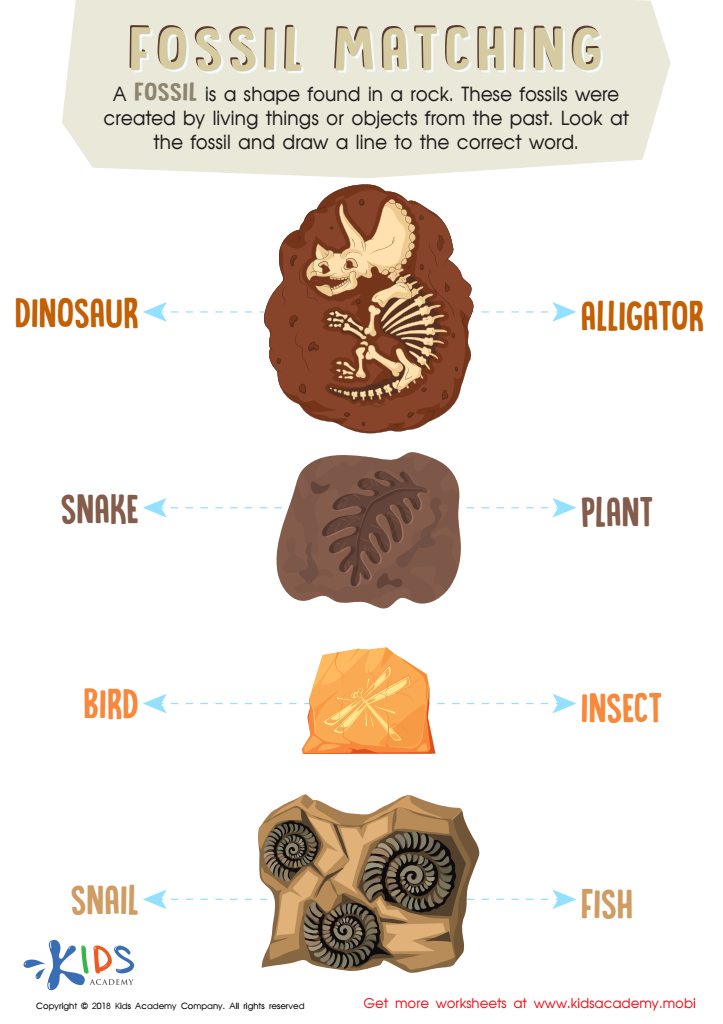
Fossil Matching Worksheet
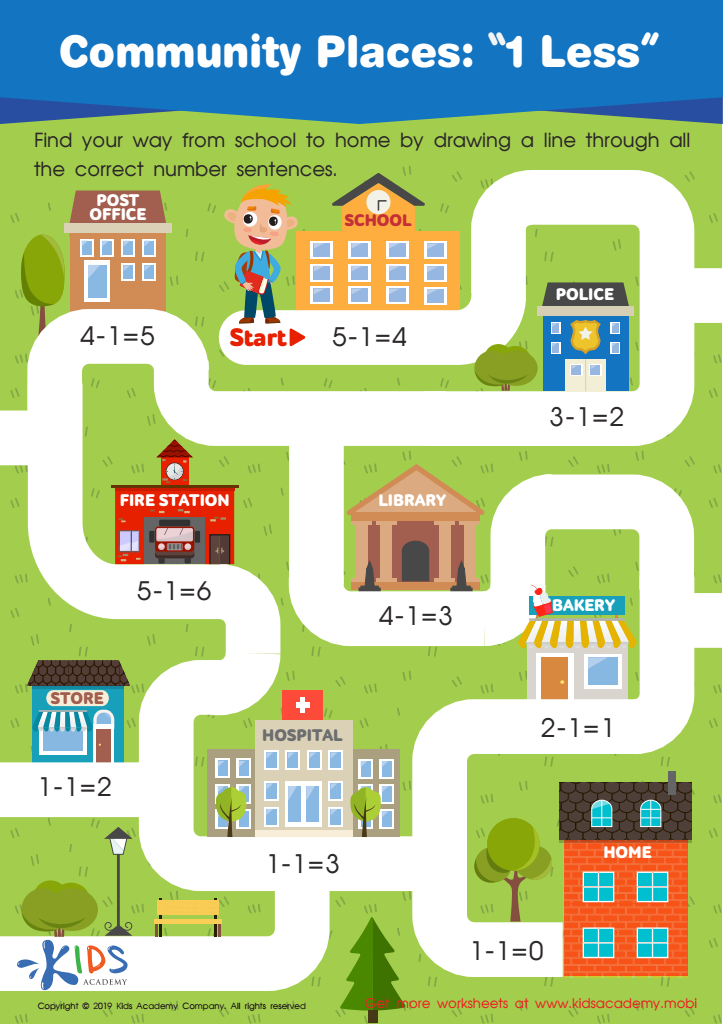
Community Places: 1 Less Worksheet





.jpg)


Identification skills are critical for young children, aged 5-9, as they form the foundation for various cognitive and academic abilities. These skills include recognizing shapes, colors, letters, numbers, and eventually more complex patterns and relationships. Fostering identification skills at this early age promotes literacy, numeracy, and problem-solving abilities.
Parents and teachers should care about enhancing these skills because they directly influence how children interact with their environment and comprehend new information. For instance, mastering letter identification is a precursor to effective reading and writing, while recognizing numbers is essential for arithmetic and later mathematical concepts.
An Extra Challenge in identification exercises serves multiple benefits. It keeps children engaged and motivated, offering a sense of achievement when they solve more complex tasks. This heightened engagement not only improves their current skill levels but also builds a strong foundation for lifelong learning.
Moreover, early development of these skills encourages critical thinking and observational capabilities. Children become adept at distinguishing details, a competency vital across subjects and everyday life. By prioritizing identification skills, parents and teachers help children build confidence in their abilities, making the learning process enjoyable and setting them up for future academic success. Consequently, these skills are a gateway to more advanced cognitive development and academic success.








