Alphabet Recognition Extra Challenge Worksheets for 5-Year-Olds
5 filtered results
-
From - To
Boost your child's alphabet recognition skills with our engaging "Alphabet Recognition Extra Challenge Worksheets" designed specifically for 5-year-olds! These worksheets offer a variety of fun and interactive activities that reinforce letter identification and sound associations. From tracing letters to identifying them in different contexts, your child will love the diverse designs and colorful illustrations. These extra challenge worksheets not only enhance learning but also foster creativity and critical thinking. Perfect for classroom use or at-home learning, these resources are intended to supplement your child's education. Unlock their potential today with our alphabet recognition challenges and watch their confidence soar!

Letter A Tracing Page
 Assign to My Students
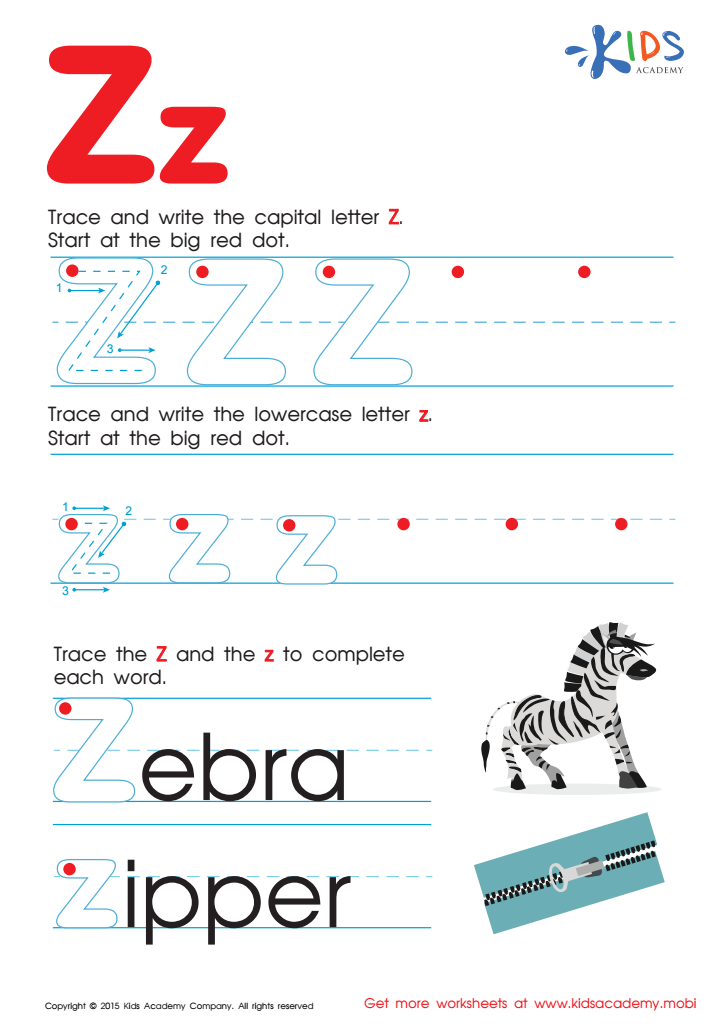
Letter Z Tracing Page
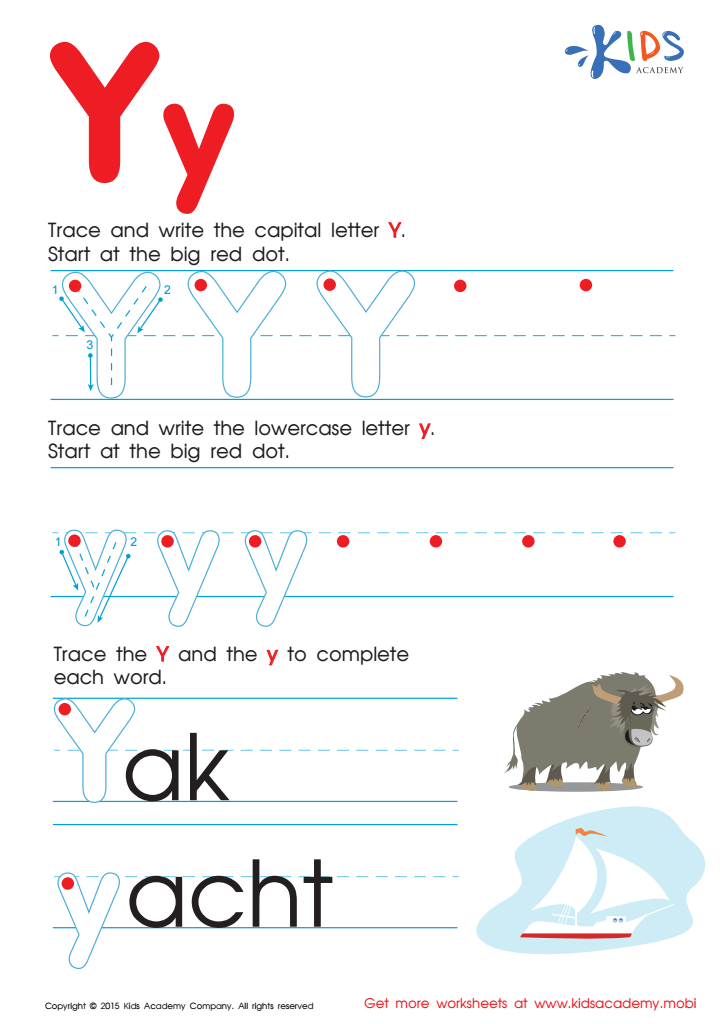
Letter Y Tracing Page
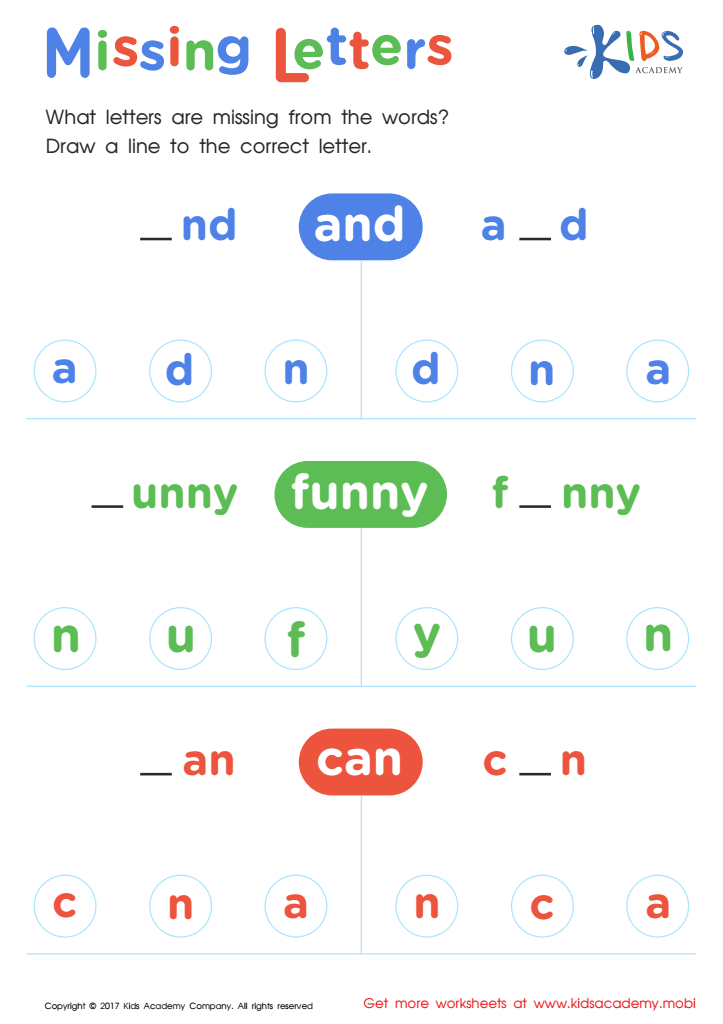
Missing Letters Worksheet
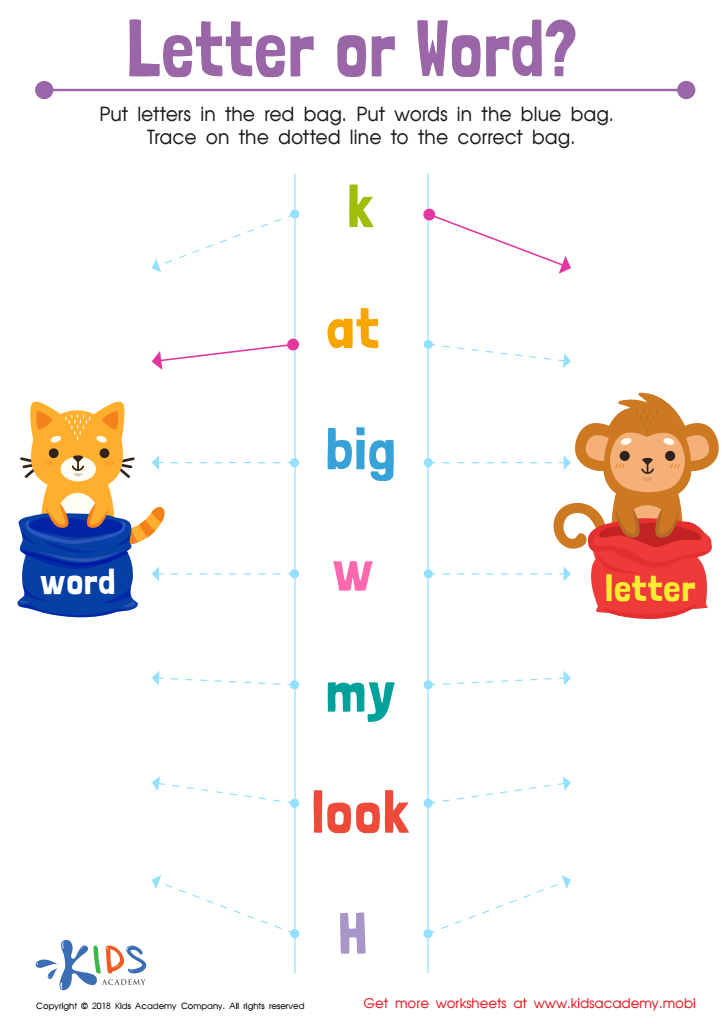
Letter or Word? Worksheet




.jpg)



Alphabet recognition is a foundational skill that sets the stage for literacy and academic success in young learners. For 5-year-olds, mastering this skill goes beyond simply reciting the alphabet; it involves recognizing both uppercase and lowercase letters, connecting them to sounds, and understanding their placement in words. The "Alphabet Recognition Extra Challenge" is crucial for several reasons.
First, it boosts cognitive development by encouraging critical thinking and memory retention. Engaging in challenges allows children to explore letters in diverse contexts, facilitating deeper understanding. Additionally, mastering alphabet recognition enhances phonemic awareness, which is essential for reading and spelling proficiency.
For parents and teachers, implementing these extra challenges fosters a love for learning and contributes to a child’s confidence. When children successfully recognize letters, their motivation increases, leading to more engagement in reading and writing activities.
Furthermore, strong alphabet skills provide a solid foundation for future learning, ensuring that kids are well-prepared for more advanced literacy concepts. By prioritizing alphabet recognition, caregivers empower their children and foster lifelong learning habits. In an increasingly literate world, these skills are invaluable for academic achievements and personal growth, illustrating why parents and educators must invest in such challenges for young learners.








