Categorization skills Extra Challenge Worksheets for 5-Year-Olds
3 filtered results
-
From - To
Introduce your kindergartner to a world of fun with our "Categorization Skills Extra Challenge Worksheets" designed specifically for 5-year-olds. These worksheets are crafted to enhance critical thinking while engaging young minds. Through vibrant illustrations and interactive activities, children will learn to sort and classify objects by color, shape, size, and more. Each task promotes cognitive development and problem-solving skills. Ideal for use at home or in the classroom, these extra challenging exercises make learning enjoyable and rewarding. Help your child establish a strong foundation in categorization skills today and witness their confidence soar!
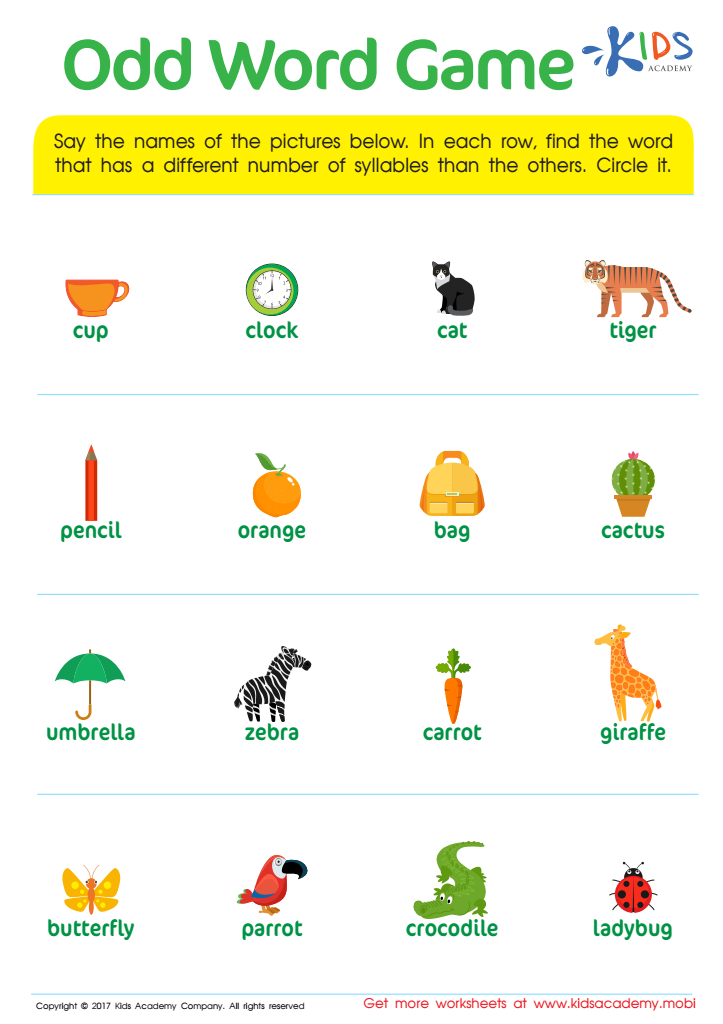
Count Syllables: Odd Word Game Worksheet
 Assign to My Students
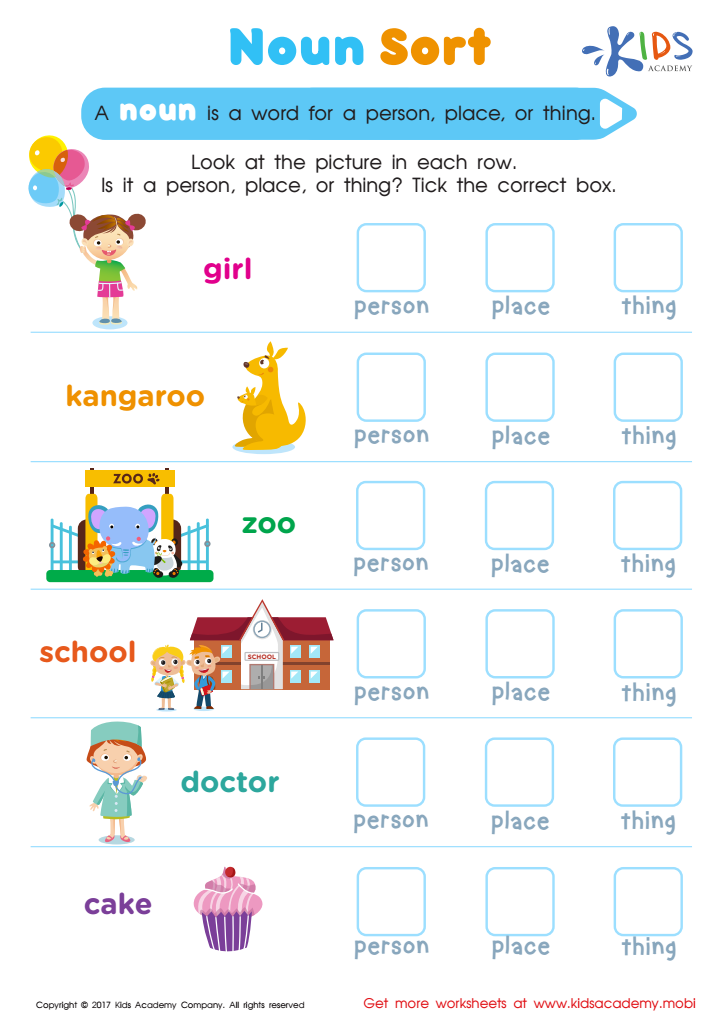
Noun Sort Printable
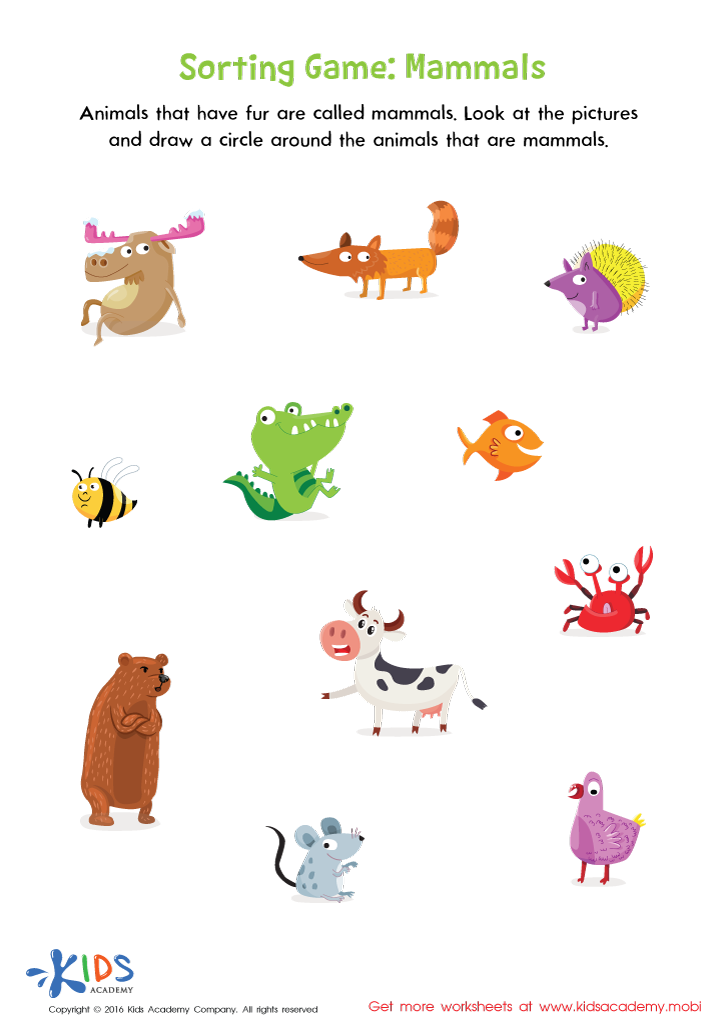
Mammals Sorting Worksheet








Categorization skills are fundamental to a child's cognitive development, and for 5-year-olds, promoting these skills through extra challenges can significantly enhance their learning and intellectual growth. At this age, children are eagerly expanding their vocabulary and understanding of the world. Engaging in activities that require them to categorize objects, ideas, or information helps them grasp sorting, grouping, recognizing patterns, and understanding relationships.
When parents or teachers provide extra challenges in categorization, they foster critical thinking and logic. This capability never operates in isolation but supports other essential skills such as problem-solving, memory retention, and decision-making, laying a robust foundation for academic success. For instance, kids who are adept at categorizing can more readily transition into reading and math, where categorization techniques are subtly embedded in spelling patterns or number groupings.
Moreover, these activities boost language development as children explain their thought processes or describe groupings, aiding in their communication skills. Socio-emotionally, categorization also teaches patience, attention to detail, and the perseverance to complete tasks, all skills imperative in their daily interactions.
In essence, nurturing categorization skills in 5-year-olds prepares them for future complex learning, instills lifelong intellectual curiosity, and develops foundational competencies indispensable across various domains. This investment in their cognitive toolkit promises significant benefits for their overall developmental trajectories.








