Matching numbers Extra Challenge Worksheets for 5-Year-Olds
5 filtered results
-
From - To
Unlock the fun of learning with our Matching Numbers Extra Challenge Worksheets for 5-Year-Olds! Designed to reinforce number recognition and enhance critical thinking skills, these engaging worksheets present a variety of matching activities tailored for young learners. Kids will enjoy connecting numbers to pictures and their corresponding written forms, solidifying their understanding in an enjoyable way. Perfect for both home and classroom use, these worksheets provide an extra layer of challenge to ignite curiosity and promote independence in learning. Encourage your child's early math skills today with our thoughtfully crafted resources that turn education into a delightful adventure!
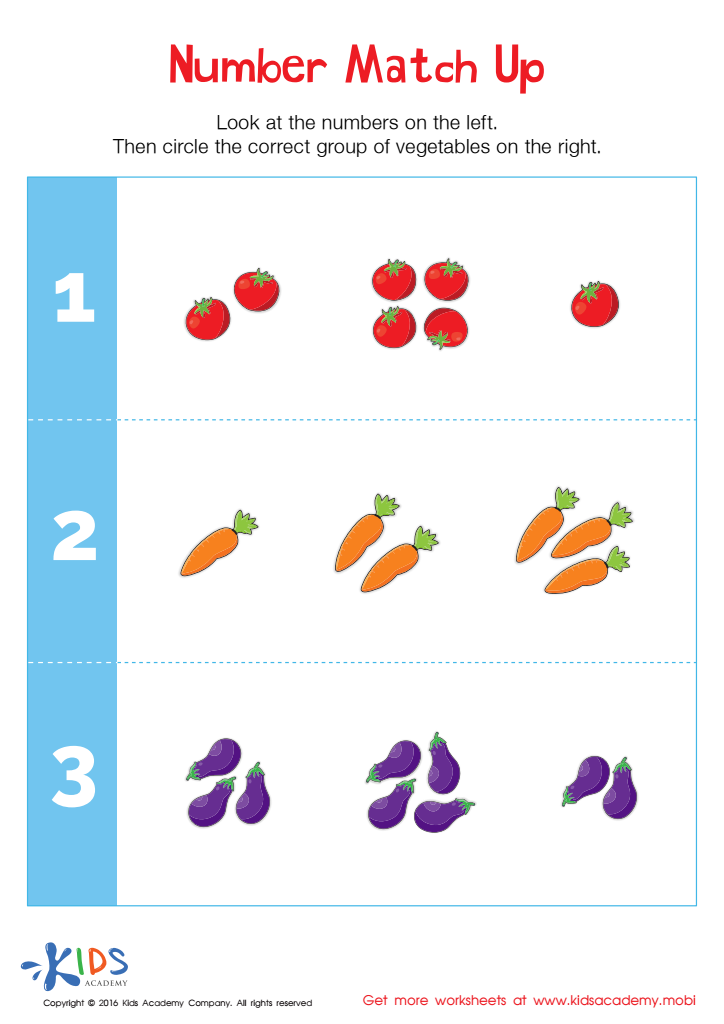
Number Match Up Worksheet
 Assign to My Students
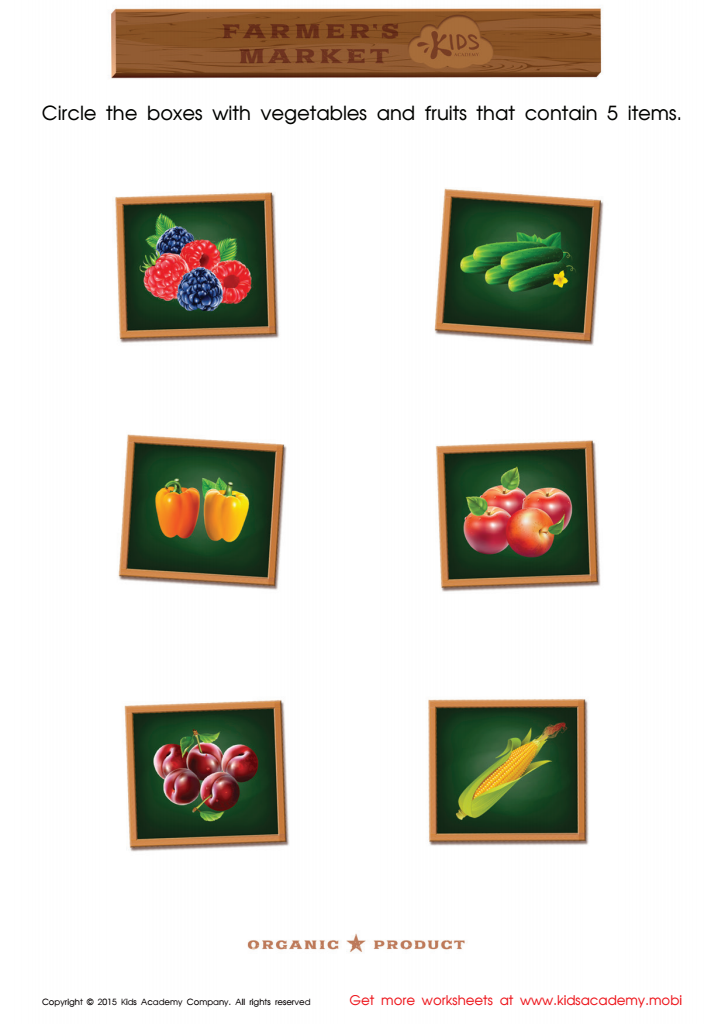
Count and Match Vegetables 1 – 7 Math Worksheet
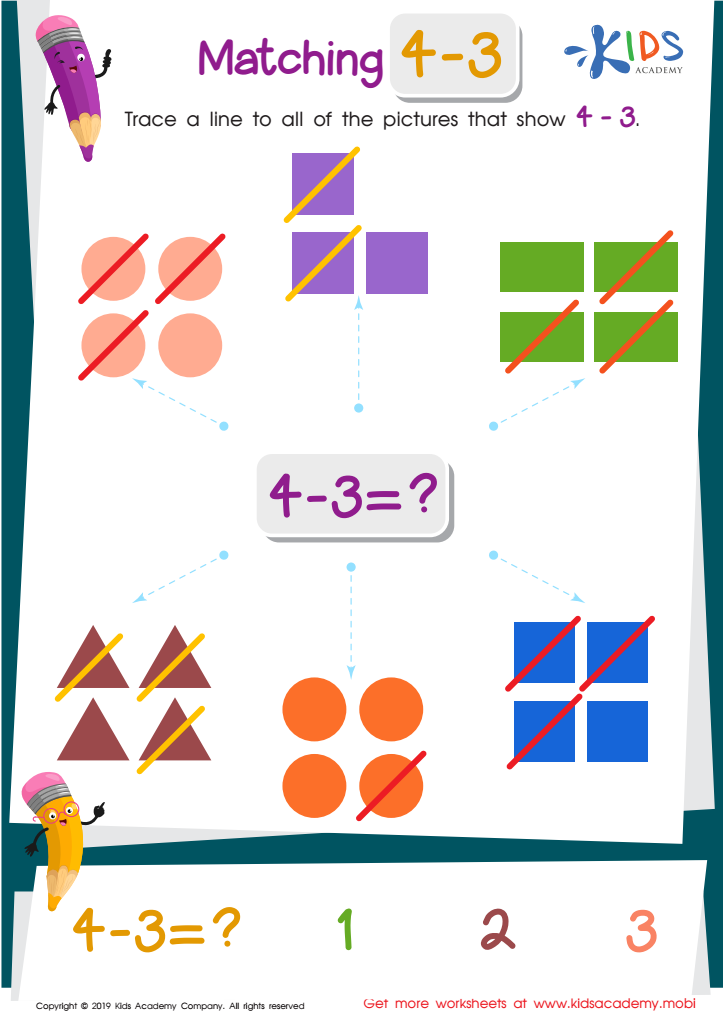
Matching 4 – 3 Worksheet
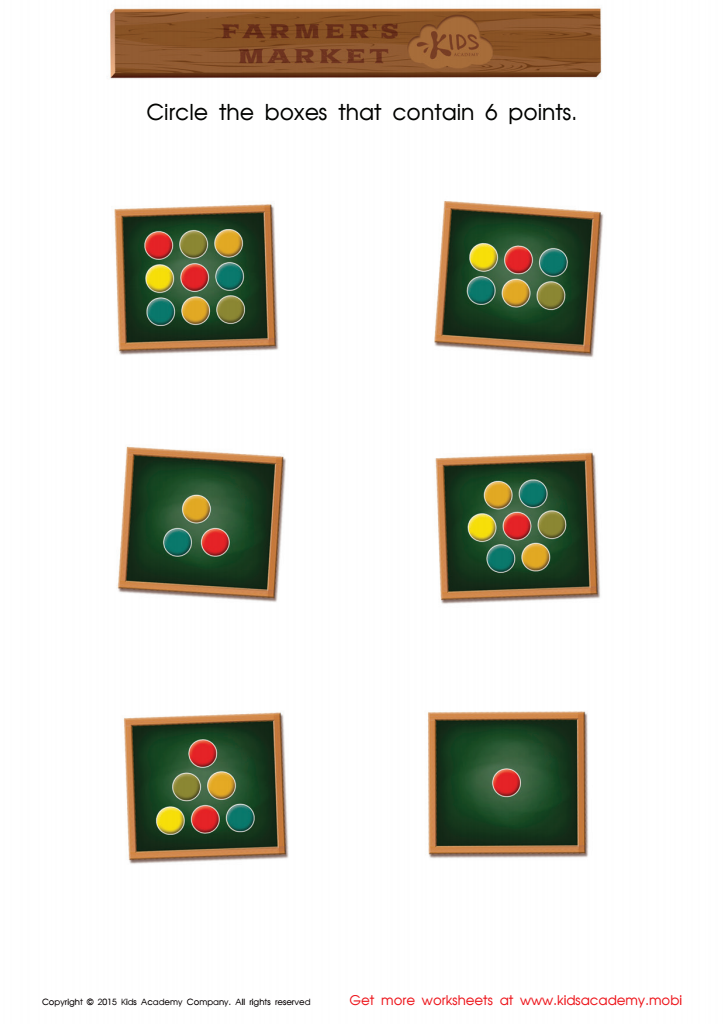
Count and Match Points 6 Math Worksheet
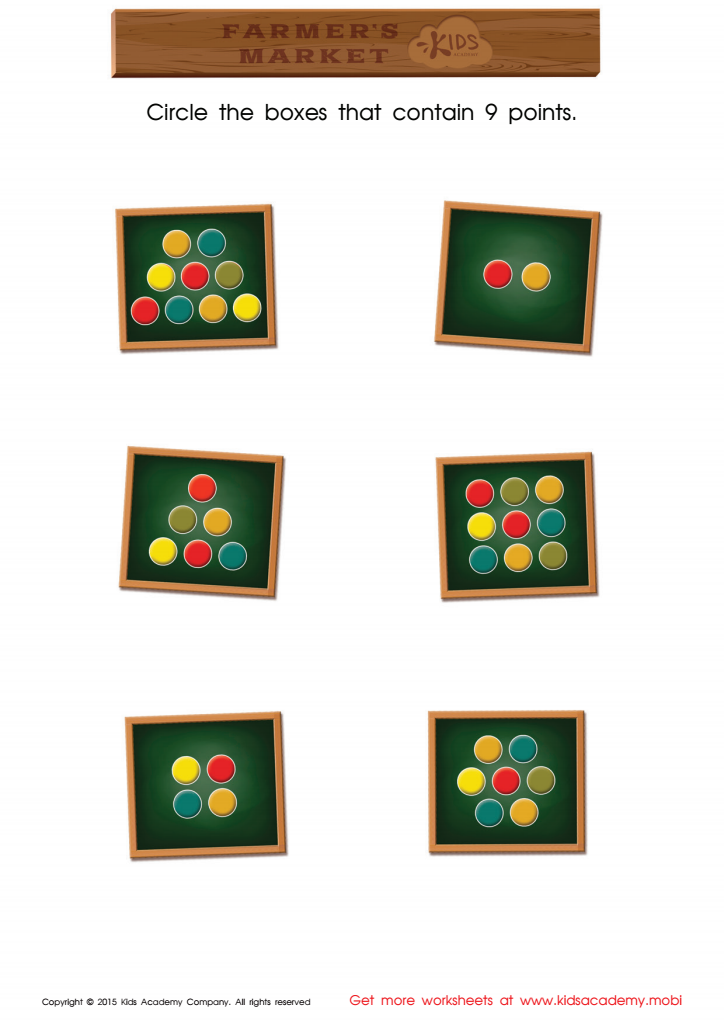
Count and Match Points 9 Math Worksheet







Matching numbers activities, particularly the Extra Challenge for 5-year-olds, play a crucial role in early childhood education. These activities lay the groundwork for essential math skills, which are fundamental to a child's cognitive development. By engaging children in matching numbers, parents and teachers can foster pattern recognition, number identification, and begin to build an understanding of quantity.
At the age of five, children are highly receptive to learning, and these activities can effectively harness their curiosity. The Extra Challenge component offers a progressive layer that stimulates critical thinking and problem-solving skills, encouraging kids to extend their mathematical abilities beyond simple recognition.
Moreover, matching numbers enhances fine motor skills as children manipulate objects to find corresponding pairs, promoting hand-eye coordination. This interactive approach also supports language development, as adults can engage children in discussions about numbers, counting, and relationships.
Ultimately, by integrating enjoyable and engaging matching numbers activities into early learning environments, parents and teachers provide 5-year-olds with a solid foundation in mathematics while making learning fun and accessible. This proactive stance helps prepare children for future academic success and instills a love for learning that can last a lifetime.








