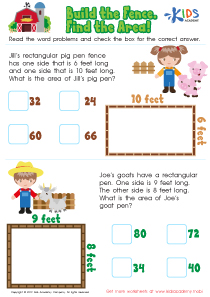
Basic Math Skills Extra Challenge Numbers Worksheets for 5-Year-Olds
5 filtered results
Difficulty Level
Grade
Age
-
From - To
Subject
Activity
Standards
Enhance your child's learning experience with our "Basic Math Skills Extra Challenge Numbers Worksheets" designed specifically for 5-year-olds. These engaging worksheets offer a fun way for children to reinforce their understanding of numbers while developing essential math skills. Packed with diverse activities, children will enjoy practicing number recognition, counting, and simple problem-solving techniques. Our carefully structured exercises encourage early learners to explore math concepts at their own pace, promoting confidence and independence in their abilities. Perfect for parents and educators, these worksheets make math exciting and accessible, setting the groundwork for future learning success. Boost your little one's math journey today!
Favorites
With answer key
Interactive
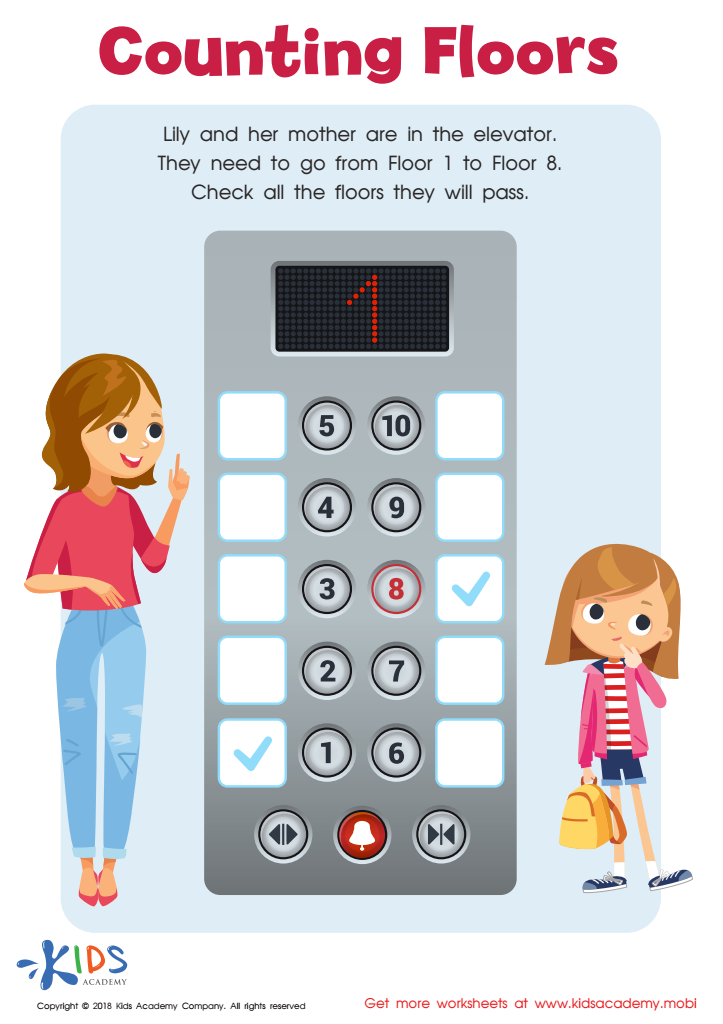
Counting Floors Worksheet
Take your kids on an elevator ride and have them help you. With this worksheet, little ones meet Lily and her mom. They're taking an elevator from Floor 1 to Floor 8. Ask them to check the floors they pass and help the two reach their destination.
 Assign to My Students
Counting Floors Worksheet
Worksheet
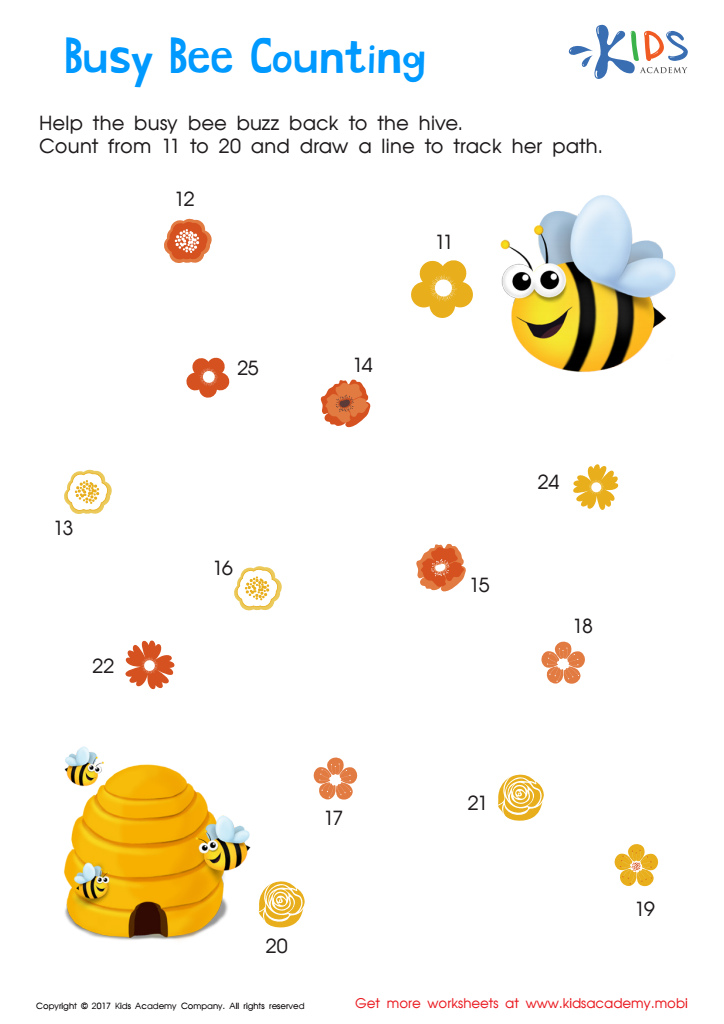
Ordering 11–20: Busy Bee Counting Worksheet
Help your child master counting from 11 to 20 with our connect the dot counting worksheet. Kids will have fun counting, drawing and problem-solving with this vibrant worksheet. With clear directions, adorable pictures and a sense of purpose, your child will develop crucial numeracy skills without even knowing it!
Ordering 11–20: Busy Bee Counting Worksheet
Worksheet
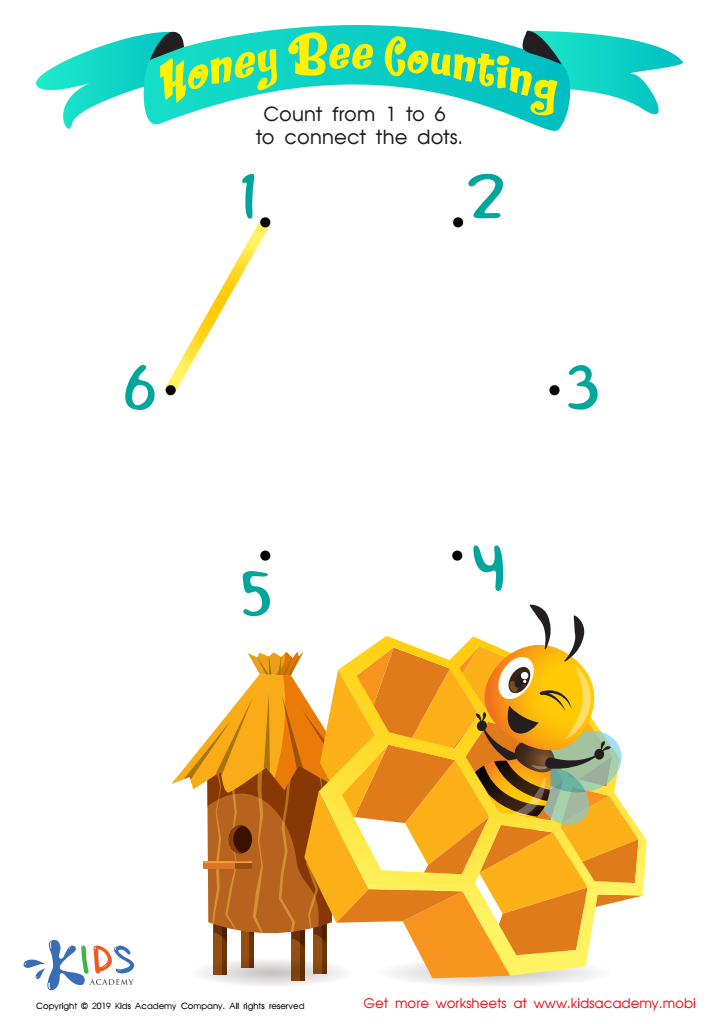
Honey Bee Counting Worksheet
Help your kids learn about honey bees while practising their counting skills! Show them the picture and ask them to point out the bee. Then, give them this worksheet and have them count up to 6, connecting the dots as they go. Numbers are provided for guidance - it's a great way to have fun and learn!
Honey Bee Counting Worksheet
Worksheet
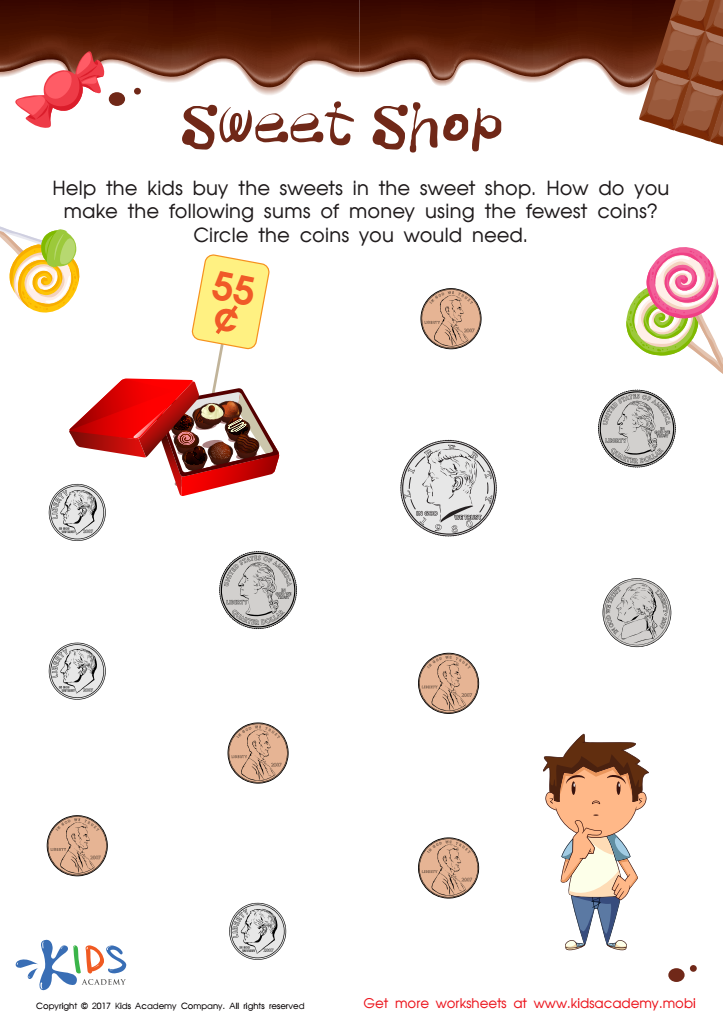
Sweet Shop – Counting Coins Worksheet
Help your child get ready to buy sweet treats with this coin counting worksheet. It'll challenge them to use the fewest coins possible. With knowledge of coin values, they'll work out the right combination to get the sweets!
Sweet Shop – Counting Coins Worksheet
Worksheet
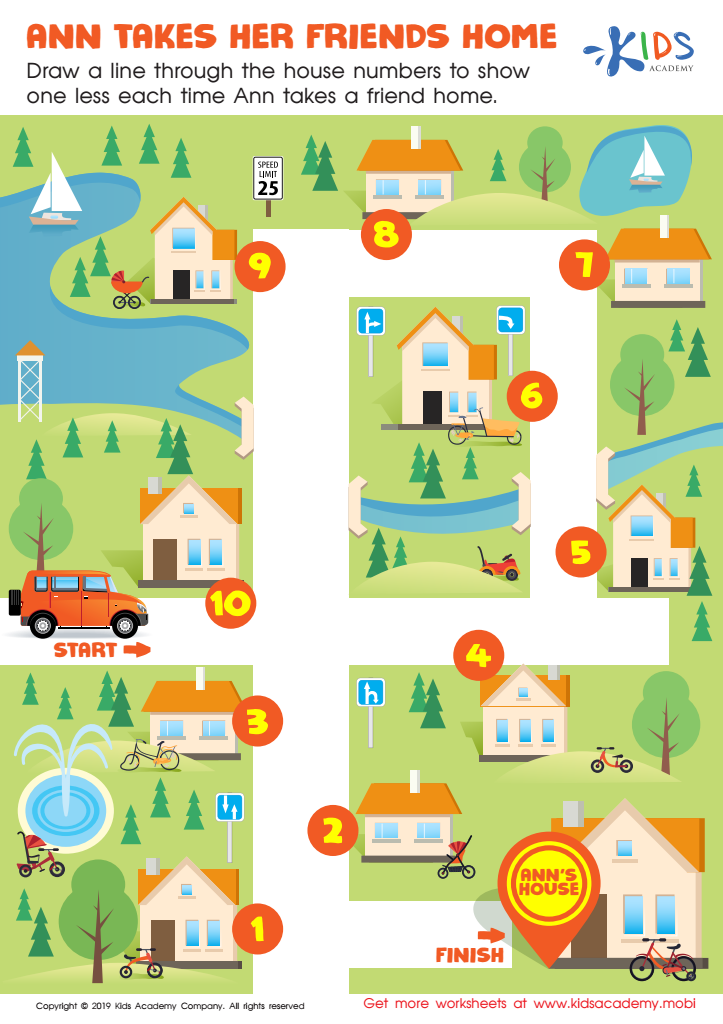
Ann Takes her Friends Home Worksheet
Get your kids to tell you what they enjoy doing with their friends in each other's homes. Then, encourage them to complete the worksheet. It shows Ann taking her friends to her house. Have them draw a line through the house numbers to show Ann taking one friend home at a time.
Ann Takes her Friends Home Worksheet
Worksheet
Join Kids Academy for Free
Who is primarily going to use this learning content?








Basic math skills are foundational for children's cognitive development and future academic success. For 5-year-olds, engaging with extra challenge numbers can play a crucial role in igniting their interest in mathematics and enhancing their numerical intuition. When parents and teachers focus on providing enrichment through challenges, they encourage critical thinking and problem-solving skills.
These extra challenges not only help build a child's confidence in handling numbers, but they also promote perseverance. Young learners who master challenge numbers can feel a sense of accomplishment, motivating them to tackle more complex problems as they progress in their education. Moreover, early exposure to such challenges can bridge gaps in understanding and foster a love for learning that may extend beyond math.
Additionally, challenging activities can be tailored to the child's individual pace and interests, resonating with their natural curiosity. This approach promotes a positive attitude toward math, dismantling the fear often associated with the subject in later years.
Ultimately, prioritizing basic math skills and incorporating challenges not only equips children with essential life skills but also lays the foundation for future academic achievement and a lifelong appreciation for math. Both parents and teachers should thus recognize the significance of fostering these early experiences.