Comparing sizes Extra Challenge Measurement Worksheets for 5-Year-Olds
3 filtered results
-
From - To
Promote your child's understanding of measurement with our "Comparing Sizes Extra Challenge Measurement Worksheets" designed for 5-year-olds! These engaging printable worksheets provide an exciting opportunity for young learners to explore the concepts of size comparison. Packed with vibrant visuals and fun activities, children will sharpen their observational skills as they identify, compare, and differentiate between various objects' sizes. This essential pre-math skill encourages critical thinking and boosts creativity. Perfect for classroom settings or home learning, these worksheets will help your little one become confident in measurements while making learning enjoyable. Download now to inspire their measurement journey!
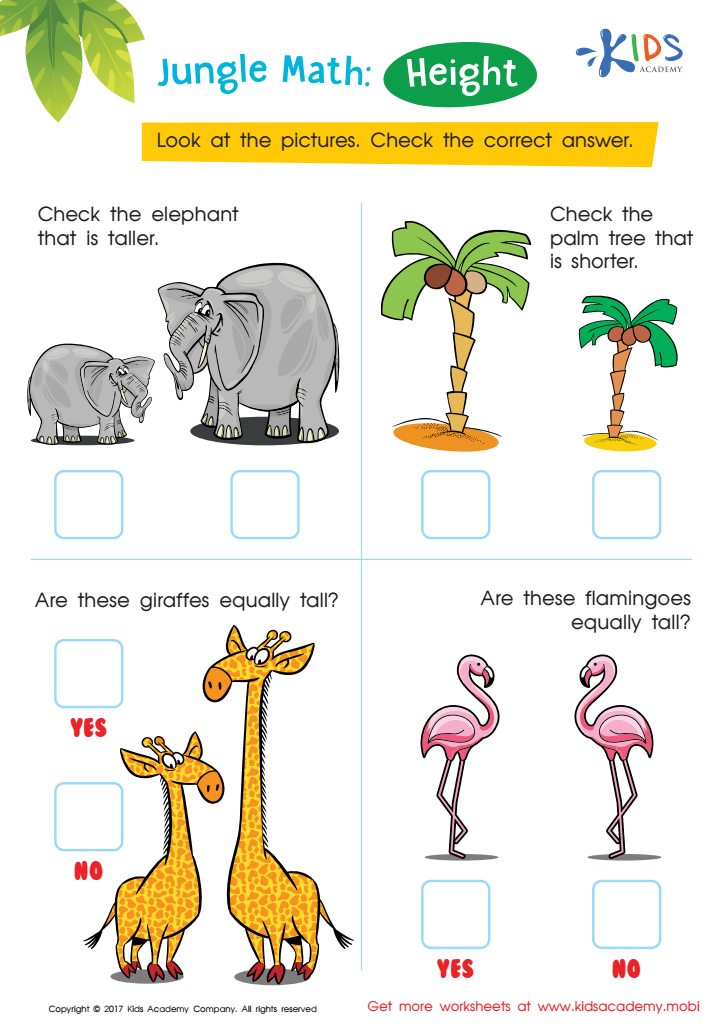
Which Is Taller Worksheet
 Assign to My Students
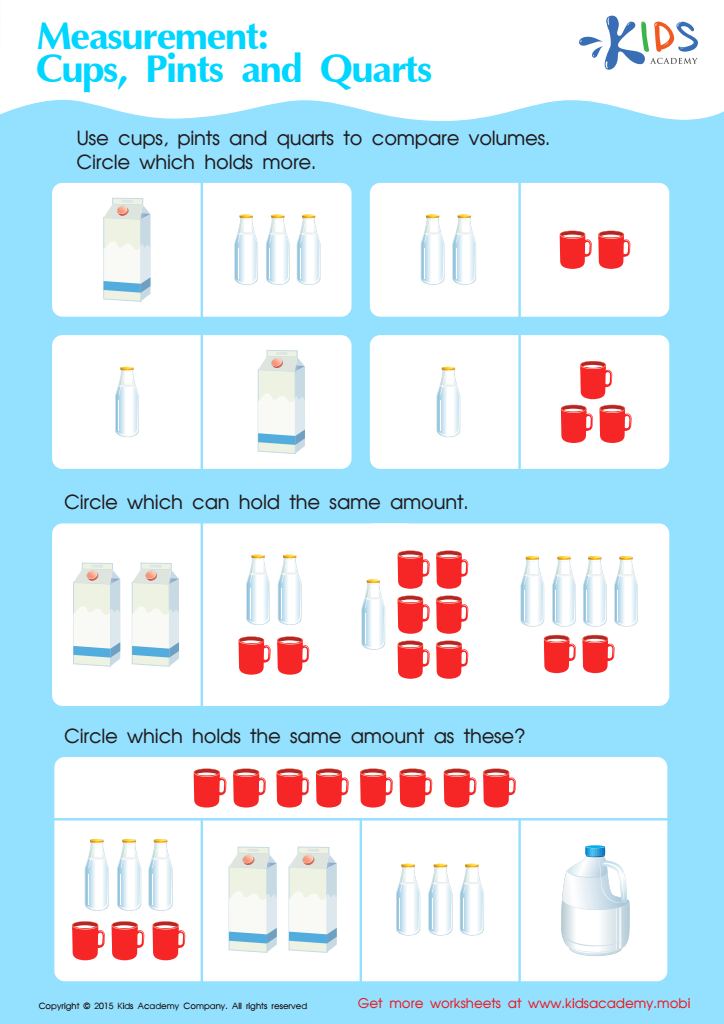
Measurement: Compare Volumes Worksheet
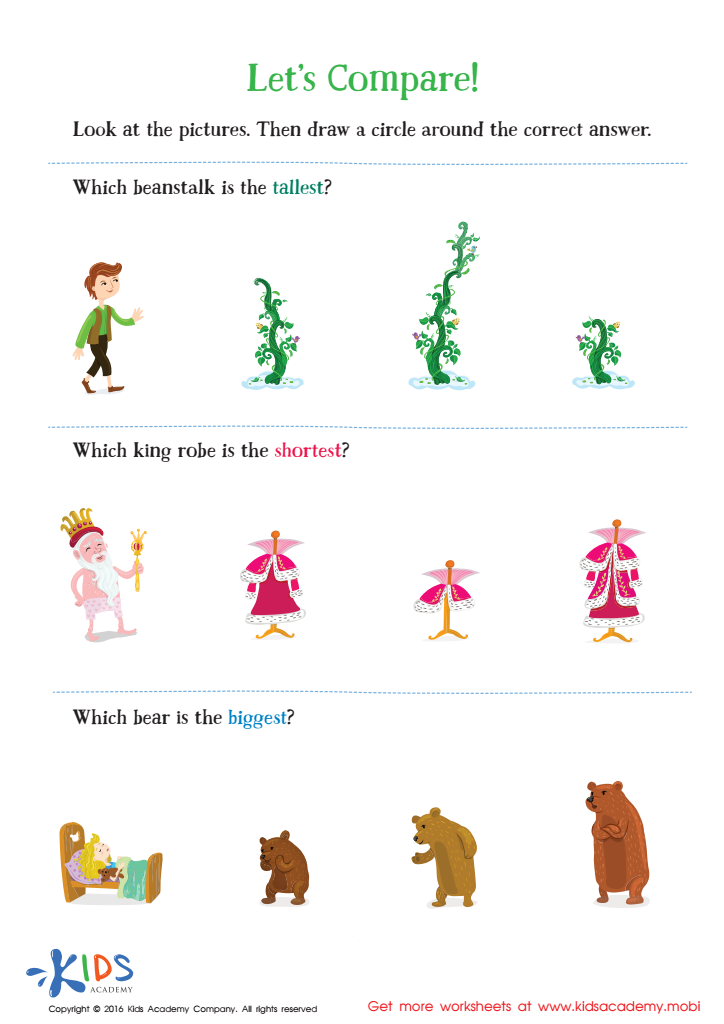
Fairy Tale Worksheet: Let's Compare








Understanding how to compare sizes and measurements is crucial for 5-year-olds as it lays the foundation for their mathematical skills and critical thinking. This skill not only fosters cognitive development but also enhances spatial awareness, enabling children to make sense of their environment. When parents and teachers focus on comparing sizes and engaging in extra challenges, they provide children with practical experiences that go beyond rote memorization.
Learning to measure and compare items encourages problem-solving skills and promotes language development as children describe their observations. Activities like measuring objects with non-standard units (such as blocks or their own body parts) can make learning interactive and fun. This hands-on approach builds confidence as children see their progress in understanding measurements.
Moreover, nurturing a fascination with measurements can spark an interest in STEM (Science, Technology, Engineering, Math) fields, preparing children for future academic pursuits. By guiding young learners through these concepts, parents and teachers support holistic growth, making math relatable and relevant to everyday life. Ultimately, the emphasis on comparing sizes not only promotes early mathematical understanding but also enhances children's analytical skills and creativity, which are essential for lifelong learning and development.