Alphabet Recognition Extra Challenge Letter Recognition Worksheets for Ages 6-8
3 filtered results
Difficulty Level
Grade
Age
-
From - To
Subject
Activity
Standards
Boost your child’s alphabet recognition skills with our "Alphabet Recognition Extra Challenge Letter Recognition Worksheets" designed for ages 6-8! These engaging worksheets feature fun, interactive activities that challenge young learners to identify and differentiate letters effectively. Each worksheet is thoughtfully crafted to enhance letter recognition through a variety of exercises, including matching, tracing, and coloring. Perfect for both classroom use and home learning, these resources will help kids build confidence in their reading abilities while developing essential foundational skills. Give your child the extra challenge they need to excel in reading with our vibrant and educational worksheets!
Favorites
With answer key
Interactive
Letter A Tracing Page
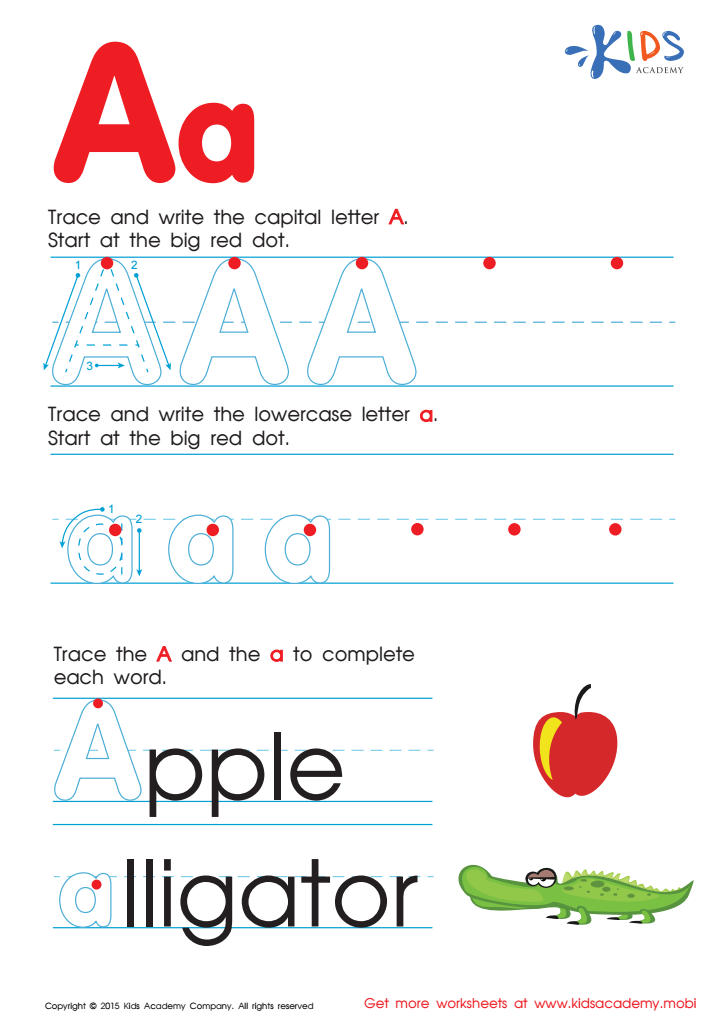
Trace and write the letter "A"! Start with the big red dot, then do the capital and lowercase versions. Then write it again with two words - apple and alligator. Download more tracing worksheets at Kids Academy.
 Assign to My Students
Letter A Tracing Page
Worksheet
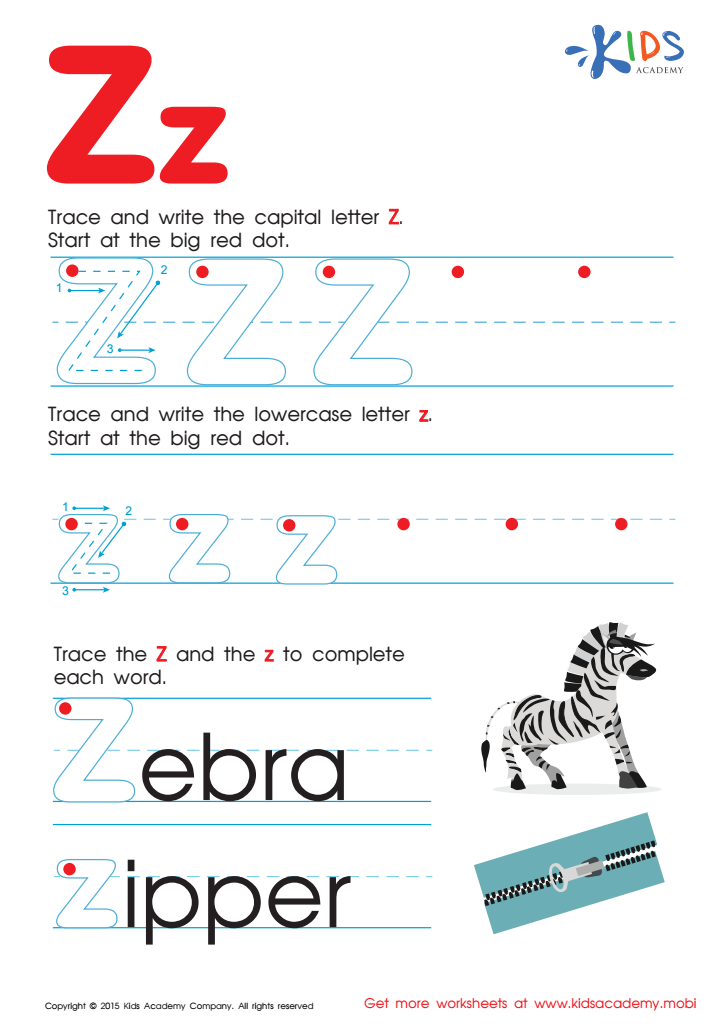
Letter Z Tracing Page
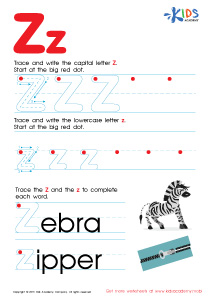
Trace and write capital "Z" and lowercase "z". Complete words "zebra" and "zipper". Be attentive and have fun! (80 words)
Letter Z Tracing Page
Worksheet
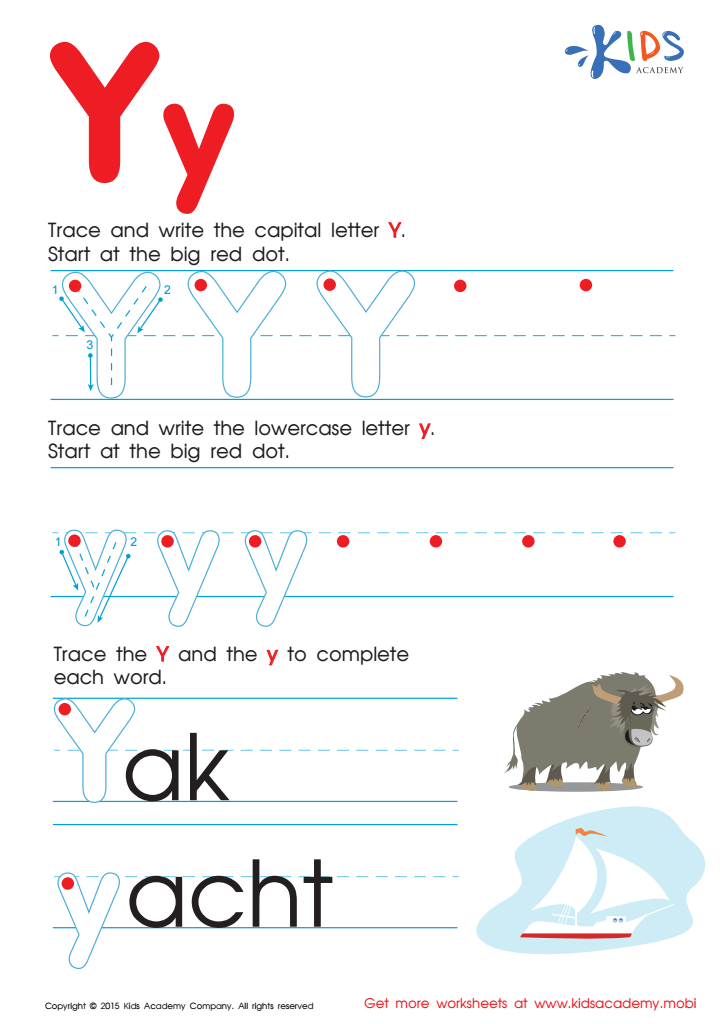
Letter Y Tracing Page
Trace the capital letter "Y" on the red dot, then trace and write the lowercase letter. Complete the words to help the Yak walk and the yacht swim. More worksheets at Kids Academy.
Letter Y Tracing Page
Worksheet
Join Kids Academy for Free
Who is primarily going to use this learning content?








Alphabet recognition, particularly for children ages 6-8, is a crucial foundational skill that supports literacy development. As children transition from learning letters to reading, mastering alphabet recognition enhances their ability to decode words, which is essential for early reading comprehension. When children participate in extra challenges focused on letter recognition, they not only gain proficiency with the letters but also improve their cognitive skills, such as memory and attention.
For teachers and parents, emphasizing extra challenges in letter recognition can boost confidence and foster a love for learning. Engaging activities can make learning fun and memorable, helping children to internalize letter-sound relationships. By reinforcing these skills, educators and parents empower children to become proficient readers, ultimately paving the way for academic success in all subjects.
Additionally, understanding the nuances of letter recognition can help identify children who may need extra support, allowing for early intervention. In a world increasingly driven by text, the ability to read effectively opens doors to greater opportunities. Thus, focusing on alphabet recognition through extra challenges ensures that children develop the essential skills they need for lifelong learning and future educational endeavors.