Vowel Recognition Extra Challenge Long Vowels Worksheets for Ages 6-8
3 filtered results
Difficulty Level
Grade
Age
-
From - To
Subject
Activity
Standards
Boost your child's reading skills with our "Vowel Recognition Extra Challenge: Long Vowels Worksheets!" Perfect for ages 6-8, these engaging activities focus on mastering long vowel sounds through fun exercises. Each worksheet encourages kids to identify, differentiate, and use long vowels within words, enhancing their pronunciation and spelling abilities. Our thoughtfully designed challenges not only build foundational literacy skills but also promote confidence in young readers. Ideal for classroom use or extra practice at home, this comprehensive set supports consistent learning and progress. Equip your child with the tools they need to excel in reading and language arts!
Favorites
With answer key
Interactive
Long Vowel Sound A Worksheet
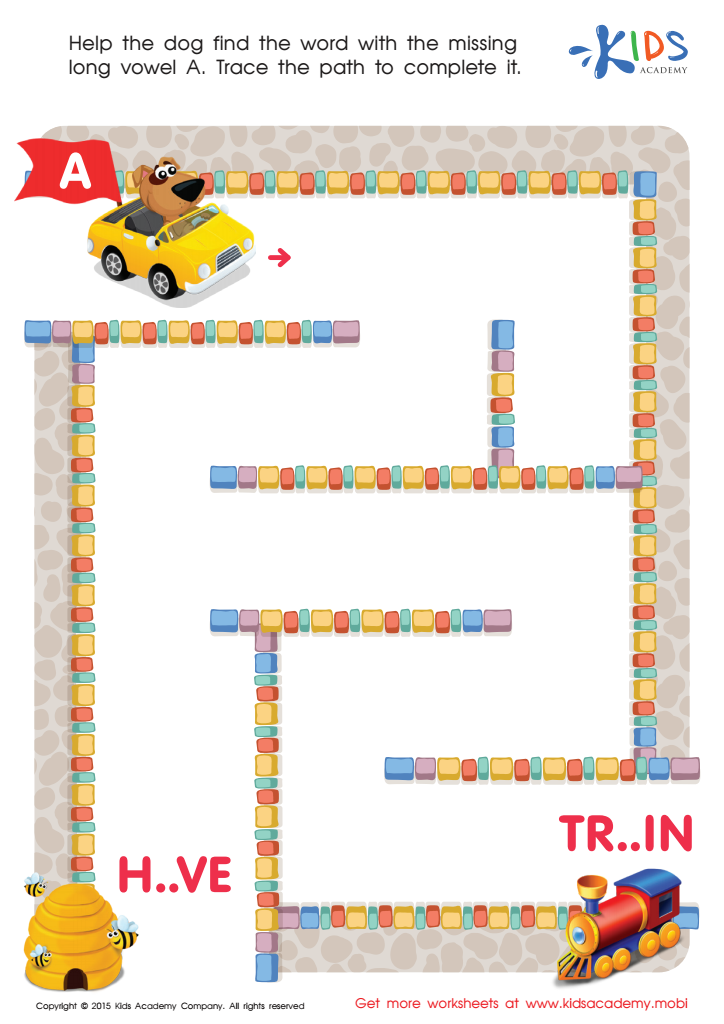
Teach your young learner about the long vowel A with this colorful free printable phonics worksheet. The long vowel A says its name while the short vowel A does not. Complete the worksheet by tracing the root to the toy train and helping the dog by filling in the missing letter A. Have them practice writing and spelling with phonics while having fun!
 Assign to My Students
Long Vowel Sound A Worksheet
Worksheet
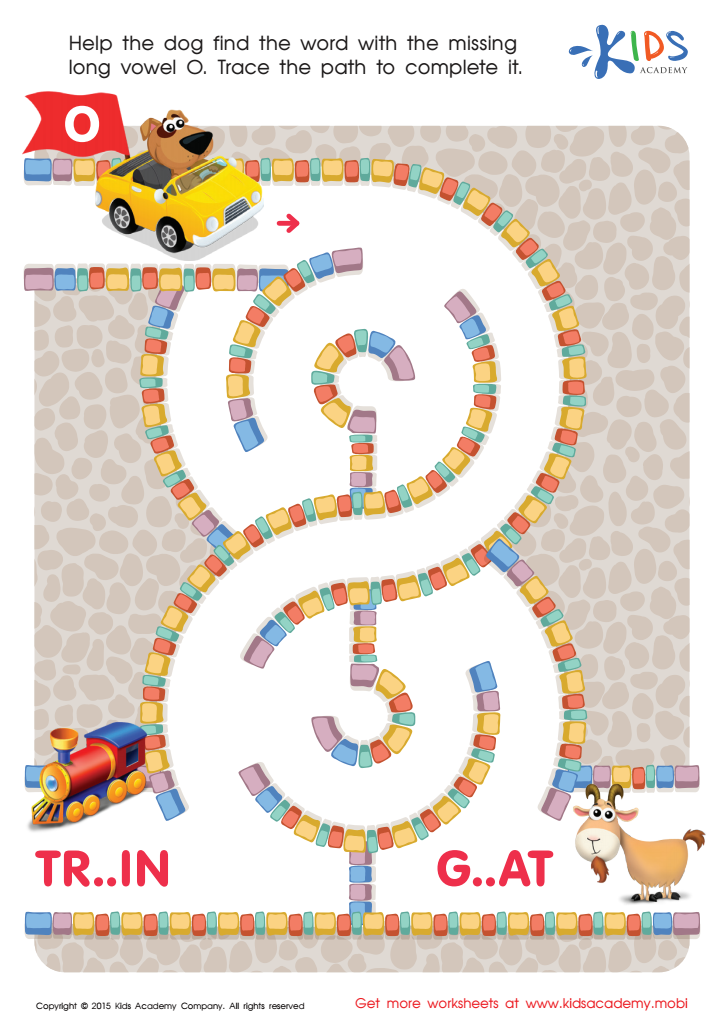
Long Vowel Sound O Worksheet
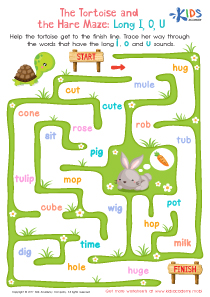
Help the goat find her missing O! Guide your little learner through this fun maze to help the goat get its vowel sound back. Make phonics learning engaging and enjoyable with this free printable worksheet.
Long Vowel Sound O Worksheet
Worksheet
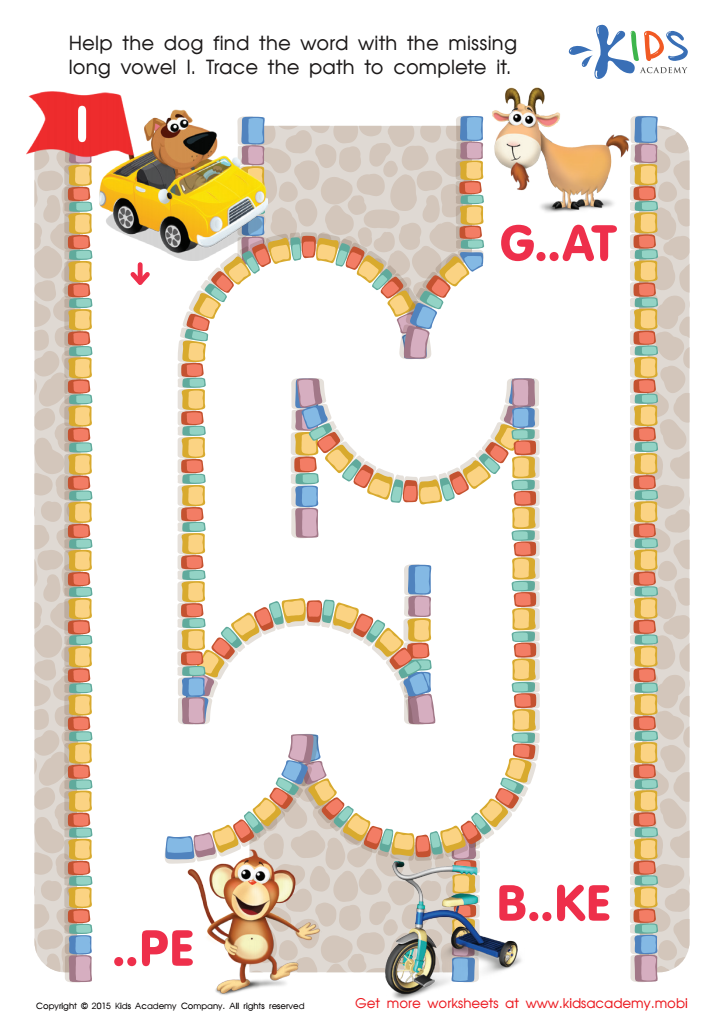
Long Vowel Sound I Worksheet
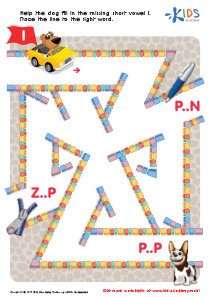
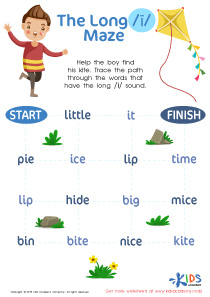
Learning long vowels is essential to becoming a good reader. Ask your child to distinguish between the long and short I vowel sounds. Remind them that the long I says its name, while the short I doesn't. With this fun printable phonics worksheet, your kid can practice writing and spelling while helping a dog find his way through a maze. Check out our phonics worksheets for more learning activities.
Long Vowel Sound I Worksheet
Worksheet
Join Kids Academy for Free
Who is primarily going to use this learning content?



Vowel recognition is foundational for literacy development, and the "Vowel Recognition Extra Challenge Long Vowels" for ages 6-8 can be immensely beneficial for young learners. At this age, children are transitioning from simple CVC (consonant-vowel-consonant) words to more complex word structures. An understanding of long vowels—where the letter "says its name"—plays a crucial role in this transition.
Long vowels appear in numerous common words and are essential components of both reading and spelling skills. Proficiency in recognizing long vowel sounds directly influences a child's ability to decode new words, extract meaning from text, and expand their vocabulary. For example, understanding that "e" at the end often makes the preceding vowel long (as in "cake" or "cone") equips children with tools to approach unfamiliar words with confidence.
Moreover, structured and engaging vowel challenges can make learning enjoyable, fostering a positive association with reading. Age-appropriate exercises that incorporate long vowel recognition help reinforce patterns and connections, making complex language rules more accessible for young minds.
By providing children with these tools at an early age, parents and teachers set them up for better reading fluency, comprehension, and ultimately, academic success. This investment in vowel recognition includes not just the present reading skills but also the future ability to tackle more advanced literacy tasks confidently.